Incident Overview
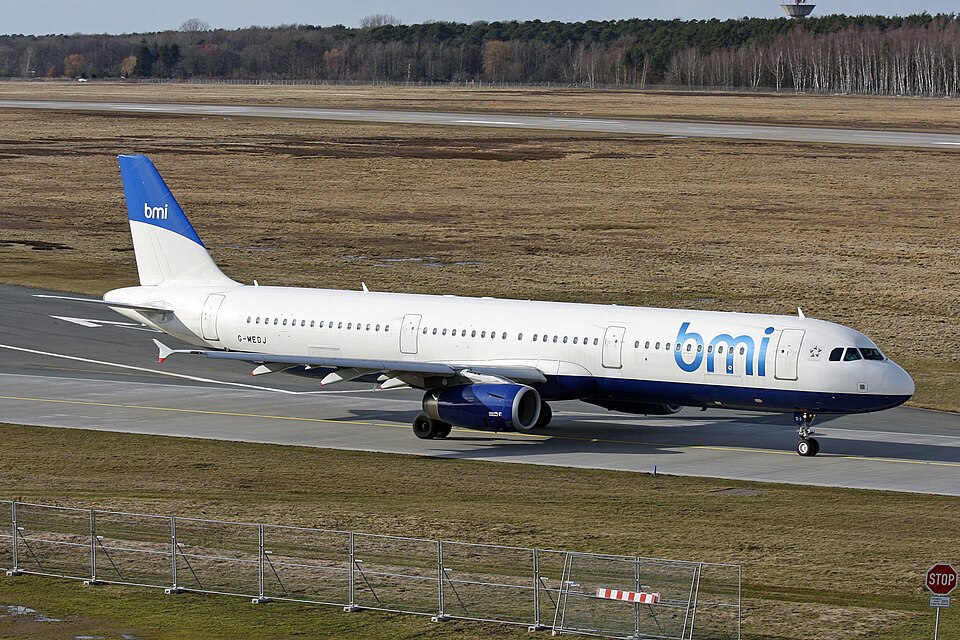
On 24 August 2010, an Airbus A321-231 (registration G-MEDJ) operated a scheduled night flight from Khartoum, Sudan, to Beirut, Lebanon. At approximately 0225 UTC, while cruising at Flight Level 360 over northern Sudan in night Instrument Meteorological Conditions with slight turbulence, the aircraft suffered an electrical malfunction.
Sequence of Events
The commander, acting as pilot flying, noticed that his Primary Flight Display (PFD), Navigation Display (ND), and ECAM upper Display Unit (DU) began to flicker, grey out, show lines or crosses, and go blank. Concurrently, a chattering sound was heard from the circuit breaker panels behind the pilots' seats, thought to be relay operation. The abnormal behaviour ceased after a short time. The co-pilot checked circuit breakers for signs of overheating, but found none.
Minutes later, the commander's displays flickered and greyed out again before blanking for longer periods. Autopilot 1 (AP 1) disconnected, and the commander handed control to the co-pilot, whose displays were unaffected at that time. The condition again resolved, and the commander resumed control and re-engaged AP 1.
Shortly afterward, the symptoms returned: the commander's displays became mostly blank or showed white lines, and when visible, airspeed, altimeter, and QNH/STD indications were erratic. The co-pilot's PFD, ND, and ECAM lower DU began to flicker and were sometimes unreadable. Cockpit lights went off intermittently. The commander again handed control to the co-pilot, who flew manually. The standby flight instruments operated normally throughout.
The chattering sound resumed and was at times continuous. Numerous ECAM messages and master caution annunciations appeared. Symbols indicated flight control system reconfiguration to Alternate Law, flight directors were intermittent, and the autothrust system entered thrust lock mode. The aircraft rolled left, adopting an approximately 10° left-wing-low attitude without crew input. The flight crew reported that the aircraft did not respond as expected to control inputs and shuddered and jolted repeatedly.
Crew Actions and Resolution
The flight crew were concerned that the ECAM was only sometimes visible and did not identify the root cause. They were not aware of any applicable procedure. The commander considered transmitting a MAYDAY but prioritised aircraft control and problem identification.
After several minutes, the commander saw an ECAM 'GEN 1 FAULT' message and associated checklist, requiring the No 1 generator to be selected to OFF. On doing so, the juddering ceased, the chattering stopped, and all displays returned to normal, although the left-wing-low attitude persisted. The checklist directed selecting the generator ON again. Following discussion and agreement to deselect immediately if problems returned, the commander selected it ON, which caused the symptoms to return, prompting him to select OFF again.
The APU was started, and its generator was selected to power systems previously powered by the No 1 generator. Shortly thereafter, the crew noticed the rudder trim display indicated several units from neutral, although they had not made any rudder trim inputs. When reset to neutral, the aircraft adopted a wings-level attitude. The aircraft had deviated approximately 20 nm left of track during the incident.
The aircraft was flown manually for the remainder of the flight and landed at Beirut without further incident.
Engineering Investigation
An investigation was initiated to establish the source of the failure in the electrical system, why both pilots' electronic instrument displays were affected, and the effects of electrical power interruptions on the flight control system. The aircraft manufacturer indicated that a reset of the Flight Augmentation Computer (FAC) caused by an electrical power interruption may cause a small incremental offset in rudder trim; multiple interruptions can produce a significant rudder trim input.
Flight Recorders
Due to late notification, both Cockpit Voice Recorder (CVR) and Flight Data Recorder (FDR) data were overwritten. Flight data was obtained from the operator's Flight Data Monitoring programme, which confirmed some crew reports including unusual yaw behaviour. A detailed review with the manufacturer is underway.
Safety Action
Airbus intended to notify A320-series aircraft operators of this incident and associated ongoing actions.
Progress
The AAIB continued investigating with co-operation from the manufacturer, the Bureau d'Enquêtes et d'Analyses pour la Sécurité de l'Aviation Civile, and the operator. A final report was to be published when complete.