Background
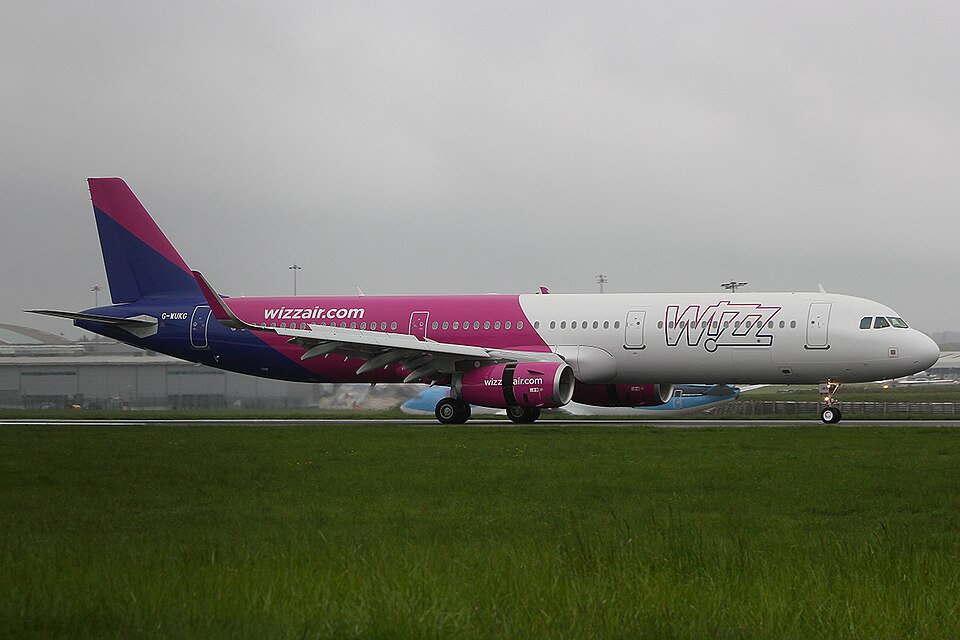
On 16 January 2020, an Airbus A321-231, registration G-WUKG, operated a scheduled commercial passenger flight from London Luton Airport to Prague Airport. The aircraft was manufactured in 2018 and equipped with two International Aero Engine V2533-A5 turbofan engines. The crew consisted of 7 members and 157 passengers.
Incident
During departure from Runway 26, the pilot flying (PF) applied a normal aft side stick input at rotation airspeed (VR) but the aircraft did not pitch up. The PF increased the input to near maximum deflection. When the aircraft still did not respond, the pilot monitoring (PM) selected TOGA thrust. The aircraft then rotated and climbed, continuing to the planned destination. The landing gear was not retracted until approximately 5,000 feet amsl due to a missed 'positive rate of climb' call.
Weight and Balance
An aircraft change had been made from an Airbus A320 to the A321 for operational reasons. However, the change was not communicated to the Passenger Services Department, so passengers were boarded with seat allocations for the A320, which has three cabin zones. The A321 has a fourth zone at the rear, which remained unoccupied. This placed the aircraft's centre of gravity (CG) forward of the permitted operating envelope. The load and trim sheet provided to the crew calculated a CG within limits, but the actual passenger distribution did not match the sheet.
Analysis
The incident occurred because the aircraft change was not notified to both the Operational Handling Department and Passenger Services Department. As a result, passengers were seated forward, causing the CG to be outside the forward limit. At rotation, the forward CG prevented the nose from lifting with normal control inputs. The PF required almost full aft stick and the PM selected TOGA thrust before rotation occurred. The crew initially attributed the issue to an incorrect stabiliser setting from the load sheet. Later, it was realised that passengers were distributed incorrectly.
Safety Actions
Following the incident, the operator implemented several safety actions: improving information flow between departments when changing aircraft variant, increasing ground handling agents' awareness of variant change implications, distributing briefing material, including variant changes in crew briefings, providing additional cabin crew training on weight and balance, issuing a safety bulletin, and amending the Operations Manual with enhanced guidance for onboard suspicion of loading issues.
Probable Cause
The incident occurred due to the aircraft change from an A320 to an A321 not being notified to both the Operational Handling Department and Passenger Services Department, leading to passengers being seated at the front of the aircraft and placing the CG outside the forward limit of the operating envelope.