Introduction
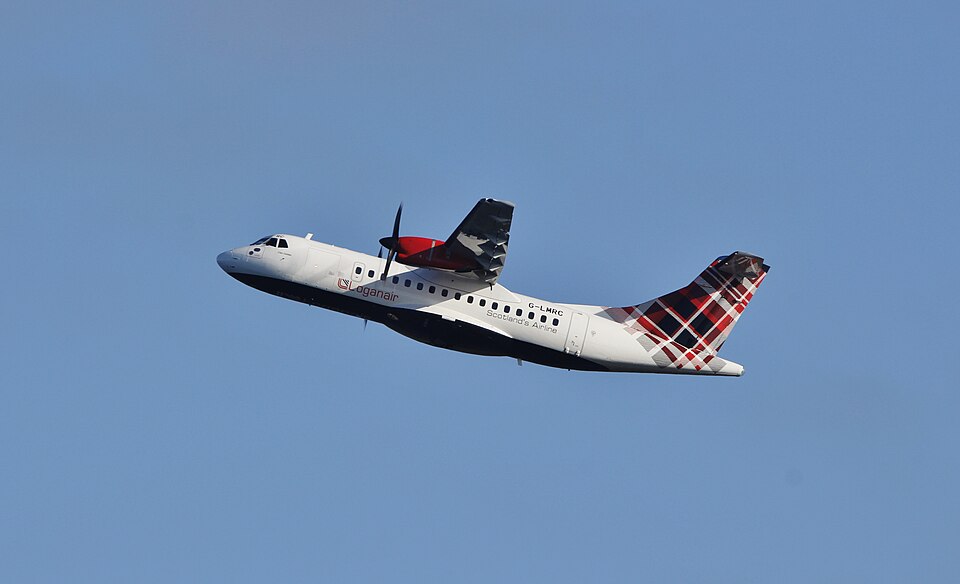
On 27 August 2022, an ATR 42-500 aircraft, registration G-LMRC, experienced a temporary loss of multiple flight deck displays and other systems while climbing from Aberdeen Airport. The incident lasted approximately three seconds before normal operations resumed. The aircraft returned to Aberdeen and landed without further event. No injuries were reported, and the aircraft sustained no damage.
History of the Flight
The aircraft was operating a scheduled passenger flight from Aberdeen International Airport to Sumburgh Airport, Shetland. Takeoff from Runway 34 occurred at 1010 hrs in daylight conditions. While climbing through FL100 in visual meteorological conditions, the co-pilot performed the standard 'FL100 Procedure', which included turning off the landing lights. As the lights were switched off, a "clunk" was heard from the electrical cabinet behind the co-pilot's seat. Simultaneously, both Electronic Attitude Director Indicators (EADI) and Electronic Horizontal Situation Indicators (EHSI) went blank, the autopilot disengaged, both air conditioning packs de-powered, engine torque indications dropped to zero, and the Multi-Function Control Display Unit (MCDU) and Advisory Display Unit (ADU) also blanked. The co-pilot quickly turned the landing lights back on, and all displays and systems returned without further crew action. The crew then elected to return to Aberdeen. After entering a holding pattern and completing checklists, they conducted an uneventful ILS approach and landing on Runway 34. Upon vacating the runway, the commander turned off the landing lights as part of the After Landing Checklist, and the same failure recurred, lasting about three seconds before the displays returned. The aircraft then taxied to a stand and shut down normally.
Aircraft and Electrical System
The ATR 42-500 (serial number 480, manufactured in 1996) is a twin turboprop regional aircraft. Its electrical system includes two engine-driven 28V DC starter-generators, main and emergency 24V DC batteries, two propeller-driven AC generators, two static inverters, and a Transformer Rectifier Unit. The emergency electrical network comprises the DC Standby Bus, DC Emergency Bus, and DC Essential Bus. In normal flight configuration, DC Generator 1 powers DC Bus 1 and DC Generator 2 powers DC Bus 2, with batteries providing backup to the emergency buses. Contactors such as 1PA, 58PA, and 3PA manage power routing.
Investigation Findings
The AAIB investigation found a fault in the 1PA contactor, which was stuck in an intermediate position and unable to supply backup power to the emergency electrical network. This was considered a contributory factor but not the cause of the power loss. Despite extensive testing, the root cause of the simultaneous loss of the emergency electrical network and a loss or undervoltage condition of DC Bus 2 could not be determined. After replacement of the 1PA contactor, battery switch, and landing light relays, no further failures occurred. The aircraft manufacturer and EASA have taken safety action to require testing and replacement of 1PA contactors that have failed. The AAIB also made a safety recommendation to the manufacturer to continue investigating possible causes of the electrical failure.