History of the Flight
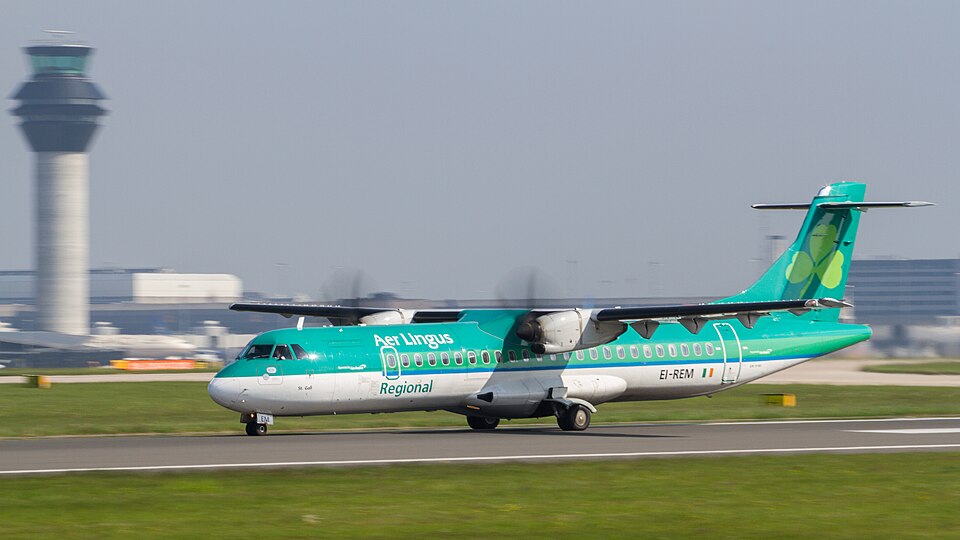
On 22 December 2015, at approximately 1553 UTC, an ATR 72-212 A (registration EI-REM) was operating a scheduled passenger service from Birmingham to the Isle of Man. The co-pilot, who was undergoing line training under the supervision of a Line Training Captain, was the handling pilot for the landing.
The aircraft made a stable approach in good flight conditions. However, the co-pilot flared slightly too early and selected a higher pitch attitude than necessary. The aircraft flew level just above the runway before beginning to sink. The main wheels touched down with a light skip, and the captain made a steadying input on the control column to prevent a large forward control input that could lead to a nose-first touchdown. The aircraft then touched down firmly on the main landing gear, and the remainder of the landing roll appeared normal.
Damage and Inspection
An observer near the runway noticed sparks from under the rear fuselage at touchdown and informed Air Traffic Control, who alerted the flight crew. Inspection revealed light abrasion damage to the tail bumper on the lower rear fuselage. The damage was limited in extent, and no maintenance action was required for the aircraft to continue in service.