History of the Flight
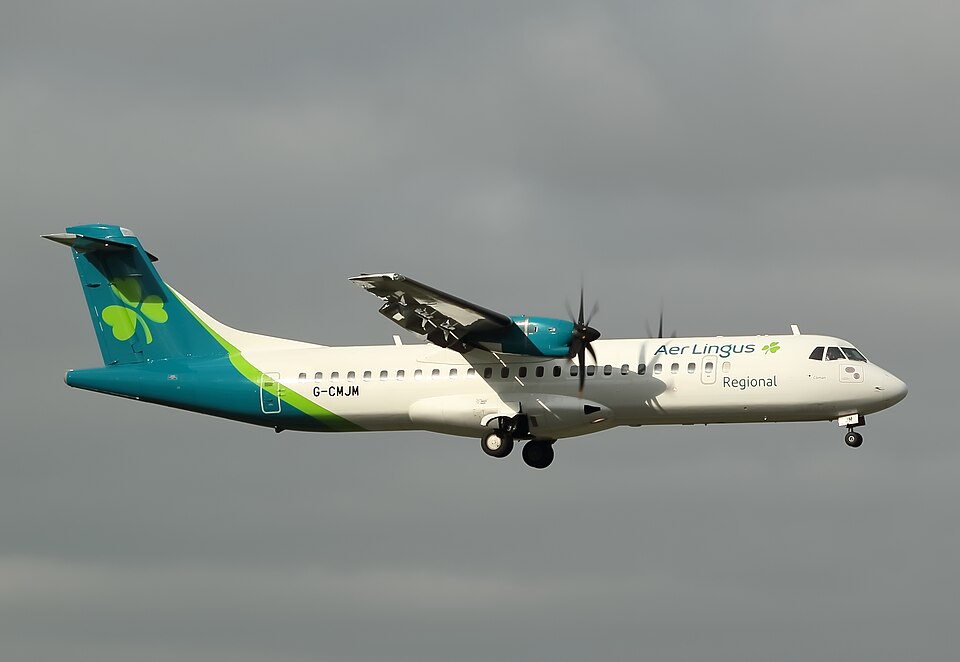
On 31 October 2023, an ATR 72-212A (registration G-CMJM) departed Edinburgh Airport for a commercial passenger flight to Belfast City Airport. During takeoff from Runway 06, the right nose landing gear wheel detached from the aircraft. The detachment was not observed by airfield operations or the flight crew. The aircraft continued to Belfast, performed an ILS approach and landing on Runway 04, and taxied to the stand without abnormal indications. Only after parking did ground crew inform the commander that a nosewheel was missing. Both airports conducted runway inspections, and the nosewheel was found beside the runway at Edinburgh. No damage to airport infrastructure was reported.
Aircraft Examination
Examination of the nose landing gear revealed that the axle was sheared off and showed evidence of heat damage. The nose landing gear bay had no other damage or fluid leakage. The aircraft structure and engines were undamaged. The right wheel assembly was disassembled and found with all tie bolts loose, no balancing weights, a fractured outer half-wheel hub, and an interposition product on the mating faces of the half-wheels (not permitted for nosewheels). Both bearings showed over-greasing and heat damage. The outer bearing cone was deformed; the inner bearing had rollers, cage, circlip, grease, and seal missing due to heat. The left wheel assembly also had loose tie bolts, interposition product, missing balancing weights, and signs of over-greasing and heat damage.
Metallurgy
Metallurgical analysis indicated exposure to high temperatures consistent with a bearing failure. The axle fracture resulted from thermal shock and cadmium liquid metal embrittlement. The precise crack initiation region was not identified.
Contributing Factors
The manufacturer highlighted factors that can contribute to bearing overheat, including incorrect bearing preload or installation, roller misalignment, incorrect lubrication, use of interposition product between half-wheels, and lack of balancing weights. These factors can occur during line maintenance or component overhaul.
Analysis
The wheel detached because the axle fractured due to bearing overheat. The cause of the overheat could not be positively determined, but factors identified included over-greasing, missing balancing weights, and the interposition product. The manufacturer emphasized adherence to maintenance manuals.
Conclusion
The right nose landing gear wheel detached on takeoff due to axle fracture caused by bearing overheat. The root cause of the bearing overheat was not positively determined, but several non-conformances with approved maintenance procedures were identified as potential contributors.