Incident Details
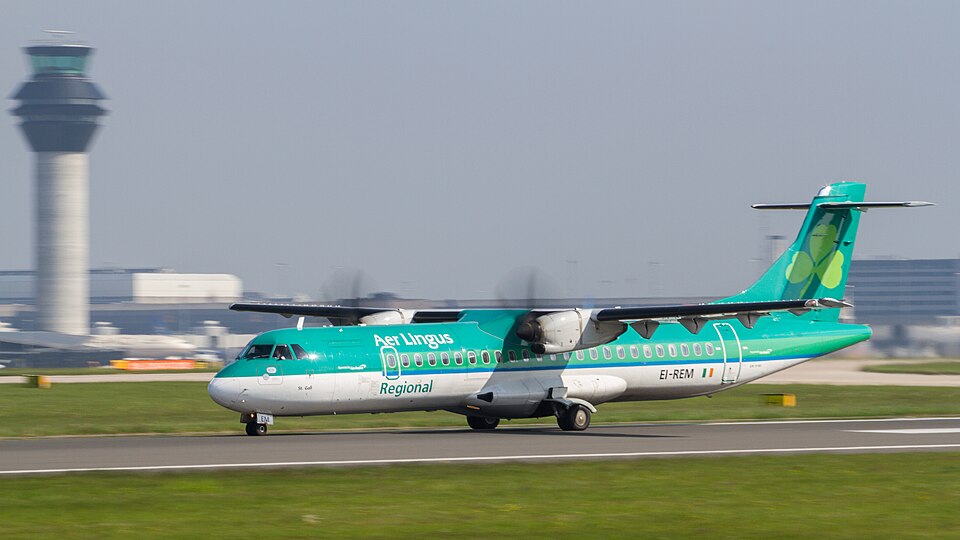
On 18 December 2017 at 1543 UTC, an ATR 72-212A (registration EI-REM) operated a scheduled passenger flight from Birmingham International Airport to Isle of Man Airport. The co-pilot was the handling pilot. During the final landing flare, the aircraft pitch increased to approximately 6° and the speed reduced below the calculated approach speed. This resulted in a firm landing, during which the tail bumper on the underside of the rear fuselage contacted the runway. The aircraft's flight management system recorded a vertical acceleration of 1.31 g at touchdown.
An air traffic controller observed sparks from under the rear fuselage as the aircraft touched down, but reported that the subsequent rollout appeared normal. The controller requested a runway inspection and informed the flight crew of the tail contact, which they had not noticed.
Aircraft and Personnel
The aircraft was a 2007 ATR 72-212A (serial number 760) powered by two Pratt & Whitney PW127F turboprop engines. On board were 4 crew and 70 passengers; no injuries were reported. The commander, aged 52, held an Airline Transport Pilot's Licence and had 9,564 total flying hours, including 2,578 hours on type, with 123 hours in the last 90 days and 18 in the last 28 days.
Engineering Inspection
Engineers inspected the aircraft and found light abrasion damage to the tail bumper. The damage was limited in extent, and no maintenance action was required for the aircraft to continue in service.
Flight Data Monitoring
The operator reviewed Flight Data Monitoring (FDM) data for the event, which showed the pitch at touchdown was 6.94°. The aircraft manufacturer defines FDM event thresholds for 'High pitch at Touchdown' on the ATR 72 as 6° (low risk), 7° (medium risk), and 8° (high risk). The operator's FDM software reflected these thresholds, and the event was categorized as low risk.
Commander's Assessment
The commander assessed that the tail strike occurred due to a combination of the downward slope at the runway touchdown zone, the slightly high pitch angle at touchdown, reducing airspeed, and the high landing weight of the aircraft.