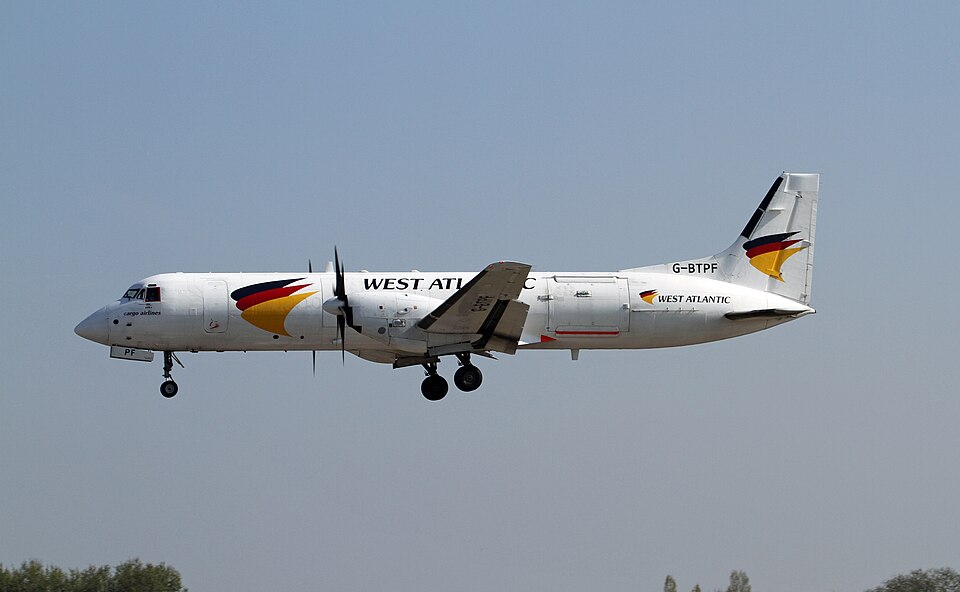
Incident Overview
On 7 October 2014, a BAE ATP (registration G-BTPF) was involved in a serious incident shortly after departing Bournemouth Airport, Dorset, on a positioning flight to London Stansted Airport. The aircraft, manufactured in 1989, was powered by two Pratt & Whitney Canada PW126 turboprop engines. The crew consisted of two pilots; no passengers were on board. No injuries were reported and there was no damage to the aircraft.
Flight Details
The flight was the second sector of a three-sector night cargo operation. The aircraft was flown manually by the commander from the left seat throughout. After departure from Runway 26 and climbing to 4,000 ft, the crew contacted Solent Radar and were instructed to climb to FL70. Approximately one minute after levelling at FL70 with an indicated airspeed of 200 kt, the incident began.
Event Description
The commander reported that the control wheel turned violently to the left with sufficient force to pull it from his hands. He arrested the resulting roll using opposite rudder and an estimated 40 to 45 lb of force on the control wheel. The aircraft began to roll level when the control wheel was displaced 45° to the right. For the next three to four seconds, the ailerons felt 'notchy' and were unresponsive to inputs within 15° of centre, after which full control was regained. Approximately 30 seconds later, a similar event occurred, this time a violent roll to the right, again arrested with opposite rudder and 40-45 lb of force. No warning captions illuminated on the Central Warning Panel (CWP).
The commander decided to return to Bournemouth and instructed the co-pilot to declare a MAYDAY and set the transponder to 7700. Solent Radar vectored the aircraft for a long final approach to Runway 26. During the approach, the crew noticed the fluorescent flood lighting in the cockpit roof flickered. The commander performed a low-speed handling check with normal results and landed with Flap 20 set.
Post-Flight Observations
After parking and engine shutdown, approximately 10 minutes later, the crew observed a smoky or hazy condition on the flight deck with a strong acrid smell of electrical burning. A ground engineer heard a 'bang' from the forward lower fuselage area. When the No 1 forward lower belly hatch was opened, acrid white smoke vented from the bay.
Investigation
The AAIB was notified on 15 October 2014, eight days after the incident. By that time, the operator had replaced components from several systems and the aircraft had flown about 12 hours without further issues. The Cockpit Voice Recorder (CVR) recording had been overwritten. The Flight Data Recorder (FDR) recorded over 26 hours of operation but did not capture autopilot status, control column/wheel positions, rudder pedal positions, or electrical system status. Investigations by the operator and tests on various components did not identify any faults that would have caused the reported symptoms.