Incident Summary
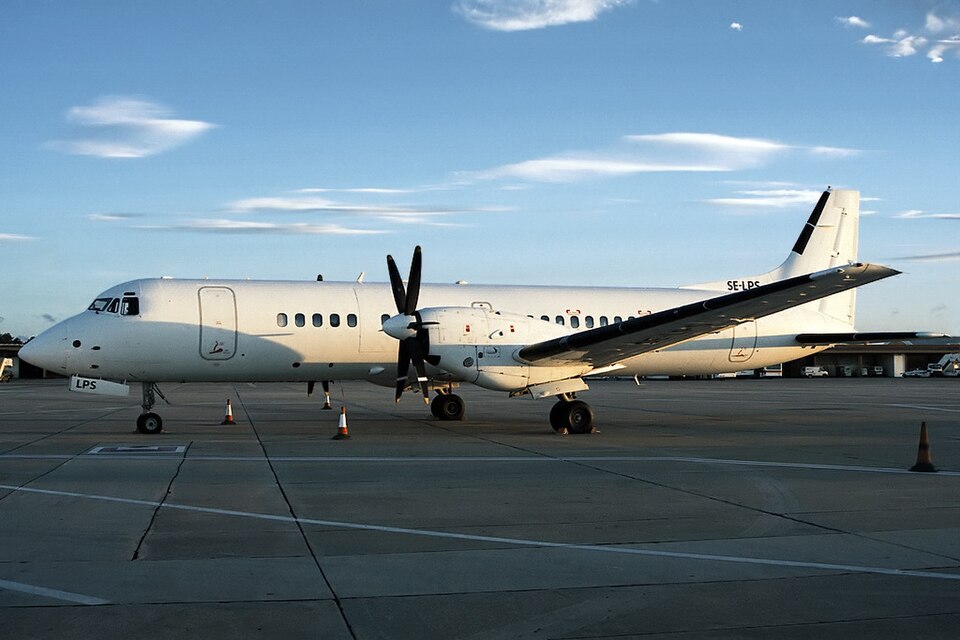
On 9 April 2021 at 0519 UTC, a BAe ATP aircraft, registration SE-LPS, experienced an autopilot disengagement anomaly during an approach to Ronaldsway Airport, Isle of Man. The aircraft was operating a commercial air transport cargo flight with two pilots and no passengers. No injuries were reported, and no damage was sustained.
Flight History
The aircraft departed East Midlands Airport at 0428 UTC. The co-pilot was the pilot flying and used Autopilot 2 (AP2) throughout the flight. During the final approach to Runway 26, which was an ILS approach, AP2 remained engaged in localiser and glideslope modes. As the aircraft reached decision altitude, the co-pilot pressed the autopilot disconnect button on the control column. No audio tone indicating disengagement was heard, and the co-pilot felt resistance when attempting to roll the aircraft to align with the runway centreline. Both pilots observed their primary flight displays, which indicated the autopilot had disengaged. The commander took control and also felt resistance in the controls. He pressed and held the synchronisation (syn) button on his control column, after which the controls became free. The syn button was held until the aircraft landed at 0517 UTC. After parking, the autopilot disconnect audio warning sounded continuously and could not be cancelled by the crew; it eventually stopped when the audio warning unit timed out.
Previous Flight
The aircraft's previous flight on 2 April 2021 was uneventful, but the commander noted that the yaw damper indication on the flight controller panel had extinguished during the flight. Post-flight, a technical log entry recorded: 'AP controller yaw damper not indicating. AP disconnect sounded continuously after landing. Cannot select AP on ground.' A replacement autopilot control panel was fitted, and a broken bulb was found for the yaw damper indication. The aircraft technical log also recorded that a replacement AP2 computer was installed.
Recorded Information
The aircraft was equipped with a cockpit voice recorder (CVR), flight data recorder (FDR), and quick access recorder (QAR). QAR data showed AP2 disengaged just before decision altitude. The CVR, of high quality and two hours duration, captured the end of the flight and post-flight events but did not record the start of the flight. Extracts of QAR and CVR recordings indicated that the co-pilot attempted to disengage the autopilot and felt resistance. The commander stated he was 'in sync mode' and felt the aircraft 'felt weird.' After landing, the CVR recorded the crew discussing the event. The co-pilot later engaged AP2 on the ground, triggering multiple series of cavalry charge tones. Engineering personnel could not fault the autopilot system and noted that the commander's syn button should not have worked with AP2 engaged. Additionally, throughout the flight, altitude alert chimes lasted approximately 12 seconds instead of the usual one second.
System Description
The ATP is fitted with two independent autopilots sharing a common flight controller, servo clutches, and mechanical drive assemblies. The autopilot controls pitch and roll via three primary electrically actuated servomotors (aileron, elevator, rudder), each with a slipping clutch allowing pilot override at specified forces. The flight controller includes an AP switch for engagement (but not disengagement) and an AP system selector. Disengagement can be achieved via the autopilot disconnect button or by operating manual electric trim switches. The synchronisation switch, when depressed, de-clutches the aileron, elevator, and pitch trim servos and deselects autopilot modes.
Investigation Findings
A definite cause for the autopilot not disengaging as designed could not be determined. The manufacturer identified a possible scenario where autopilot servomotors could remain engaged after disengagement, resulting in higher-than-normal control forces. On 2 December 2021, a similar autopilot occurrence on an ATP (registration SE-MAJ) was reported to the AAIB, and its findings were included in this report.
Safety Action and Recommendations
Safety action was taken by the UK Civil Aviation Authority (CAA) to include additional testing of the autopilot system as part of the ATP's continued airworthiness programme. The operator reconfigured their fleet so that either pilot could override either autopilot via the syn button on their respective control wheel. The operator also initiated remedial action to prevent water ingress into the cockpit. Two Safety Recommendations were made to the CAA regarding the use of magnetic tape recorders.