History of Flight
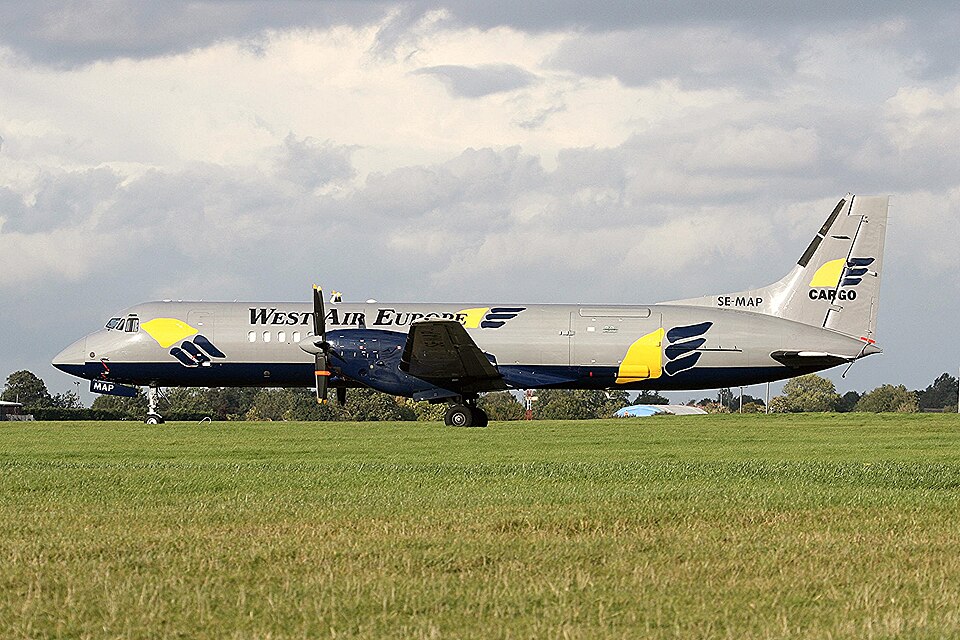
The flight from London Stansted (STN) to Belfast International (BFS) took place on 27 November 2021 during Storm Arwena. Forecast weather conditions did not require de-icing or anti-icing before departure. During climb out, the aircraft encountered minor icing, but this did not warrant use of the anti-icing boots. In cruise at FL200, the pilot noted small altitude hunting and constant twitching of the trim wheel, but considered this normal for the ATP in light turbulence.
During descent to BFS, the autopilot struggled at times to maintain a set vertical speed. On final approach, the pilot disconnected the autopilot for manual flying. The crew then found the elevator stiff to move, requiring two hands and operating jerkily in both push and pull directions. Despite the unusual response, the aircraft remained controllable and landed successfully. During taxi, the pilot kept moving the elevator control, which gradually freed up and returned to a more normal feel after a few minutes.
Operator's Investigation
The crew confirmed the autopilot had disconnected, as indicated by the audio warning and cleared indications on the control panel and PFD. Data from the Flight Data Recorders supported this. During fault finding, engineers found the elevator primary servo and lever assembly noisy and unable to drive the elevator through full range. The elevator trim servo motor also did not drive through full range. Both components were replaced and sent to the operator's component testing bay in Sweden, where extensive testing found no fault.
The aircraft flew six further cycles without incident. While on stand, a depowering procedure revealed an elevator trim defect: the electric trim switch was very slow to spring back to centre. Cleaning restored spring action. It could not be determined if this fault was related to the earlier elevator issue, but the cause was likely ingression of cleaning agents into the yoke switches. Consequently, the operator ceased disinfection of cockpits for the ATP fleet due to potential electrical problems, and introduced a procedure to remove residual cleaning agents from yoke switches.
Safety Action
During investigations, the operator identified that inspection of wiring in the steering columns was challenging due to access constraints. A new procedure was developed to enable more extensive inspection. The operator prioritised completing steering column inspections across its ATP fleet.