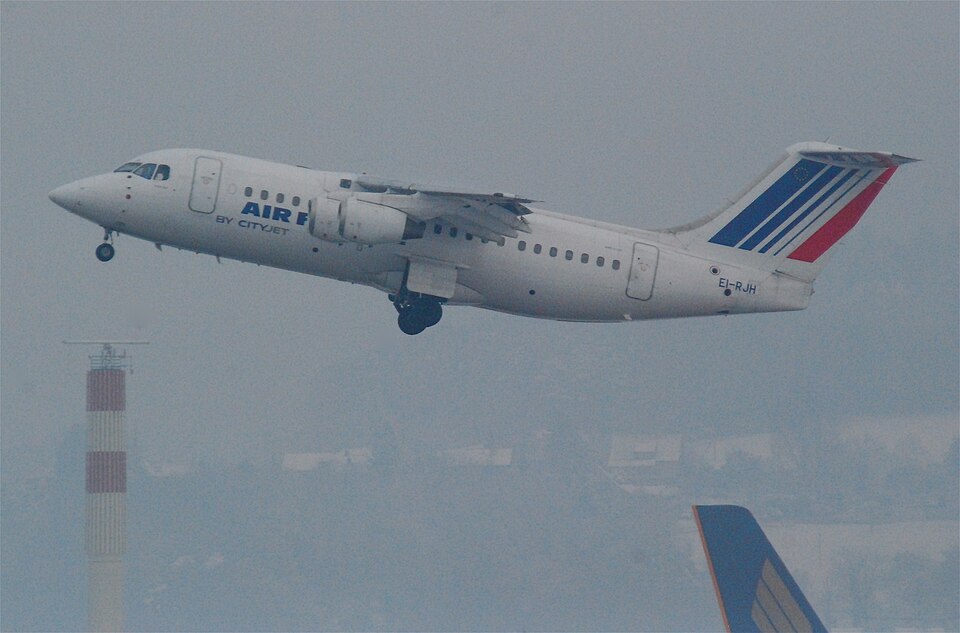
Aircraft Information
The aircraft involved was a BAe Avro RJ85, registration EI-RJH, manufactured in 1999 (serial no: E2345). It was powered by four Lycoming LF507 1F turbofan engines. The flight was a scheduled commercial passenger service from Paris Charles de Gaulle to Dublin.
History of the Flight
On 12 November 2015, the flight crew prepared for departure with forecasts indicating strong south to south-westerly winds at Dublin, gusting to 45 kt. Belfast International and Manchester were considered as alternates; Manchester had lighter winds but similar showery conditions later. The commander ordered fuel sufficient for an approach at Dublin, diversion to Manchester, plus an additional 25 minutes of flying time, atop the required final reserve of 30 minutes.
The aircraft departed Paris at 1246 hrs. En-route reports showed Dublin's surface wind from 220° at 23 kt gusting 35 kt, with runway 16 in use. As the aircraft neared Dublin, the crew was instructed to delay approach due to gusting wind of 47 kt, exceeding crosswind limits. While holding, they noted Belfast's wind from 190° at 22 kt with good visibility.
The wind at Dublin eased temporarily, and an approach commenced but was discontinued when wind strengthened again and preceding aircraft failed to land. The crew initiated a diversion to Belfast, verifying sufficient fuel.
During vectoring for an ILS approach to Runway 25 at Belfast, ATC advised of an area of poor weather with low visibility and gusts to 40 kt. The crew observed the weather on radar and, unable to commence approach until it cleared, made a 'PAN-PAN' call regarding fuel state. They also anticipated a 'low fuel' alert and prepared the relevant checklist.
With ATC assistance, the aircraft flew southwest of the airport. As weather cleared and wind abated, ATC offered Runway 17, which the crew accepted after confirming landing distance adequacy. Realizing the aircraft might land below final reserve fuel (849 kg), the crew transmitted a 'MAYDAY' call. The aircraft performed a short-pattern radar circuit to an ILS on Runway 17, touching down at 1548 hrs with 650 kg of fuel remaining. No injuries to the 4 crew or 80 passengers were reported, and no damage occurred.
Contributory Factors
The commander reported several factors influencing the sequence. More fuel could have been loaded in Paris, but landing weight considerations, especially potential windshear, were taken into account. The diversion was initiated with fuel for an extra 10 minutes above minimum. An earlier diversion decision would have allowed more fuel for delays, but the likelihood of a safe landing at Dublin appeared possible when winds eased. Manchester was available with better weather and had been allowed for in fuel planning, but Belfast required less fuel and offered two runways for wind shifts.
AAIB Comment
This incident exemplifies decisions flight crews face in rapidly changing weather. When landing conditions are clearly unsuitable, the diversion decision is straightforward. However, when conditions appear marginal, the commander must balance the likelihood of a safe approach at the original destination (which consumes fuel otherwise available for diversion) against variables of diverting to another airport.
Fuel and Weather Data
- Final reserve fuel required: 849 kg
- Fuel remaining on landing: 650 kg
- Wind at Dublin: up to 47 kt gusts
- Wind at Belfast: 190° at 22 kt initially, later gusts to 40 kt