Incident Overview
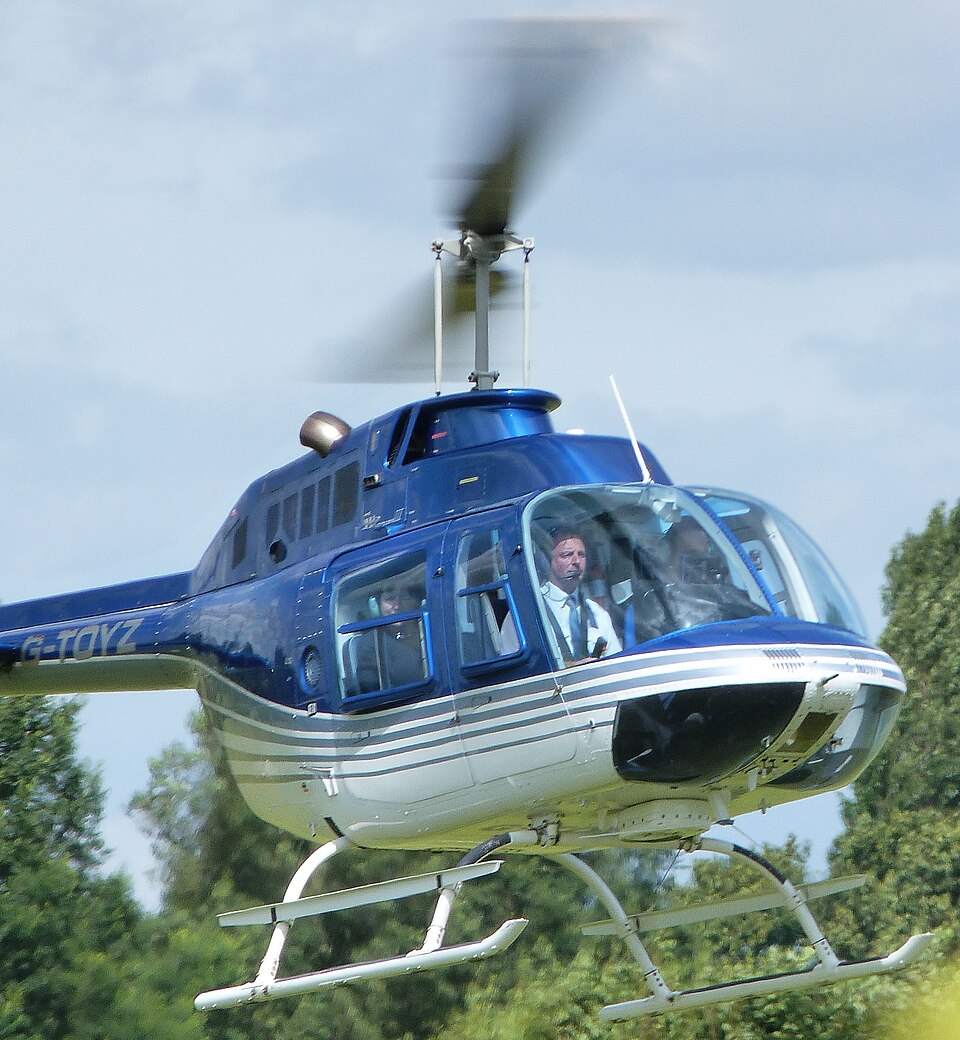
On 5 September 2022, at approximately 1110 UTC, a Bell 206B Jet Ranger (registration G-TOYZ) was conducting a commercial air transport sightseeing flight near West Usk Lighthouse, Newport, Gwent. During the ninth landing of the day, a sign that had been positioned in the passenger waiting area became detached and struck a waiting passenger, causing a cut to their lower leg that required stitches. The helicopter was operated by a single pilot with 422 hours of flying experience, including 311 hours on type. There were four passengers on board; the pilot and other passengers were uninjured.
History of the Flight
The temporary site for sightseeing flights had been set up the previous day (4 September 2022). The layout included a passenger parking and waiting area delineated by a rope cordon with a gate to the airside, and a sign measuring 800 mm x 575 mm x 10 mm and weighing 2 kg was displayed next to the gate for passenger briefings. During setup, cows escaped from an adjacent field, requiring removal and securing, which caused delays and time pressure. Passengers also began arriving and parking incorrectly. The sign was normally secured with plastic cable ties on all four corners, but on this occasion it was only secured with two ties on the top corners.
The cordon and sign were left overnight. The strongest wind recorded at nearby Cardiff and Bristol Airports that night was 15 kt, and a strong wind warning was in place for Cardiff Airport for winds of 15–20 kt with possible gusts of 25–30 kt.
On the day of the incident, no check of the sign's security was performed before flying commenced. The Terminal Aerodrome Forecasts (TAFs) for Cardiff and Bristol predicted winds of 150° at 9 kt and 160° at 10 kt respectively, with a 40% chance of occasional stronger wind of 15 kt from 1300 hrs. The pilot completed eight uneventful flights with landings in the same spot. By the ninth flight, the wind had increased to about 10–15 kt. During landing, the cable ties broke and the sign detached, striking the waiting passenger.
Investigation Findings
Investigation by the Air Accidents Investigation Branch (AAIB) revealed that the ground crew were distracted and under time pressure during the initial site setup, leading to the sign being less securely fastened than usual. The combination of the helicopter's downwash and the prevailing wind exerted sufficient force on the sign to break the two plastic cable ties. Additionally, the possibility existed that the sign had been exposed to strong winds overnight, and there was no process to verify the site's safety before the start of each day's operations. No one had noticed the sign was poorly secured or any movement before the incident.
Safety Actions Taken
Following the incident, the operator took immediate steps to enhance safety:
- The distance between the landing helicopter and the passenger waiting area was increased.
- A flying staff instruction was issued requiring the sign to be secured with two cable ties on each corner, and metal lanyards were ordered to further secure the sign.
- The instruction also mandated that the ground team leader check the site's safety before the first flight of the day and before each engine start.
Probable Cause
The sign was not secured properly because the ground crew were distracted and under time pressure. During a landing, the combination of downwash and wind caused the sign to detach and strike a waiting passenger who suffered minor injuries.