History of the Flight
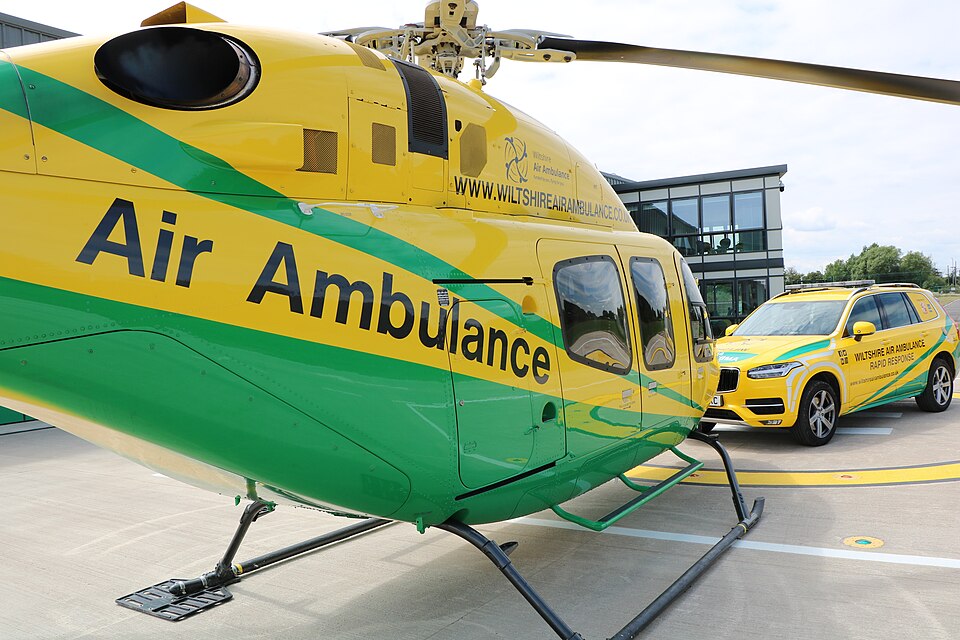
The report covers two events involving the same Bell 429 GlobalRanger helicopter, registration G-WLTS, operated by an unspecified commercial air transport operator. The first event occurred on 15 June 2018 after the helicopter returned from a Helicopter Emergency Medical Service task. The pilot intended to conduct a Power Assurance Check (PAC) using the automated method. After the two technical crew vacated the helicopter, the pilot set the rotor speed to 100% (though data showed 104%), selected off the No 1 generator and Trakka searchlight, and adopted a posture with feet off pedals. During the PAC, the pilot heard a loud noise from the right side, felt a lurch, and the helicopter yawed rapidly left. The pilot lowered the collective and shut down both engines after brief difficulty. The helicopter made two and a half rotations in approximately ten seconds.
The second event occurred on 2 January 2019 at 1255 UTC at Melksham Airbase, Wiltshire, with the same pilot preparing for another PAC. The pilot kept feet on pedals and noticed unusual feedback forces. The pedals attempted to drive to full left deflection, but the pilot contained them. Depressing the force trim release button momentarily did not clear the condition; a longer press did. A short video was recorded by the technical crew member.
Recorded Information
Flight data from the combined recorder was analyzed for both events. For the June 2018 event, data showed that the collective was raised with autopilot engaged, then held at about 23% range for three seconds. During this hold, pedals began to drift left, a yaw out-of-detent condition occurred, rotor speed reduced to 100%, and autopilots disengaged. The pedals then suddenly moved to left maximum deflection in about one second. The yaw out-of-detent condition cleared, and the collective was lowered within two seconds. The helicopter rotated two and a half times.
For the January 2019 event, data showed that after touchdown, left pedal input was made and held as autopilots disengaged. A brief right pedal input preceded left pedal movement and a yaw out-of-detent condition that lasted nearly two minutes. The trim release button was pressed at least twice; the condition cleared after the second press.
CVR Recording Issues
Examination of the cockpit voice recorder (CVR) recording from the January 2019 event revealed audio clipping on both crew channels, affecting intelligibility. The cockpit area microphone channel was unaffected. The operator had used the flight recorder manufacturer to perform periodic inspections, which specified a maximum interval of 24 months between CVR and FDR recording inspections. The manufacturer later improved its reporting of CVR recording inspection results.
Safety Action and Recommendations
Following these events, the helicopter manufacturer and Transport Canada took safety action to help crews respond to yaw trim runaway and address the underlying causal factor. Two Safety Recommendations were made: one to Transport Canada regarding the conduct of the Power Assurance Check, and one to the European Union Aviation Safety Agency to ensure new equipment installations do not detrimentally affect existing equipment.