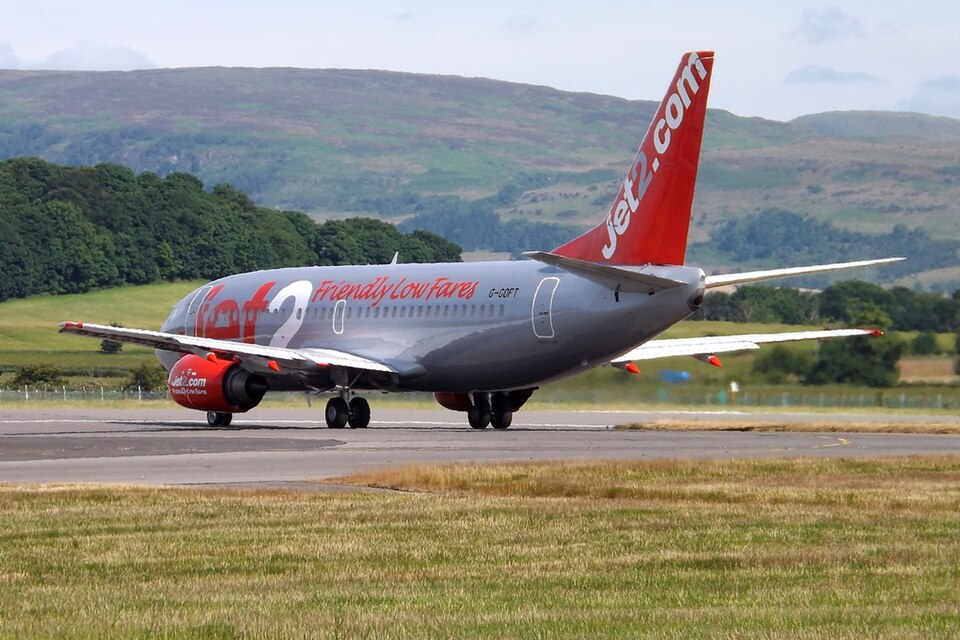
History of the Flight
On 3 September 2014, a Boeing 737-36Q, registration G-GDFT, operated a commercial passenger flight from Ibiza Airport, Spain, to East Midlands Airport, UK, with 152 passengers and five crew members. At 1908 hrs, while descending near reporting point AVANT, the commander noticed the public address system had failed. Soon after, multiple system malfunctions appeared: left equipment cooling fan failure, radio fault, weather radar loss, autobrake inoperative, and loss of power to the standby attitude indicator and standby compass. Additionally, terrain indications, reference speeds, engine fuel flow, and N1 rpm disappeared from the pilots' displays.
The crew diagnosed a battery busbar problem but found no applicable Non-normal Checklist in the Quick Reaction Handbook. They noted the battery alone could power systems for about 30 minutes. The commander requested expedited routing to East Midlands Airport via ATC. The cabin interphone was inoperative, so the co-pilot opened the flight deck door to brief the Senior Cabin Crew Member (SCCM). The SCCM informed other cabin crew, but the PA system and a loud hailer unit with a broken volume control hampered communication. The commander later elected to declare a PAN due to uncertainty about battery discharge.
During the approach, the landing gear position indicators failed, prompting a low pass over the runway at 1,000 ft for visual inspection. ATC confirmed the nose gear appeared down, but the main gear was unclear. The crew used observation ports in the cabin floor to confirm all gear extended. The aircraft landed without further incident at 1954 hrs and began taxiing to its stand.
The Evacuation
As the aircraft neared the stand, cabin crew near the forward exits smelled smoke. The SCCM attempted to alert the flight deck via the normal entry code but received no response; she then used the emergency code and knocked. The pilots also detected a strong acrid smell. The co-pilot opened the door, and smoke intensified. The SCCM reported fire alarms and smoke, prompting the commander to declare a MAYDAY and order an evacuation.
The SCCM deployed the forward left (1L) slide and supervised passengers. The forward right (1R) slide twisted and became unusable, so the crew guarded that exit. The aft left (L2) crew member initially disarmed the door for normal disembarkation but, seeing passengers sliding off the left wing, re-armed and deployed the slide. The Airport Fire and Rescue Service, already alerted to the electrical problem, arrived immediately and assisted passengers, later finding a smoke layer throughout the cabin but no heat source.
Findings and Cause
The battery bus failure was caused by one or more loose R1 relay terminals, leading to a break in electrical continuity. The acrid smoke in the cabin and cockpit was a direct result of the relay failure. The loss of the air cycle machine cooling fans caused dust and oil residue to burn off hot metal duct surfaces, and the resulting fumes entered the cabin, prompting the evacuation.