History of the Flight
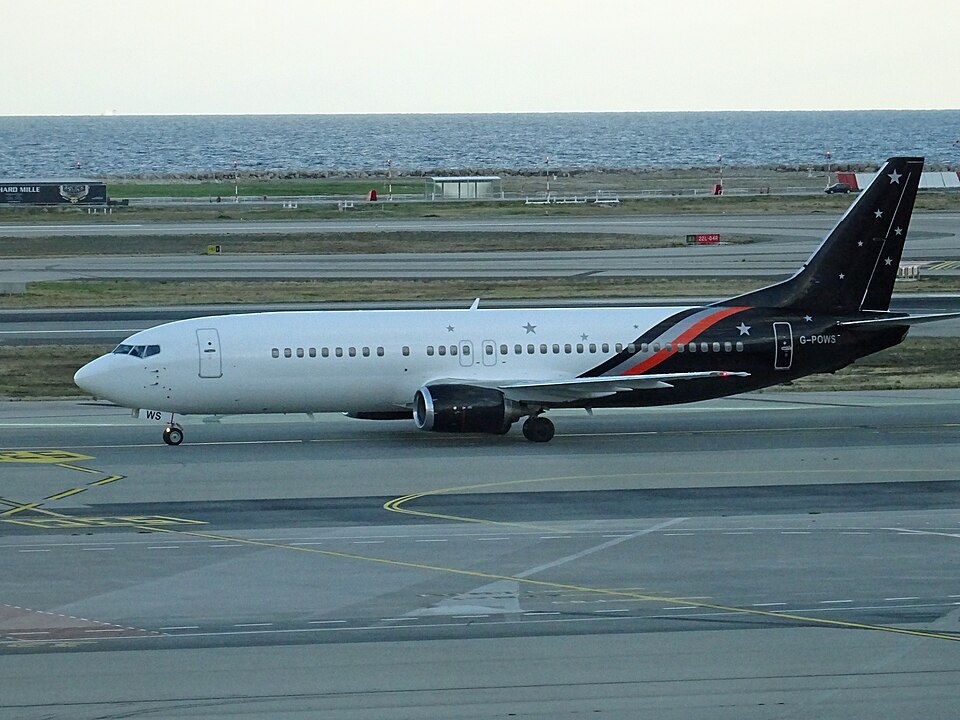
On 18 June 2021, at approximately 1300 UTC, a Boeing 737-436 (G-POWS) operated by a cargo airline was involved in a serious incident at London Southend Airport. The crew consisted of two pilots; no passengers were on board. The aircraft had previously completed an uneventful flight from Leipzig, Germany, to Southend. The commander, who was the pilot flying, reported a low level of distraction due to a perceived risk of a reoccurring Electronic Horizontal Situation Indicator (EHSI) issue that had been resolved before departure.
While taxiing after landing, the aircraft was cleared by ATC to vacate Runway 05 via Taxiway A, then taxi via A and Z to hold short of Runway 05 at B1 holding point. The commander had not taxied this route before. During a right turn from Taxiway Z onto Taxiway B, the right main landing gear left the paved surface, causing damage to taxiway infrastructure. The commander increased power in an attempt to return to the taxiway, but the aircraft lost momentum and came to a stop. ATC instructed the crew to hold position and wait for assistance. The aircraft was subsequently towed to a hangar; no damage was found, and it was released to service two days later. The lower portion of two taxiway edge lights and some cable ducting were damaged beyond repair, and a portion of the taxi edge was reinstated.
Personnel Information
Both the commander and co-pilot held valid licences and medical certificates. The commander held an Airline Transport Pilot’s Licence, was 63 years old, and had 9,800 flying hours, of which 4,900 were on type. The co-pilot’s details were not specified in the report.
Airport Information
London Southend Airport has a single runway, 05/23, with a length of 1,604 m and width of 36 m. The operator’s Operations Manual Part A (OMA) defines a narrow runway as any runway with a width less than 45 m. Taxiways Z and B both have a declared width of 15 m, though Taxiway B appears wider on ground charts due to its history of being previously used as a runway. The aircraft’s outer main gear wheel span is 6.4 m. The commander stated that he believed Taxiway B was wider than Taxiway Z based on both the ground charts and visual perception while taxiing.
Procedures and Manuals
The OMA does not require specific training for narrow runway or taxiway operations. The Boeing 737 Classic Flight Crew Training Manual (FCTM) advises pilots to consider displacing the aircraft to the far side before initiating a sharp turn from a wide to a narrow taxiway, but this guidance did not directly apply as the taxiways were of the same width. The operator’s briefing sheet for Southend Airport required crews to vacate Runway 05 at Taxiway B due to taxiway restrictions of 15 m to the south, but on this occasion ATC instructed the crew to vacate at Taxiway A.
Crew Resource Management
Both pilots reported working effectively together. The co-pilot stated he felt comfortable raising concerns but realized the aircraft was close to the grass too late.
Other Findings
The investigation identified shortcomings in the operator’s handling of the cockpit voice recorder; procedures have since been amended. The operator also updated its briefing sheet to raise awareness of taxiway excursion threats on narrow taxiways.