Introduction
On 4 June 2019, a Boeing 737-4Q8 freighter operated by an undisclosed commercial air transport company experienced a partial electrical failure during descent to Brussels National Airport, Belgium. The two pilots on board were uninjured, and the aircraft sustained no damage. The investigation was delegated by the Belgian Air Accident Investigation Unit to the UK Air Accidents Investigation Branch.
History of the Flight
The aircraft was en route from Oslo Gardermoen Airport, Norway, to Brussels with the commander in the right seat as pilot monitoring and the co-pilot in the left seat as pilot flying. The weather forecast included thunderstorms in the Brussels area, and the pilots observed thunderstorm activity near the airfield. They configured for an ILS approach to Runway 25R with an automated landing.
At 1846 hrs UTC, during descent, the pilots heard a loud electrical clunk. This was accompanied by loss of the primary electronic flight instrument screens on the left side, autopilot and autothrottle disconnection, and failure of both flight management computer control display units. Several caution and advisory warnings illuminated. The commander took over as pilot flying and flew manually. The co-pilot declared a PAN at 1848 hrs, later upgraded to MAYDAY.
Despite the failures, the standby instruments and the pilot flying’s EFIS remained operational. The pilots decided to continue to Brussels, expecting visual meteorological conditions. However, during the approach, they entered a heavy rain shower at about 300 ft agl, losing visual reference. The pilot flying initiated a go-around, estimating thrust manually. The aircraft initially seemed slow to accelerate but achieved a climb rate of 2,500-3,000 fpm. The crew orbited to the south-east while assessing the situation.
They reviewed the electrical failure and identified that the Transfer Bus No 1 Normal circuit breaker (C819) was open, but refrained from resetting it due to uncertain procedures. After weather improved, they executed a second visual approach and landed successfully at 1922 hrs. On touchdown, additional systems failed: left intercom, VHF 1 radio, and both engine N2 and EGT gauges.
Recorded Information
ATC primary radar and voice recordings were available, but flight data and cockpit voice recorders stopped when power was lost. Secondary radar returns were restored after the transponder was set to ATC 2 following the go-around. The aircraft's position and radio call timings were plotted, showing a period of about five minutes after ATC reported loss of Mode C data until the aircraft intercepted the localiser. The crew made numerous radio calls while being vectored and assessing failures.
Aircraft Information
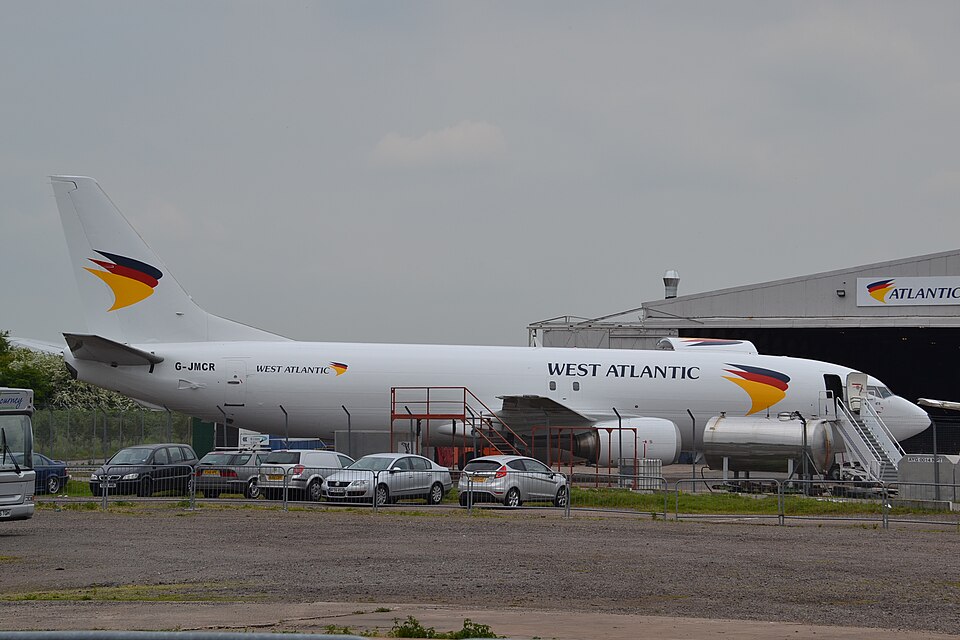
The aircraft, G-JMCR, was a Boeing 737-4Q8 built in 1992 and converted to a freighter in 2013. It had no deferred defects at the start of the flight. The electrical failure originated from a fault in the transfer relay, leading to loss of power to several electrical buses. The aircraft documentation was unclear regarding which aircraft could power cockpit instruments from a standby source, potentially affecting the pilots' understanding of the failure.
Probable Cause
The electrical failure was caused by a fault in the transfer relay which resulted in the loss of power to a number of electrical buses.