History of the Flight
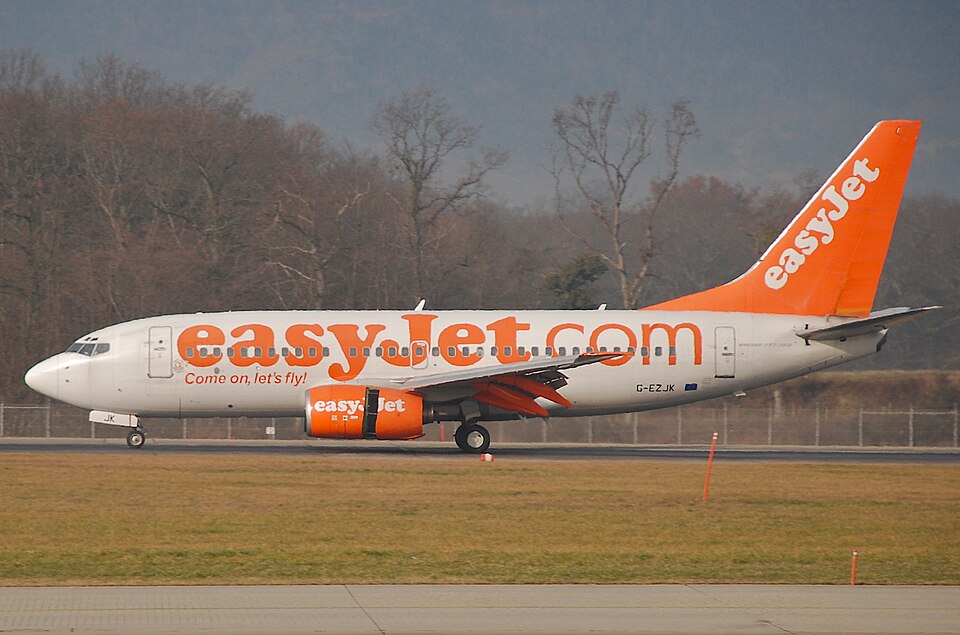
The operator was conducting a combined maintenance check and customer demonstration flight on a Boeing 737-73V, registration G-EZJK, ahead of its handover to another operator. The flight was loosely based on the Boeing new aircraft delivery test schedule, involving a series of checks agreed between the existing operator and the aircraft owner. The commander, who had previously flown the aircraft for a similar check, discussed with the maintenance crew chief that an adjustment to the elevator balance tab had been made. For the test flight, the crew were given extracts from the Aircraft Maintenance Manual (AMM) to conduct an in-flight elevator power-off test and identify asymmetrical flight control forces.
The aircraft departed at 1400 hrs with the commander as handling pilot. After takeoff, it climbed to FL410, where various checks were conducted. After about 45 minutes, it descended to FL150 for further checks. An APU bleed check was performed, and the aircraft was configured for a flight control manual reversion check. The operator's 'customer demonstration flight schedule' was used as the guiding reference for these checks, not the AMM extracts.
Before the manual reversion check, the hydraulic systems were isolated individually by placing the FLT CONTROL switches A and B to OFF and reinstating them to verify normal operation on single systems. Then, with the commander having released the controls, the co-pilot selected both FLT CONTROL switches to OFF, removing all hydraulic assistance. The aircraft suddenly pitched nose down. The commander pulled back on the control column with considerable force but could not prevent a sustained nose-down attitude of -2.81° and a descent rate of up to 3,100 fpm.
The commander decided to abandon the check but did not wish to re-engage the hydraulics while applying significant backpressure. He rolled the aircraft left to 91.2° and believed he released the controls before calling for the co-pilot to re-engage the switches. Cockpit voice recording indicated confusion, and the switches remained OFF. The commander rolled wings level, but the aircraft pitched 30° nose down, with descent rate peaking at 21,000 fpm and speed exceeding 440 kt. He retarded thrust and selected speed brakes, but spoilers were OFF per the test procedure. A PAN call was made; the aircraft recovered from the dive at about 5,600 ft after entering cloud. The pilots then selected the FLT CONTROL switches ON, and control forces returned to normal. The flight was abandoned; the crew kept speed below 250 kt and configured early for landing. The aircraft landed at Southend at 1606 hrs without further incident.
Engineering Investigation
The aircraft was at the end of its lease and had undergone maintenance for hand-back. The maintenance was sub-contracted via a complex structure involving multiple third-party companies. During a prior ferry flight, a 'shakedown' test using the same schedule included a manual reversion test to assess trim. That test indicated the aircraft was within but very close to AMM limits. The commander verbally requested adjustment but did not formally record it, resulting in the balance tabs being adjusted in the opposite sense needed. Consequently, the aircraft was significantly out of trim for the post-maintenance test flight, initiating the pitch-down during the manual reversion test.
The investigation is continuing, and a final report will be published by the AAIB.
Safety Actions
The operator suspended further check flights pending a review of maintenance procedures, check pilot procedures, and flight check schedules. The CAA reviewed Section 3, Tech 2, Part 10 of its Check Flight Handbook to clarify guidance on flying control checks.