Flight History
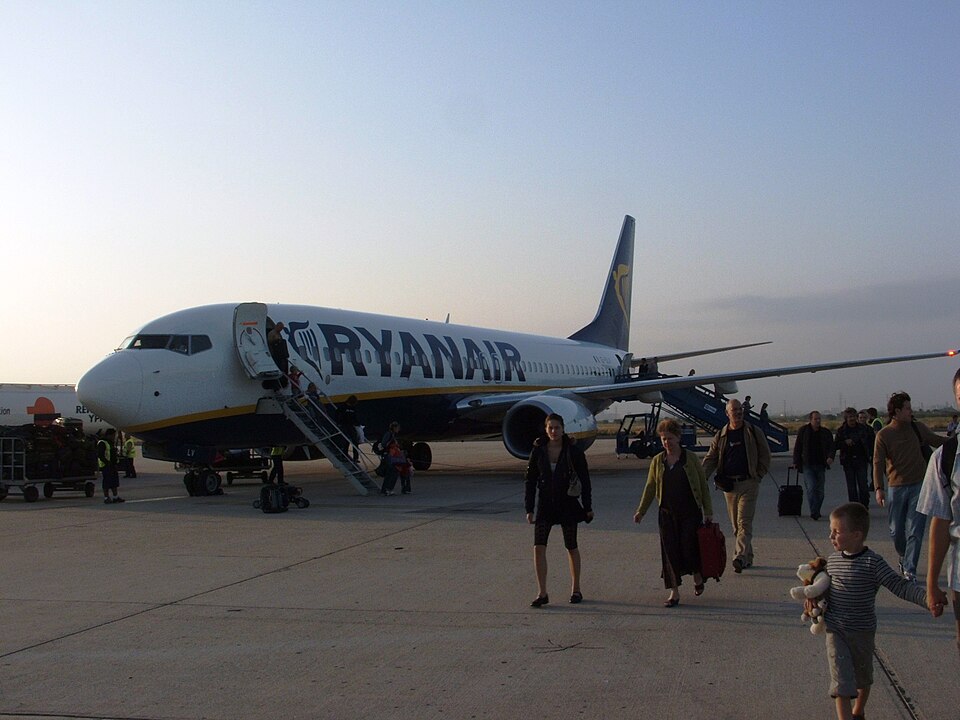
On 15 September 2017, a Boeing 737-800 (registration EI-DLV) operated a commercial passenger flight from London Stansted Airport. The aircraft, with 6 crew and 184 passengers, had completed two earlier sectors without incident. During pushback and taxi, no abnormalities were reported. As the aircraft lined up on Runway 22, the flight crew heard a noise similar to a nosewheel passing over a runway center light, but did not consider it unusual. During the takeoff roll, an aircraft holding near the runway saw a nosewheel depart EI-DLV and be blown off the runway. Air traffic control (ATC) informed the crew of EI-DLV, which was climbing. The crew diverted to East Midlands Airport, where they conducted an uneventful landing. The aircraft's left nosewheel was found to have separated.
Examination of the Aircraft
After landing at East Midlands, examination revealed that the left axle of the nose landing gear (NLG) inner cylinder had failed at the inboard journal location. The wheel bearing spacer remained in place and appeared in good condition. The separated nosewheel, axle, and wheel bearings were recovered from Stansted. No other anomalies were found.
Metallurgical Findings
The NLG cylinder underwent detailed metallurgical examination. Multiple crack initiation points were found on the lower circumference of the axle, with the dominant crack near the 6 o'clock position. Beneath the chrome plating, intergranular fracture consistent with stress corrosion cracking or hydrogen embrittlement was observed, followed by fatigue cracking. The chrome plating showed some surface cracking adjacent to the fracture. A Barkhausen inspection detected base metal heat damage around the 6 o'clock position on the failed journal and a smaller area on the intact right axle. Nital etch confirmed heat damage. The heat damage resulted from abusive grinding of the chrome plate during the part's last overhaul approximately three years earlier. The Maintenance and Repair Organisation that performed the overhaul has since introduced a new inspection for detecting abusive grinding.