History of the Flight
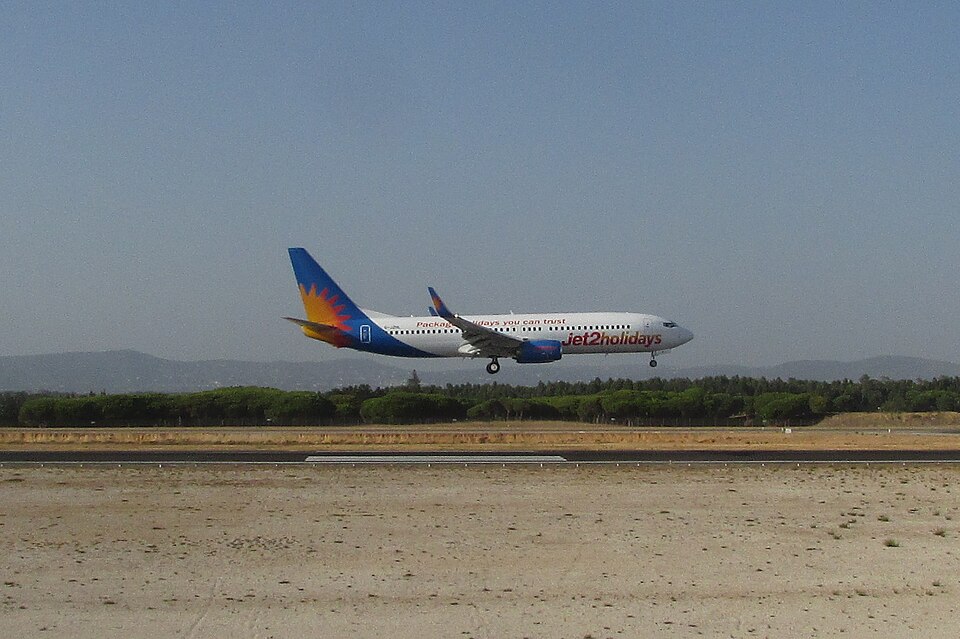
The crew, operating a return flight from London Stansted to Kuusamo, prepared for departure with no passengers on board. The co-pilot was the pilot flying. The aircraft was de-iced and the crew completed takeoff performance calculations for Runway 12 from intersection A, using derated thrust. The calculated N1 was 89.0%, with V1 93 kt, VR 122 kt, and V2 131 kt. The crew briefed for a pre-takeoff engine run-up at 70% N1 while holding brakes, required due to cold weather.
After lining up, the co-pilot advanced the thrust levers to 70% while applying toe brakes. He felt the aircraft start to slide and yaw, becoming startled by the movement and proximity of snowbanks. He released the brakes and focused on steering. The commander, distracted by a radio transmission from the Flight Information Service Officer asking to confirm the departure turn, did not check the thrust setting. The co-pilot omitted to press the TOGA button, leaving the thrust at 70% N1.
As the aircraft accelerated, both pilots sensed something was wrong but did not identify the issue. At VR, the co-pilot rotated, finding the aircraft heavy in pitch and climbing slowly at about 600 ft/min, with airspeed hovering around V2. At approximately 250 ft agl, the commander realized the power was insufficient and advanced the thrust levers to 89% N1. The aircraft then climbed normally. The remainder of the flight was uneventful.
Recorded Information
Flight data recorder (FDR) data confirmed that the target N1 for takeoff was 89%, but the engines remained at 70% N1 throughout the takeoff roll and initial climb. Brake pressure applied during the run-up was only 600-700 psi, insufficient to hold the aircraft as engines spooled up. The aircraft began moving after 12 seconds at 70% N1. Groundspeed at brake release was 6 kt. At 80 kt, acceleration was approximately 0.12g. V1 was reached 32 seconds after brake release with 1,510 m of runway remaining. The aircraft lifted off with 400 m of runway left. The thrust was corrected to 89% N1 about 1,800 m after lift-off, at 250 ft agl. No EGPWS warnings were recorded.
Subsequent Actions
The AAIB, investigating on behalf of the Safety Investigation Authority of Finland, noted that the incident highlights deficiencies in existing barriers to prevent takeoff performance errors. Two safety recommendations were made: one to develop technical specifications and certification standards for a technical solution to prevent such events, and another to improve detection and prompt reporting of takeoffs with compromised performance.