Introduction
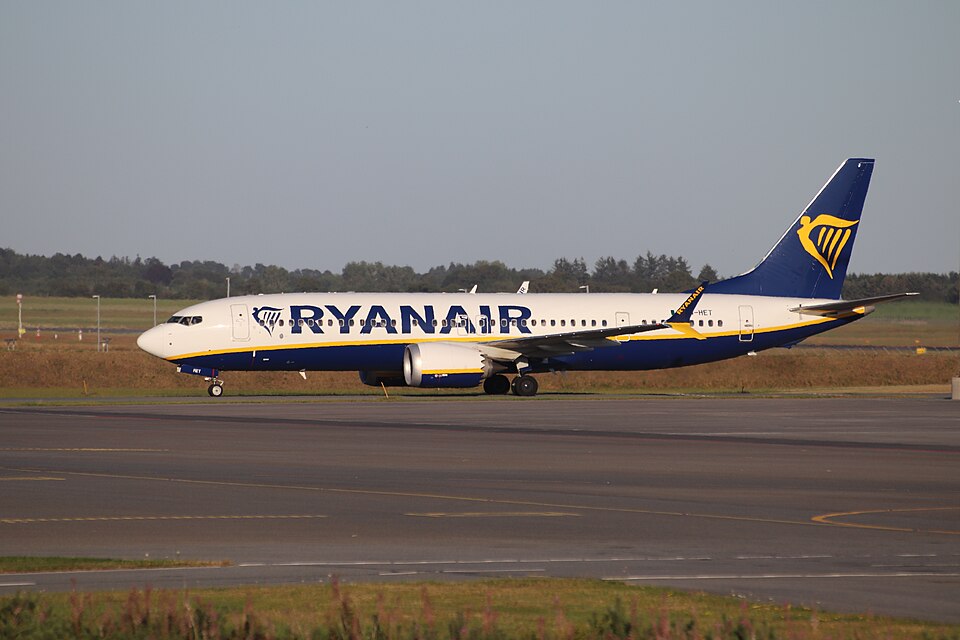
The UK Air Accidents Investigation Branch (AAIB) has published a bulletin on a serious incident involving a Boeing 737-8200 (registration EI-HET) that occurred on 4 December 2023 at London Stansted Airport. The aircraft was operating a scheduled commercial passenger flight. There were no injuries to the four crew or 122 passengers, and no damage to the aircraft.
Flight History
The crew, comprising a 46-year-old commander with 5,300 total flying hours (2,800 on type) as pilot flying (PF) and a co-pilot as pilot monitoring (PM), were on a return flight from Klagenfurt, Austria. The approach briefing planned a CAT I ILS to Runway 22. During the descent, air traffic control (ATC) issued several altitude and speed instructions. The aircraft was initially high on the continuous descent arrival, prompting ATC to vector it slightly away for extra track mileage. Speedbrakes were used intermittently. At about 12 nm, flaps were selected, and the localiser was captured at 9 nm. The glideslope was not yet captured. The commander set 100 ft in the mode control panel (MCP) altitude display and selected Level Change mode. Shortly after, at 1,940 ft amsl and 3.6 nm from touchdown, he initiated a go-around (GA).
Go-Around and Level Bust
The commander took manual control as the autopilot disengaged, following the flight directors (F/D) which commanded 15° nose-up. The autothrottle advanced to GA thrust. The copilot selected flaps 15 and raised the landing gear. During the GA, the missed approach altitude (MAA) was 3,000 ft amsl, but the MCP altitude display remained at 100 ft and was not reset. The aircraft climbed through 3,000 ft, prompting ATC to instruct "maintain 3,000 feet." The copilot acknowledged, but the climb continued to a maximum of 4,030 ft amsl at a rate of 4,100 fpm. Upon realising the level bust, the commander pitched the aircraft nose-down, making a nose-down trim input. During the descent, the copilot called out increasing speed. The commander extended speedbrakes and manually retarded thrust levers, but the autothrottle re-advanced them. The copilot then held the thrust levers at idle. The aircraft reached a maximum nose-down attitude of 17.7°, a descent rate of -8,880 fpm, and 295 KIAS with flaps 5 extended. The lowest altitude recorded was 2,078 ft amsl (1,740 ft agl). The enhanced ground proximity warning system (EGPWS) sounded "sink rate" and "pull up" warnings as the recovery began.
Recovery and Subsequent Approach
The commander pitched nose-up, recording a vertical acceleration of up to 1.89 g. The MCP altitude was set to 3,000 ft, and the autothrottle was disconnected. The aircraft stabilised in a shallow climb, then levelled at 3,000 ft. The autopilot and autothrottle were re-engaged, and the aircraft was radar vectored for an uneventful ILS and landing on Runway 22. The entire event occurred in instrument meteorological conditions (IMC).
Pilot Comments
The commander stated he noticed the aircraft was high on the approach but believed it could be managed. During the GA, he became fixated on the flight directors and did not check the MCP altitude display, expecting the F/Ds to command a level-off at 3,000 ft. He initially thought he had disconnected the autothrottle but later realised it was still engaged. The operator has since taken three safety actions, including informing pilots of the event and introducing a Discontinued Approach procedure.