History of the Flight
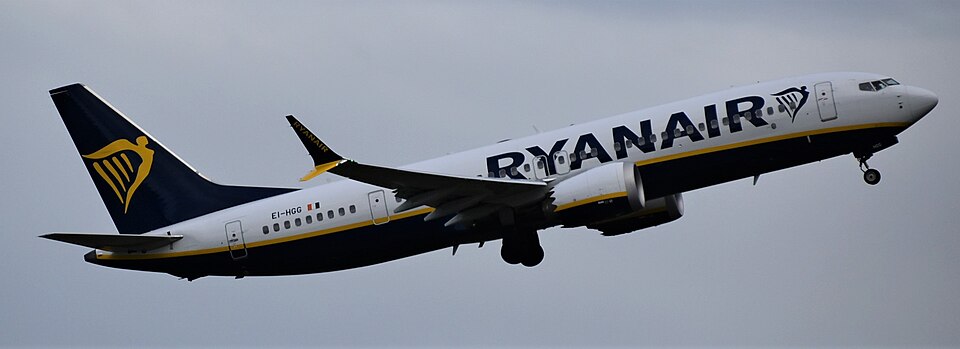
The aircraft, a Boeing 737-8200 (registration EI-HGG), was on a scheduled flight from Szczecin, Poland, to London Stansted Airport. The co-pilot was pilot flying (PF) for the ILS approach to Runway 04. At about 240 ft, the approach became unstable with IAS below VREF and the aircraft drifting above the glideslope. The commander called for a go-around at about 15 ft agl. The go-around was manually flown to 3,000 ft amsl in accordance with the published missed approach procedure. After leveling off, ATC asked the crew's intentions for a second approach. The commander asked the co-pilot if he wanted to fly the second approach, which he agreed to do. The co-pilot planned to set up the Flight Management Computer (FMC) for the next approach. The commander declared "i have control" and the co-pilot responded "you have control", but the co-pilot did not state that the autopilot (A/P) and autothrottle (A/T) were not engaged. Shortly after, while in a left turn, the commander noticed the aircraft descending about 550 ft. He took control and climbed back to 3,000 ft; total descent was 600 ft. The A/P and A/T were then engaged. The level bust was not noticed by the ATCO, who was coordinating the next departure. At the time, a VFR helicopter was inbound to Stansted outside controlled airspace at 2,000 ft amsl. The closest point of approach between the two aircraft was 1.7 nm and 300 ft. No Short Term Conflict Alert (STCA) was triggered.
Pilots' Comments
The commander stated that ATC did not pressure them, but in hindsight they should have asked for more time to complete the go-around and missed approach procedure, which would likely have ensured A/P and A/T engagement. He was familiar with the correct handover procedure and realized it should have been completed per the FCOM. The co-pilot said this was his first handover during manual flight and he did not know the precise callouts; he assumed the commander realized the aircraft was being hand-flown.
Organisational Information
The operator's FCOM specifies that during handover of control, the PF must state the AFDS and A/T status by reading the FMA left to right. For manual flight, an example call is: "You have control, autopilot and autothrottle disengaged, LNAV, VNAV, descending FL 100." After the go-around, the FCOM states that A/P and A/T can be engaged after flaps are retracted and the aircraft levels off at missed approach altitude. Following this incident, the operator amended the handover procedure to include a PM response "I have control" to positively confirm the transfer.
ATC and Recorded Data
NATS confirmed the event was a level bust (deviation >200 ft). The CVR was downloaded and provided information. Flight data monitoring showed nothing abnormal during the approach or go-around. The ATCO did not notice the short-duration level bust. The Vertical Displacement Advisory Tool (VDAT) is only applicable above 6,500 ft. No STCA activated between the two aircraft because defined parameters were not met.
Analysis
The decision to go around was appropriate given the instability. After the go-around, control was handed over without the correct procedure: the co-pilot did not know the precise calls and assumed the commander was aware the A/P and A/T were not engaged. The full go-around procedure, including flap retraction and potential A/P re-engagement, was not completed. The commander, as PF after handover, should have monitored the aircraft's flight instruments rather than the co-pilot's FMC setup. The event highlights the importance of adhering to procedures and maintaining a common mental model.
Conclusion
The aircraft descended 600 ft from its cleared altitude as a result of an incorrect procedure being used during the handover of control and the commander monitoring the co-pilot's actions, rather than the aircraft.
Safety Actions
In September 2024, the operator expanded the 'Handover of Control' guidance in their Boeing 737-NG and 737-8200 Flight Crew Operations Manual to include a PM response, "I have control", to positively confirm the transfer of aircraft control and PF responsibilities.