History of the Flight
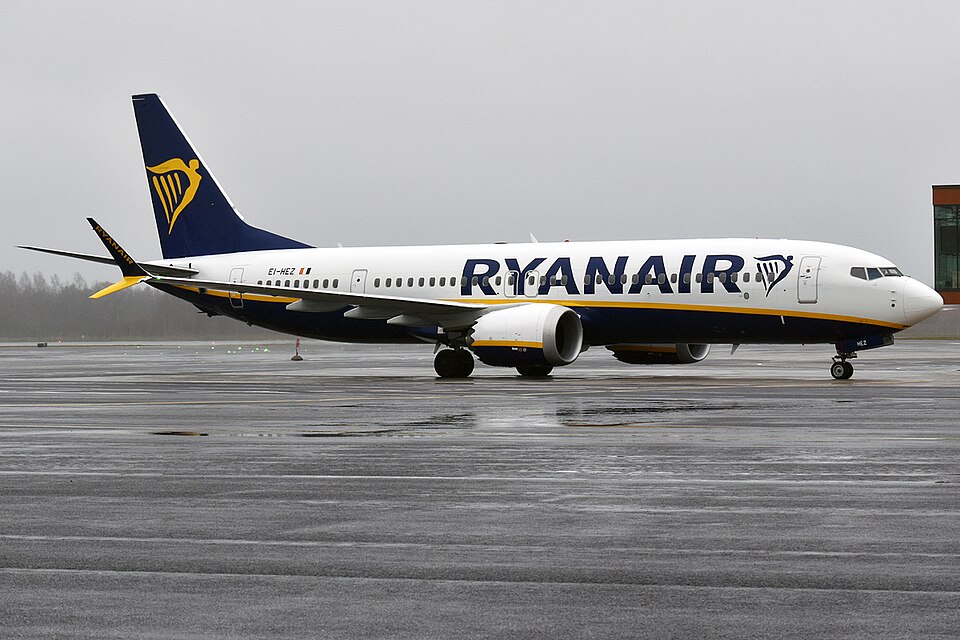
The crew of a Boeing 737-8200 MAX, registration EI-HEZ, reported for duty for a scheduled passenger flight from Venice Airport to Manchester Airport. Weather across Europe was good, and the crew accepted the standard operational flight plan fuel load, which included 637 kg of extra fuel. The aircraft was handed over by the off-going crew, the commander conducted an external inspection, and a normal refuel took place. Passengers were boarded, but dispatch was delayed by an hour due to a company computer system failure. During this time, the APU was running and a fuel imbalance developed between the main fuel tanks, which was corrected using the fuel balancing procedure from memory. The aircraft completed a normal pushback, engine start, and departure without further delay.
Shortly after reaching cruise altitude of FL380, the commander noted a fuel imbalance with the right main tank indicating 250 kg less than the left. The fuel balancing procedure was again conducted from memory, with normal fuel pump configuration restored after seven minutes of cross-feeding. After another 20 minutes, a fuel imbalance of 170 kg was noticed with the right main tank low. The commander actioned the fuel 'IMBAL' non-normal checklist, which directed them to the 'Fuel Leak Engine' non-normal checklist. The pilots noted an increasing fuel imbalance of about 100 kg every 10 minutes, indicating an engine fuel leak (the QRH stated that a change of 228 kg within 30 minutes or less should be classified as a leak). Cabin crew observed no signs of fuel spray from the engine or strut.
Based on the leak rate, continuing to the destination would use all additional fuel, so a diversion to Stansted Airport was initiated. The pilots considered the leak rate of 300 kg every 30 minutes exceeded the QRH value by only 70 kg, and decided not to shut down the affected engine, given good weather at Stansted and a short diversion of about 20 minutes. They stopped the checklist and monitored fuel consumption. A normal approach was conducted with the imbal alert illuminating, and the aircraft landed with a fuel imbalance of 586 kg. After exiting the runway, the aircraft stopped and was met by the fire service, who confirmed fuel leaking from the right engine. The aircraft was shut down and towed to the stand for passenger disembarkation.
Aircraft Fuel System
The Boeing 737-8200 MAX has three main fuel tanks: left wing, right wing, and centre. Each tank has two electrically driven fuel pumps that supply pressurised fuel to a manifold associated with each engine. Centre tank pumps produce higher pressure to ensure centre tank fuel is used first. Check valves ensure proper fuel flow direction. Fuel shutoff valves are located on the front spar outboard of each engine strut (spar fuel shutoff valve) and at the engine (engine fuel shutoff valve). The engine fuel manifolds are interconnected by a cross-feed valve, normally closed. If opened, fuel pressure can be provided to both engines from any operating pump.
Fuel imbalance limitations: The AFM and FCOM specify a maximum lateral fuel imbalance of 453 kg for taxi, takeoff, flight, or landing. The manufacturer states in the FCTM that this limitation is not for controllability but to maximise structural life of the airframe and landing gear. An amber imbal alert displays when imbalance exceeds 453 kg. Fuel cannot be transferred between wing tanks; balancing is done by burning fuel from the heavier side using the cross-feed valve. The QRH contains an 'IMBAL' non-normal checklist. The FCOM states that supplementary procedures may be performed from memory at the captain's discretion.
Fuel leak considerations: The FCTM states that a fuel leak should be considered any time an unexpected fuel quantity indication, FMC fuel message, or fuel imbalance is experienced. This is incorporated at the start of the QRH 'IMBAL' checklist and the FCOM 'Fuel Balancing' procedure. The most common fuel leak is between the front spar and the engine, assumed by the QRH 'Fuel Leak Engine' checklist, which instructs pilots to shut down the associated engine and close both fuel shutoff valves. The FCTM notes that the risk of fire increases when thrust reverser is used during landing with a fuel leak, as it can disperse fuel over a wider area.
Analysis
The commander noted a fuel imbalance during cruise and decided to balance fuel before an imbal alert. The pilots completed fuel balancing from memory, missing the prompt to consider a possible fuel leak. This delayed diagnosis until the second imbalance was noticed, about 35 minutes into the cruise. The FCOM encourages use of the fuel balancing procedure with good crew coordination to reduce errors, and using it as a checklist reduces omission likelihood. In this case, using the checklist would likely have allowed earlier diagnosis of the leak.
When the imbalance was addressed a second time, the commander actioned the QRH 'IMBAL' checklist although no imbal alert was displayed. A fuel leak was suspected, leading to the 'Fuel Leak Engine' checklist. The pilots confirmed a leak but decided not to continue with the checklist to shut down the affected engine, considering the leak rate only marginally above the QRH trigger value. Advice in the FCTM was not part of their decision-making. Thrust reversers were used for about six seconds on landing with fuel still leaking, dispersing fuel vapour and increasing fire risk.
Conclusion
In completing fuel balancing from memory, the pilots did not consider the possibility of a fuel leak, delaying diagnosis. Once the leak was confirmed, they decided not to fully complete the non-normal checklist, which directed them to shut down the affected engine. The subsequent use of thrust reverse on landing increased the potential risk of fire due to disbursement of fuel vapour around hot parts of the engine.