Introduction
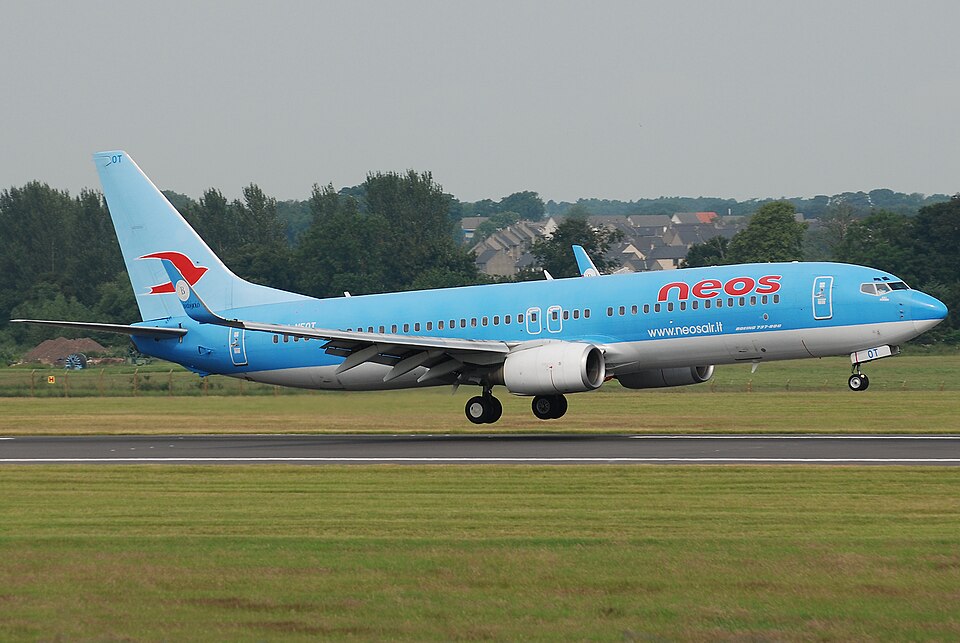
On 1 June 2019, a Boeing 737-86N (registration I-NEOT) operating a commercial passenger flight experienced a serious incident during an approach to Runway 27 at Bristol Airport. The aircraft descended below the approach path and was instructed to go around. After initially climbing, it then descended for over 30 seconds, reaching a minimum radio altitude of 457 ft. The crew and tower controller recognised the deviation and corrected the flight path. The aircraft subsequently completed a second approach without further incident.
History of the Flight
The flight departed Verona Villafranca Airport at 1135 hrs UTC. At 1313 hrs, the crew contacted Bristol Approach radar. They were advised of 33 nm to touchdown and expected an RNAV (GNSS) approach to Runway 27. The controller offered a shorter routing (about 23 nm track mileage), which the crew accepted. The aircraft was at FL100 and 280 kt CAS. During descent, the crew set QNH 1019 hPa, deployed speed brakes, and increased selected airspeed to 300 kt. At 4,715 ft with a vertical speed of -3,000 ft/min, CAS reached 303 kt before decreasing.
The controller vectored the aircraft direct to the intermediate fix ELROV, 9.8 nm from the threshold. The procedure limited speed to 210 kt with an expected altitude of 2,500 ft or above. The aircraft crossed ELROV at 3,276 ft and 271 kt CAS. Approximately 11 nm from the airport, the crew attempted to engage VNAV mode, but it would not remain engaged and switched to LVL CHG. The aircraft descended along the approach path in LVL CHG with idle thrust, about 250 ft below the designated path and significantly above stabilised approach speed. The Mode Control Panel (MCP) altitude remained set at the approach minimum of 1,000 ft.
The Go-Around
As the aircraft approached 1,000 ft, the autopilot/flight director entered Altitude Acquire mode. The rate of descent decreased, but the aircraft remained below the designated path. The tower controller, alerted by an assistant, considered the aircraft's position and instructed a go-around when the aircraft was at 1,071 ft (675 ft radio altitude) and 151 kt CAS. The crew acknowledged.
The pilot flying pressed the TOGA button and requested flap retraction. The autopilot disconnected, and the flight director commanded a pitch-up. The aircraft initially climbed, reaching 1,302 ft. However, the MCP altitude remained at 1,000 ft, so the flight director commanded Altitude Acquire and the aircraft began to descend. The crew then reselected the correct go-around altitude of 3,000 ft, but this caused the flight director to enter Vertical Speed mode, which maintained the existing descent rate. The aircraft descended for 32 seconds, reaching a minimum of 1,047 ft (457 ft radio altitude). The crew realised the aircraft was not climbing and adjusted attitude to climb. Simultaneously, the tower controller instructed a climb to 3,000 ft, which was acknowledged. The aircraft returned to a normal climb.
Aftermath
ATC provided radar vectors for a second approach, which was uneventful. No injuries or aircraft damage occurred. The operator took two safety actions: using the incident in recurrent ground school to highlight risks of rushed and unstable approaches, and continuing to improve flight data monitoring to identify similar approaches more rapidly.