History of the Flight
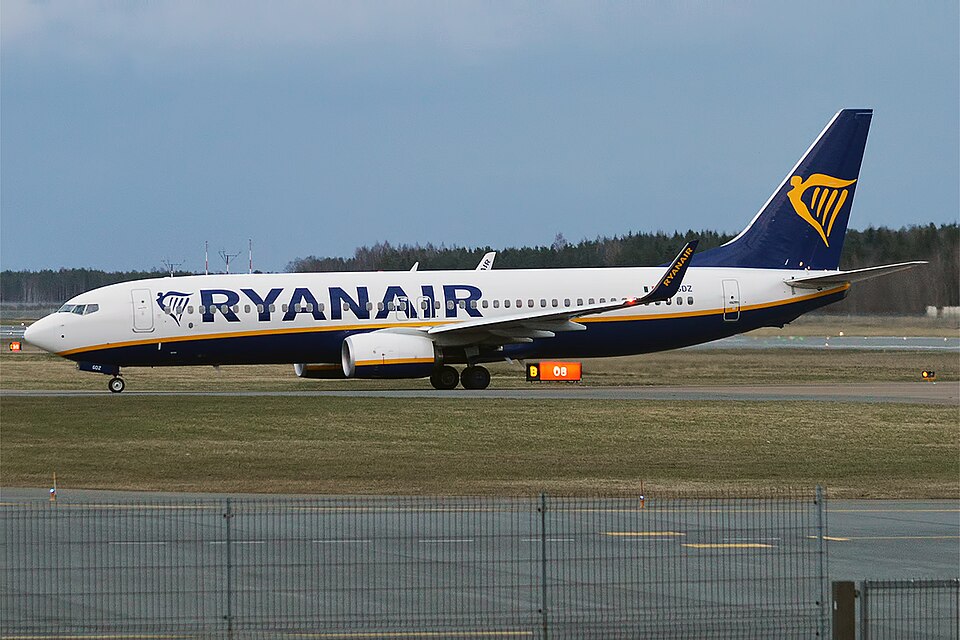
On 30 April 2018, a Boeing 737-8AS (registration EI-GDZ) was parked on Stand 43L at London Stansted Airport. The aircraft had missed an initial Calculated Take Off Time (CTOT) of 0845 hrs and was allocated a new CTOT of 1005 hrs. The crew requested a “push and hold” procedure, which was granted by the ground controller, who instructed to “push across to the east line, abeam stand 50r. do not start engines”. These instructions were relayed to the groundcrew. During the pushback, ATC provided a new CTOT very close to the present time; the crew informed the groundcrew and indicated they would start engines after the pushback. As the pushback neared its end, the flight crew felt the tug stop abruptly. The commander asked the groundcrew if everything was alright, and they responded that the aircraft had been pushed too close to the blast fence and they intended to pull it forward. The Senior Cabin Crew member called the flight deck, reporting that she and the cabin crew seated at the rear felt the tail had struck something. The commander consulted the groundcrew, who initially thought it had not, but engineering was contacted. An inspection revealed damage to the trailing edge of the left elevator. The commander informed the ground controller of the collision. The Fire Service attended and, after inspection, determined no immediate danger to the aircraft or passengers, a finding confirmed by the engineer. The aircraft was towed to Stand 50L and passengers disembarked via air stairs.
Parking Area
The aircraft was parked on Stand C43L with the headset operator positioned on the right side, in communication with the flight deck and the tug driver. The weather was described as poor visibility with strong winds, heavy rain, and standing water that reflected airport lights, making ground markings difficult to see.
Recorded Information
CCTV footage showed the aircraft being pushed back, moving slightly from side to side as the tug driver attempted to locate and follow the taxi line. When the tail contacted the blast fence, the tug stopped, reversed a short distance, and then became stationary.
Pushback Ground Crew
The operator reported that the tug driver highlighted difficulty identifying the taxiway line marking due to surface water, which led to his loss of bearings. He stated he did not feel the impact from his position in the tug and was unaware of the collision. The headset operator, still in training and being assessed by the tug driver but operating alone, was unsure of the term ‘abeam’ and believed it referred to the pilot’s window position. He thought this would provide sufficient clearance behind the aircraft from the blast fence and did not attempt to stop the pushback. After the incident, he advised the tug driver of the possible strike, and the tug driver pulled the aircraft forward.
Discussion
The clearance was to push back to abeam Stand 50R. The headset operator believed this meant aligning the pilot’s window with the stand. The pushback continued until the elevator struck the blast fence; the relative positions of the pilot’s window and the stand were not determined. Poor weather, lighting, and unclear taxi lines forced the tug driver to focus entirely on his task, and his restricted viewpoint from the nose of the aircraft prevented him from monitoring the headset operator’s actions or the tail’s proximity to the blast fence.