Incident Overview
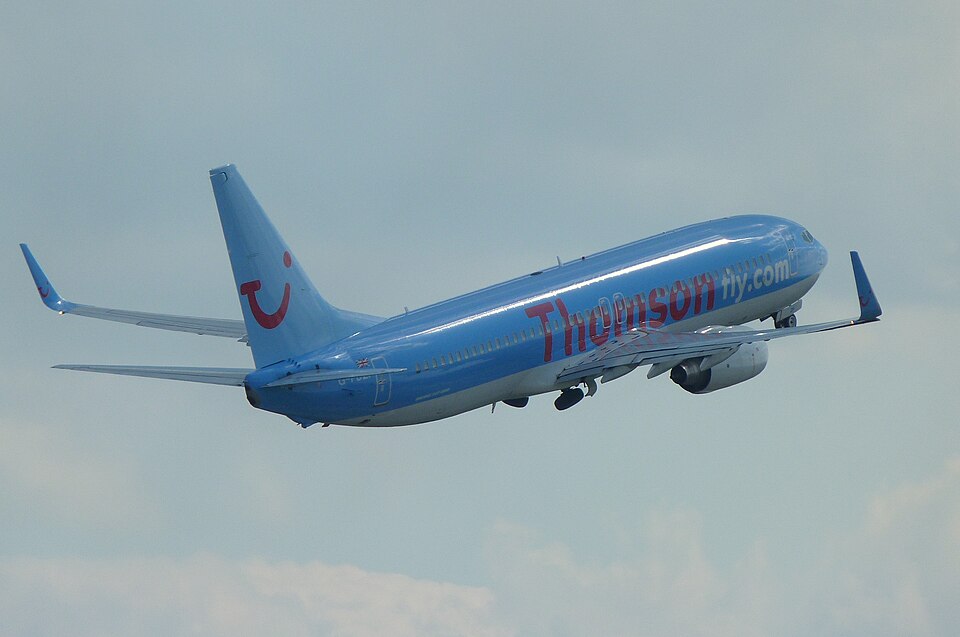
On 11 September 2021, a Boeing 737-8K5 (registration G-FDZF) operated a passenger flight from Palma de Mallorca to Aberdeen Airport. During a manually flown go-around initiated at 2,250 ft amsl, the aircraft initially climbed but began to descend just before reaching the cleared altitude of 3,000 ft amsl. The descent lasted 57 seconds, reaching a minimum altitude of 1,780 ft amsl (1,565 ft agl) with a peak rate of descent of 3,100 fpm. The airspeed accelerated to 286 kt against a selected speed of 200 kt. The crew corrected the flightpath and re-established the climb. The aircraft landed without further incident after a second approach.
Flight History
The flight had departed Palma at 1047 hrs with 67 passengers and 6 crew. At 1230 hrs, the crew contacted Aberdeen Radar for a CAT I ILS approach to Runway 34. At 1235 hrs, ATC advised a possible discontinuation due to a search and rescue helicopter. The aircraft was established on the localiser and glideslope at 3,000 ft amsl with gear down and flap 15. At 2,600 ft amsl, ATC instructed a break-off, climb to 3,000 ft, and turn left onto 270°. The autopilot was disengaged; autothrottle remained engaged and increased thrust to 97% N1. The aircraft climbed and turned. As it neared 3,000 ft amsl, it began to descend. ATC issued further headings. The tower controller noted the descent and alerted the radar controller, who instructed the crew to climb. The crew began pitching up at the same time, recovering the aircraft. The autopilot was re-engaged after passing 3,000 ft amsl. The entire event occurred in IMC.
Recorded Data
Cockpit Voice Recorder data was overwritten. Flight Data Monitoring (FDM) data showed the sequence: Area A – autopilot disconnect, thrust increase, gear retraction, climb. Area B – as altitude approached 3,000 ft, autothrottle reduced power, pitch decreased, flaps retracted (15 to 5 to 1 to up), and the aircraft descended. Area C – lowest altitude (1,780 ft) and peak airspeed (286 kt) recorded; climb initiated concurrent with ATC instruction. Area D – autopilot re-engagement and stabilisation. The Terrain Awareness and Warning System did not activate.
Analysis of Illusion
The AAIB considered somatogravic illusion, where rapid acceleration in IMC can create a false sensation of pitching up. However, analysis of control column force sensors showed nose-down forces during the initial go-around were likely due to the aircraft being out of trim, not pilot input. No abnormal nose-down forces were recorded during the unintended descent.
Aircraft Information
The Boeing 737-800 uses an Autopilot and Flight Director System (AFDS) and autothrottle. The go-around mode is engaged via TO/GA switches; this was a single autopilot approach, so automatic go-around was not available.
Post-Incident Actions
Aberdeen ATC changed procedures for broken-off approaches. The aircraft manufacturer issued guidance on AFDS and autothrottle behaviour during go-arounds. The operator informed pilots, included extensive go-around training, reviewed pilot recency, and introduced additional restrictions for periods of reduced flying.