Incident Overview
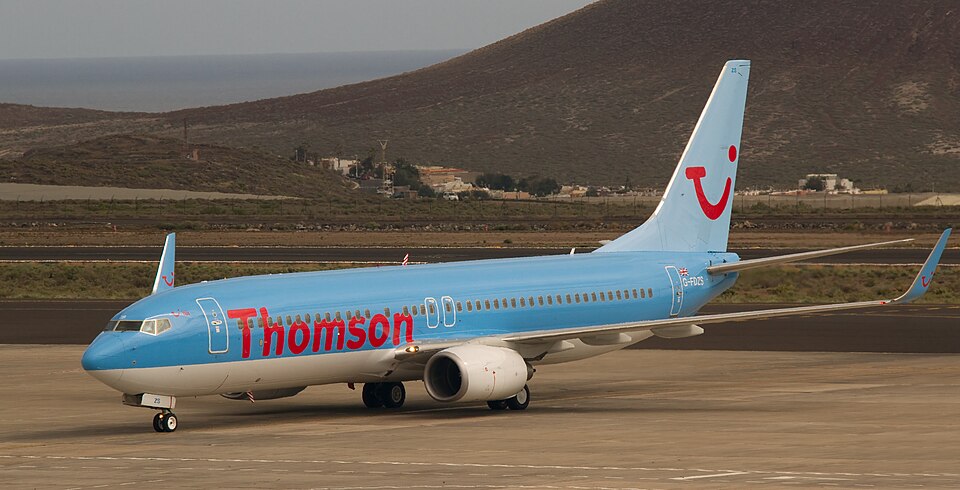
On 4 March 2024, a Boeing 737-8K5, registration G-FDZS, was preparing for a commercial passenger flight from Bristol Airport to Las Palmas, Gran Canaria. The aircraft carried six crew and 163 passengers. During the takeoff roll on Runway 09, the autothrottle (A/T) disconnected when the takeoff/go-around (TOGA) switch was pressed. This prevented the thrust levers from automatically advancing to the calculated N1 setting.
Flight Sequence
The aircraft departed the stand at 1041 hrs and taxied to Runway 09. After lining up, the pilot flying (PF) advanced the thrust levers to 40% N1 and then pressed TOGA. At that moment, the A/T disengaged with a warning. The pilot monitoring (PM) immediately re-engaged the A/T arm switch on the Mode Control Panel (MCP). However, the A/T entered an armed mode rather than controlling the thrust. The PF had manually set the thrust levers to a position corresponding to 84.5% N1, instead of the required 92.8% N1. Neither pilot detected the discrepancy, and the takeoff proceeded with insufficient thrust.
The aircraft rotated 260 m from the end of the runway and crossed the runway end at approximately 10 ft height. Both pilots recognized the proximity to the runway end. From 450 ft above airfield level, the crew increased engine power toward the takeoff setting, reaching it by about 900 ft. The flight to Las Palmas continued uneventfully, though the A/T remained unavailable despite several attempts to re-engage it.
Recorded Data
Flight data recorder (FDR) information confirmed the thrust setting was 84.5% N1 instead of 92.8% N1. The cockpit voice recorder (CVR) was not retained as it overwrites after two hours. Multipurpose Control and Display Unit (MCDU) fault data revealed 11 faults logged for the incident flight, five of which were uncommanded A/T disconnections. The first disconnection occurred at 1104 hrs as the aircraft began the takeoff roll. The fault record indicated the suspected cause as the rate monitor logic within A/T servo motor 1 (ASM 1). Additional faults generated at 90 kt related to the mis-set thrust.
Aircraft Information
The Boeing 737-800 is a twin-engine narrow-body aircraft. G-FDZS was manufactured in 2009 and fitted with 189 seats. The aircraft's A/T system uses servo motors to move thrust levers automatically. The ASM receives power from the flight control computer; a minimum voltage is required for motor operation. The uncommanded disconnect was likely due to low voltage supplied to the ASM, a known issue with the B737 A/T and the older revision of the ASM part installed on G-FDZS.
Operator Actions
The operator has implemented safety actions addressing uncommanded A/T disconnections at takeoff and enhanced monitoring through flight data monitoring (FDM). A retrospective analysis of takeoff performance at Bristol using peak longitudinal acceleration at 80 kt showed the incident takeoff far outside the normal distribution, highlighting the event's anomaly.