History of the Flight
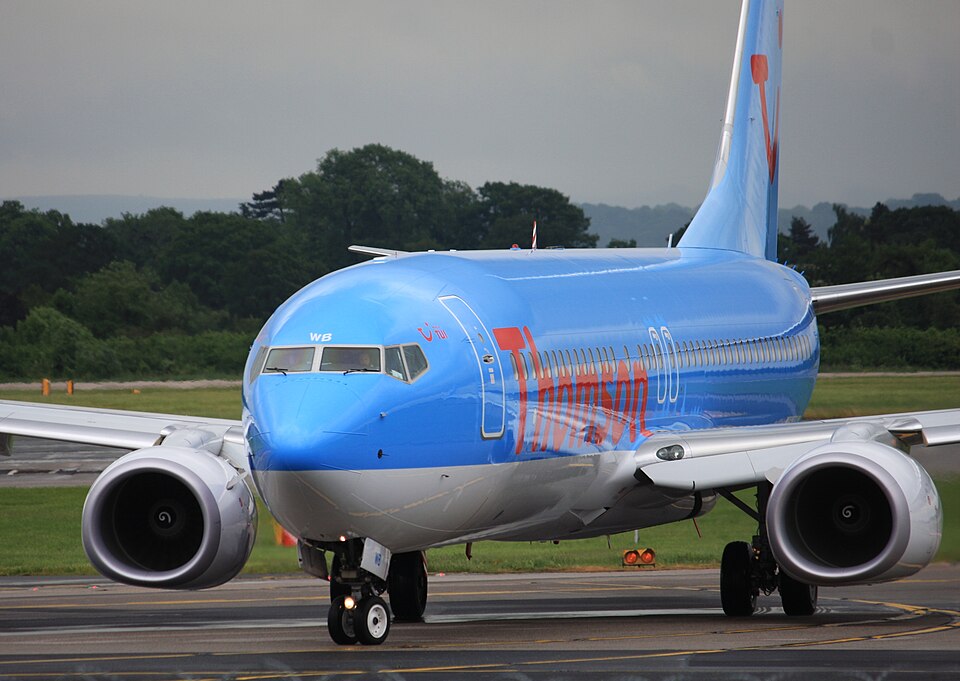
The aircraft, a Boeing 737-8K5 registered G-TAWB, was scheduled to operate a return flight to Lanzarote. Due to a delay earlier in the day, the expected departure time was moved to 1600 hrs. The aircraft arrived on Stand 9 at 1538 hrs. A team of four ramp agents led by a team leader was responsible for equipment positioning and baggage handling. A dispatcher, accompanied by a trainee dispatcher, was tasked with flight paperwork and load planning.
After passenger boarding was complete at 1622 hrs, the rear steps were removed. The dispatcher and trainee proceeded up the front steps to liaise with the flight crew and pass completed paperwork. At 1627 hrs, the trainee descended, leaving the dispatcher at the top of the steps to oversee the door closing procedure. Another dispatcher then began retracting the stabiliser legs from the front steps in preparation for removal.
Accident
At 1628 hrs, the Senior Cabin Crew Member (SCCM) began closing the front passenger door. At the same time, two ramp agents pushed the steps away from the aircraft. The SCCM fell into the gap between the steps and the aircraft and sustained serious injuries. The dispatcher at the top of the steps managed to hold onto the side rail and avoid falling.
Investigation Findings
The step removal occurred despite the aircraft door being open and a dispatcher still on the step platform. It was not clear who had responsibility for checking that the door was closed and steps were clear. The presence of a dispatcher at the bottom of the steps, with another stepping off, led the ramp staff to assume the door closure was complete. The process of door closure and step removal had been subject to a procedural workaround at East Midlands Airport and other UK airports where the ground handling company operated. This workaround had been in place for many years and had not been identified during audits.
Aftermath
Both the ground handling company and the aircraft operator took safety action to address the issues raised in the investigation. The aircraft and equipment were examined, and no faults were found. The ground handling company had previously committed to replacing all basic steps with models featuring interlocked safety barriers.