Incident Overview
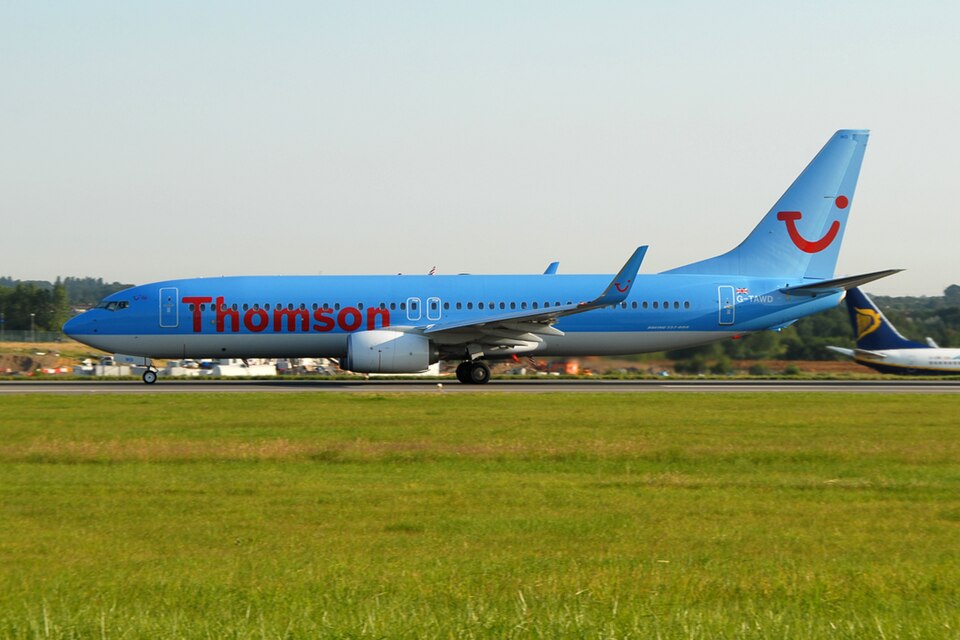
On 17 October 2023, a Boeing 737-8K5 (registration G-TAWD) operated a scheduled passenger flight from Manchester Airport to Kos Airport, Greece. During the climb, as the aircraft passed through FL130, the cabin altitude warning activated because both engine bleed air systems had been left off for departure, preventing pressurization. The crew selected both systems on and continued the climb. A pack caution later appeared, and the crew stopped the climb at FL200. After consulting the operator's maintenance control, the commander decided to return to Manchester. The cabin altitude warning remained active for 43 minutes. The crew did not don oxygen masks.
Pre-Flight Events
The flight was not originally scheduled to be operated by either pilot; both were on standby duty starting at 0300 hrs. The commander was notified at 0100 hrs via a smartphone roster app, and the co-pilot was called at 0230 hrs. Their report time was 0430 hrs. On a previous flight, the aircraft's air conditioning packs had been malfunctioning, and maintenance was performed the night before the incident flight. The co-pilot downloaded the flight plan at home and noted no open defects in the technical log. The commander arrived on time; the co-pilot was delayed by a motorway closure, so the commander took the role of pilot flying (PF) and met the co-pilot at the aircraft. The commander conducted walk-around checks and noted maintenance work on the right air conditioning pack. The co-pilot arrived during boarding at about 0500 hrs. The pilots knew each other previously; the commander emphasized correct preparation despite the desire for an on-time departure. The co-pilot did not feel pressured but expedited pre-flight duties.
Flight and Incident Sequence
Taxi and departure were normal. The commander (PF) manually flew until after-takeoff checks. The after-takeoff checklist includes verifying that bleed air switches are on. Both pilots recalled completing that checklist and visually confirming the bleed switches were on. As the aircraft passed approximately 15,000 ft amsl, the cabin altitude warning light and horn activated. The commander noticed both engine bleed switches were off and directed the co-pilot to turn them on. The commander stated that the problem seemed resolved quickly. The aircraft was leveled off at FL150. The crew did not action the QRH Cabin Altitude Checklist memory items, including immediate oxygen mask use, believing the situation was under control. The commander checked the cabin altitude indication on the overhead panel and saw it was about 2,000 ft, achieved within a couple of minutes of turning on the bleeds. The crew then read through the checklist and decided to continue the climb. During the subsequent climb, a master caution illuminated for a right pack caution. The crew stopped at FL200 and executed the QRH checklist for the right pack caution but could not recover it. After discussing with maintenance control, they agreed to return to Manchester. Since the aircraft was above maximum landing weight, they entered a hold with landing gear extended to burn fuel. The senior cabin crew member was briefed, and passengers were informed. After reducing weight, a normal approach and landing were made on Runway 05 at Manchester.
Recorded Data
Flight data recorder (FDR) information was downloaded and analyzed. The aircraft became airborne at 06:06:35 from Runway 05. At 06:11:50, while passing FL130, the cabin altitude exceeded 10,000 ft, activating the warning. At 06:12:11, the selected altitude was reduced to FL150; the aircraft leveled at FL150 at 06:12:47. At 06:13:03, engine bleed 1 and then bleed 2 were switched on — a delay of about 73 seconds after the warning. The selected altitude was then increased to FL280 at 06:16:46, but reduced to FL200 at 06:18:37 due to the pack caution. The right pack was switched off at 06:23:10. At 06:34:53, the aircraft began a 180° turn to return to Manchester. The cabin altitude descended below 10,000 ft at 06:35:09. Descent from FL200 began at 06:49:41. The aircraft entered a hold at FL90 at 07:11:19 and exited at 07:51:28. Touchdown occurred at 08:10:16 at a weight of 64,360 kg. The cabin altitude warning remained active until 06:53:47 — a duration of 43 minutes. Passenger oxygen masks did not deploy automatically, indicating cabin altitude remained below 14,000 ft. Cockpit voice recorder (CVR) data was not recovered.
Maintenance Background
Before the incident flight, maintenance was performed on the right air conditioning pack due to previous faults. The Fault Isolation Manual task required selecting bleed 1, bleed 2, and bleed APU switches off, and pack switches to auto. After testing, the pack switches were left off, and the engineer believed all other switches were returned to normal. However, the bleed switches remained off. A second engineer responsible for the departure did not detect this non-normal configuration.
Crew Actions and Decision
The crew did not use oxygen masks despite the cabin altitude warning. They considered the situation under control after the bleeds were turned on and the cabin altitude decreased. The commander decided not to follow memory items, deeming them disproportionate. After the pack failure, they consulted maintenance control and opted to return to Manchester. The flight was otherwise uneventful, with no injuries or damage reported.