History of the Flight
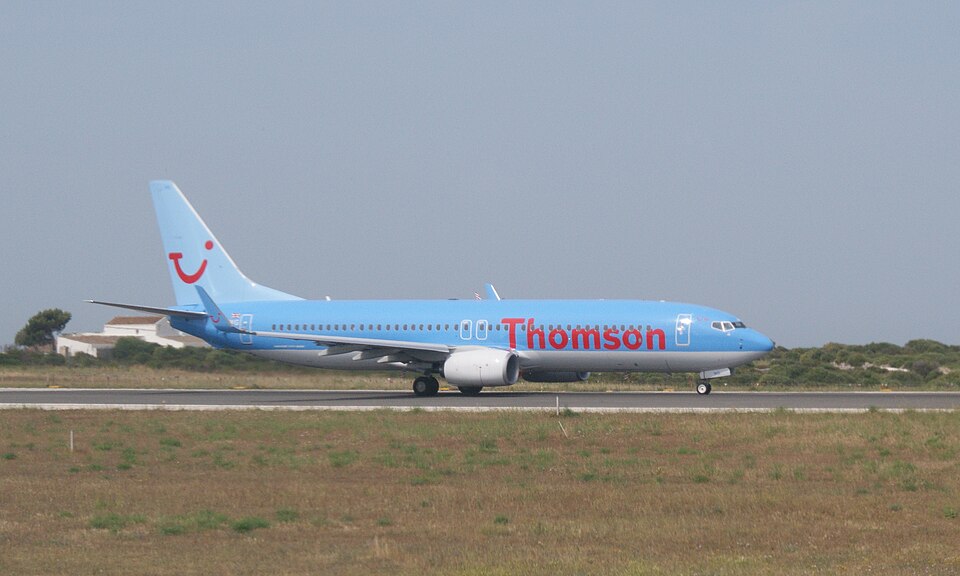
The aircraft, a Boeing 737-8K5 registered G-TAWG, operated a commercial passenger flight from Al Massira Airport (Morocco) to Manchester Airport. On 24 December 2019 at 0048 UTC, the aircraft landed on Runway 23R. The co-pilot was the pilot flying and handed control to the commander as the aircraft slowed to approximately 80 kt. At about 60 kt, the pilots observed an object passing at high speed on the right side along the runway edge. Air Traffic Control informed the pilots that the aircraft might have a tyre issue. The aircraft was slowed to 10 kt and vacated the runway onto a taxiway. The pilots reported no handling abnormalities except a slight judder when leaving the runway.
The Airport Fire and Rescue Service inspected the aircraft and informed the commander that the right outboard wheel (No 4) and tyre had completely detached, with significant damage to the brake pack. The aircraft was shut down, and after consulting with the operator's engineers, passengers were disembarked onto the taxiway and bused to the terminal. The aircraft was towed to the parking area for examination.
Debris Trail
Marks and debris on the runway indicated the wheel detached approximately 1,800 m from the threshold and traveled a further 700 m before coming to rest on grass to the right of Runway 23R, between Taxiway AF and AG. Metallic debris from the wheel hub, bearings, and brake pack was found along the runway.
Examination Findings
A detailed examination was conducted by the AAIB and a representative from the bearing manufacturer. The wheel hub showed severe damage: the inboard bearing cup had detached, and the hub area where it had been fitted was distorted into an elliptical shape. The brake pack rotors and stators were present but displaced, with the outer reaction plate and a portion of the torque tube detached. No hydraulic fluid leakage was evident.
The inboard bearing suffered extensive overheating, wear, and deformation; roller remains were smeared and welded to the cone. The outboard bearing was similarly damaged but to a lesser extent. Only 20% of the outboard and 50% of the inboard bearings were identifiable. Grease residue showed carbonization.
The wheel nut and washer remained in place on the axle, which was undamaged apart from minor scratches.
Maintenance History
The wheel assembly was overhauled on 11 November 2019, released to service on 14 November 2019, and fitted to G-TAWG on 25 November 2019. The maintenance work order noted replacement of the No 4 mainwheel assembly with application of a final torque of 150 ft-lbs using torque wrench #8007. The licensed engineer reported no abnormalities and confirmed proper bearing installation and greasing. The preload torque was set to 550 lbf-ft, and service torque to 150 lbf-ft, with minimal clockwise adjustment to align locking bolt holes.
Bearing Failure Analysis
The wheel separated as a result of a failure of the inboard wheel bearing, which led to failure of the outer bearing. The exact cause of the initial failure to the inboard bearing could not be determined.
Recorded Information
The Cockpit Voice Recorder and Flight Data Recorder were downloaded but contained no relevant information to help determine why the mainwheel separated.