History of the Flight
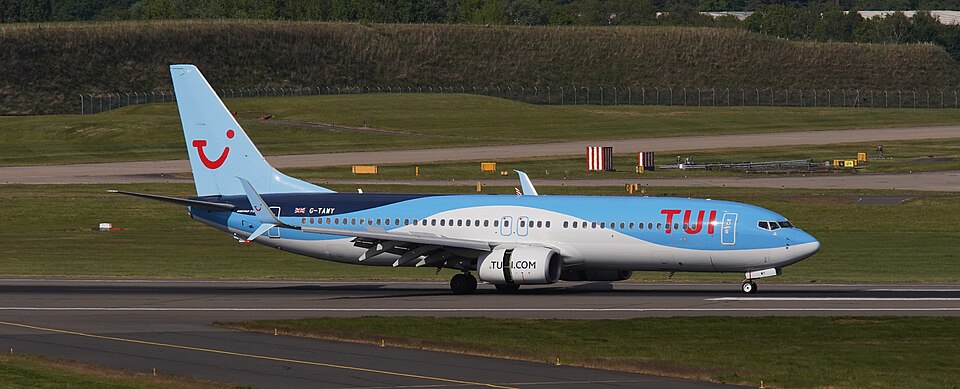
On 9 March 2022, a Boeing 737-8K5 (G-TAWY) operated a scheduled passenger flight from Manchester Airport to Fuerteventura as a line training sector for a new co-pilot. The co-pilot was the pilot flying. Weather included a surface wind from 170° at 13 kt, providing an 11 kt crosswind on Runway 23R.
The takeoff roll was normal until V1. After V1, the aircraft drifted slightly downwind. The co-pilot initiated rotation at VR. The commander described the initial rotation as “a bit quick but within the normal and safe range”. As pitch attitude reached approximately 9°, the rotation rate increased markedly. The commander attempted to reduce the rate but could not prevent the tail striking the runway. Both pilots felt a bump.
The crew continued the takeoff and climbed. The commander delayed landing gear retraction until after flaps were retracted. Cabin crew reported hearing “a very big bang”. The commander declared a PAN and returned to Manchester for an overweight landing. The approach and landing were uneventful, though the commander noted significant windshear prior to touchdown. The aircraft landed at 0921 hrs.
Damage
Inspection revealed minor damage to the tail skid (crushable cartridge) and paint damage to the aft drain mast. The tail skid shoe was worn but within limits.
Recorded Information
Flight data recorder (FDR) data showed pitch rate peaked at 7.1°/sec and maximum pitch attitude reached 13°. A left roll input sufficient to deploy left spoilers was made during rotation. The landing gear was retracted at 3,500 ft and 247 kt.
Co-pilot’s Training History
The co-pilot joined the operator in 2019. His training was interrupted by COVID-19 public health restrictions. He completed refresher training and base training in July 2021. His first two line training sectors (27 January 2022) noted a slightly slow rotation rate; subsequent sectors advised against stagnating rotation at 10°. The incident occurred on his fifth sector, with 15 hours 40 minutes on type.
Operator’s Comments
The operator stated that training complied with its policy, which required a bespoke package due to the pandemic. They acknowledged delays were not ideal but considered it when assessing training needs. The policy to continue with an experienced training captain from a long runway was deemed appropriate. The operator noted the risk of tail strikes in the B737-800 and re-emphasised caution for low-experience trainees in unsuitable conditions. Average rotation rates are monitored monthly.
Analysis and Conclusion
The trainee co-pilot rotated the aircraft too rapidly, causing the tail to strike the runway. Disjointed training due to public health restrictions likely made it harder to learn the correct technique. Attempts to correct earlier issues (slow rotation, stagnation) may have contributed. The crosswind might have added to workload.