History of the Flight
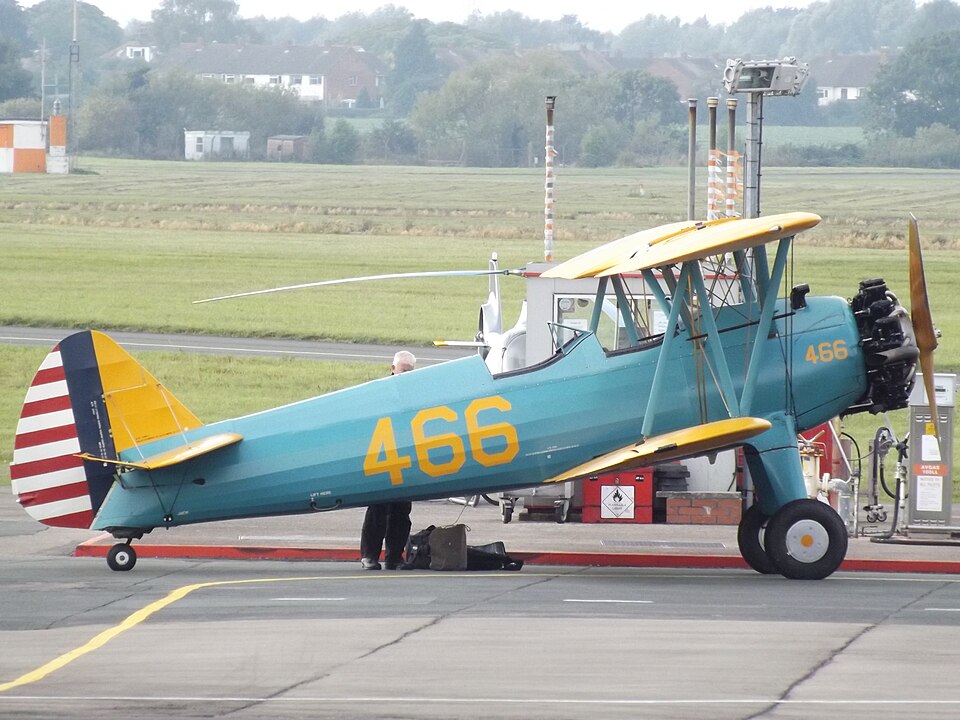
On 4 August 2024, at approximately 1025 UTC, a Boeing A75, registered G-PTBA, was on a private flight to Lundy Island to attend a fly-in event. The pilot flew a normal circuit for Runway 24 and performed a three-point landing on the left side of the runway. During the landing roll, the aircraft drifted left, and shortly after touchdown, the left main landing gear leg struck a white-painted rock placed alongside the runway as an edge marker. The impact caused the left main landing gear leg to fail and detach, which then struck the left lower wing. The aircraft then slewed left, off the runway, before coming to rest. The pilot and the single passenger were uninjured and vacated the aircraft normally.
Airfield Information
Lundy Island is located approximately 10 nautical miles from Hartland Point on the north Devon coast. Lundy Island Airstrip is about 400 meters long and 50 meters wide, oriented 060°/240° magnetic, with a rough grass surface. The runway edges are marked with white-painted rocks placed approximately every 10 meters.
Pilot's Comments
The pilot commented that he chose to land on the left side of the runway because it appeared smoother than the right side, a decision also made by several pilots who arrived after the accident. He noted that once in the three-point landing attitude, there were few forward or peripheral visual cues to ensure he remained tracking parallel to the runway edge markers during touchdown.
Analysis and Conclusion
During the landing, the pilot was unable to keep the aircraft tracking straight down the runway due to a loss of visual references after flaring into the three-point landing attitude. This prevented him from correcting a left drift present during touchdown, leading to the impact with the runway edge marker. The aircraft struck a runway edge marker during the landing roll, causing the left main landing gear leg to detach and resulting in a subsequent runway excursion.