History of the Flight
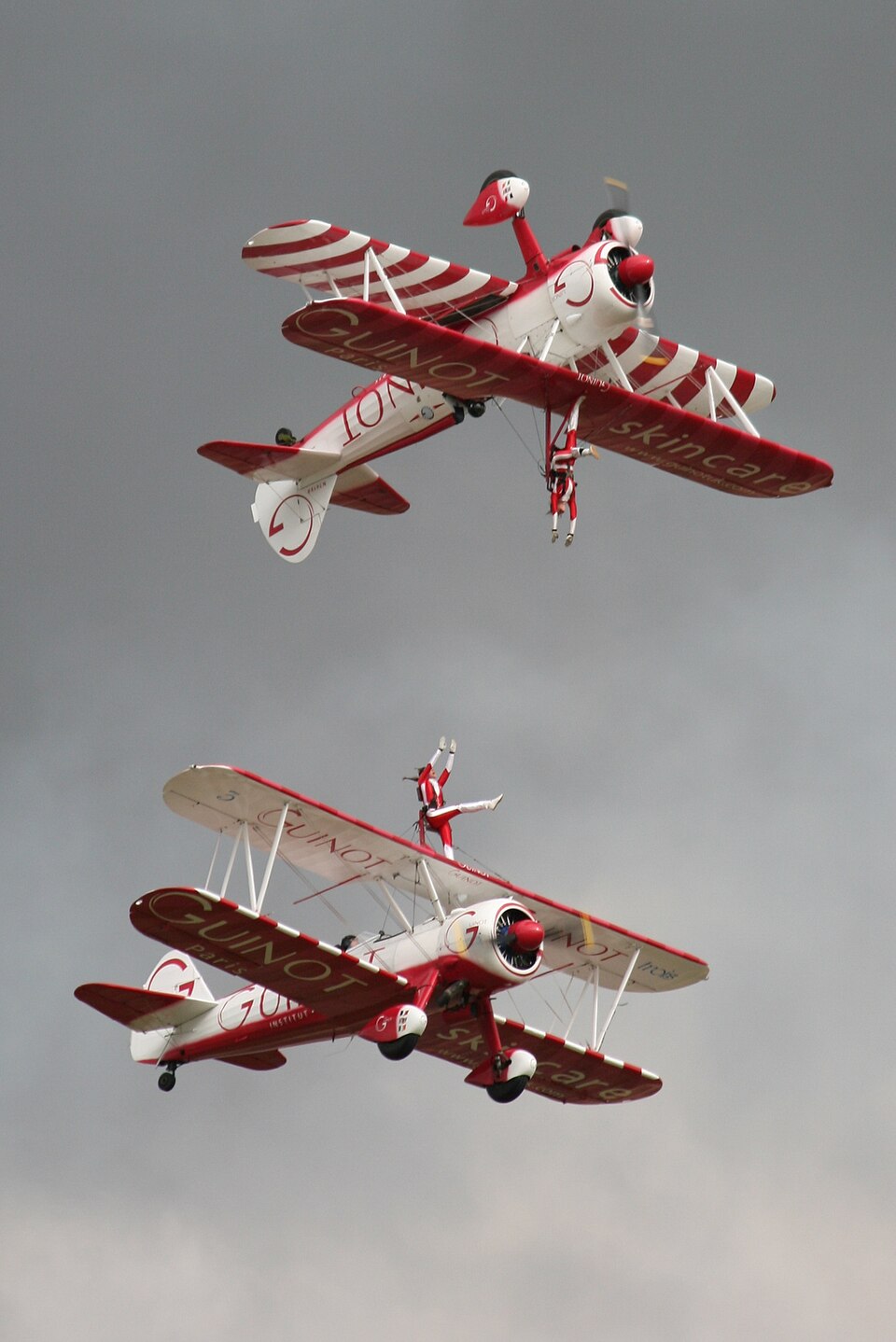
The aircraft was part of a two-aircraft display team at the Bournemouth Air Festival from 2 to 5 September 2021. On 4 September, the team conducted a pre-flight briefing covering the display sequence and emergency procedures, including ditching and egress. The pilot hand-turned the propeller to check for oil pooling and started the engine per the checklist; power checks were satisfactory.
At 1437 hrs, the two aircraft took off from Bournemouth Airport with wing walkers on the wings. N707TJ led. After switching to the display frequency, they received clearance to proceed to the display area. The pilot reported normal oil temperature and pressure.
The display commenced at 1443 hrs. During the first two manoeuvres, engine rpm was approximately 2,000 rpm with 32 inches manifold pressure. Positioning for the next manoeuvre, the pilot increased power but noticed the aircraft was not climbing and rpm was around 1,800 rpm. He confirmed the throttle was fully forward and checked fuel, magnetos, and carburettor icing controls—all correct. Engine temperature and pressure were normal.
Unable to achieve full power, the pilot left the display area to the west. He rocked the wings as a signal for the wing walker to dismount, which she did, strapping into the front cockpit. The pilot reported the engine problem on the display frequency and intended to return to Bournemouth Airport.
At about 600 ft amsl, the engine misfired. The pilot declared a PAN on Bournemouth Tower frequency and was cleared direct to any runway. The aircraft maintained height but could not climb. Avoiding built-up areas, the pilot flew west along the coast. He then noticed oil streaming from the engine cowling past the cockpit.
Recognizing the beach was unsuitable due to crowds and groynes, the pilot requested a steer to an open field. He was given a heading to Parkstone golf course but deemed it occupied and unsafe. Approaching Sandbanks and losing height, he set best glide speed (70 mph) and aimed for fields near Studland, but then the engine emitted a loud mechanical noise, vibrated violently, and lost significant power.
The pilot diverted to Poole Harbour entrance, identified a clear area between the breakwater and shoreline, and ditched. Video showed a stable descent with the propeller turning; the aircraft adopted a nose-high attitude and flipped over on contact. The pilot and wing walker exited their submerged cockpits and were rescued by a leisure craft. The wing walker had knocked her head during the accident and was examined by a paramedic; both were taken to hospital for checks and released that day. The time from initial engine issue to ditching was about four minutes. The ditching occurred 3 nm west of the display area.
Aircraft Information
N707TJ was a Boeing A75N1(PT17) Stearman, manufactured in 1940. It was a two-seat tandem biplane with fixed landing gear and tailwheel configuration. Originally powered by a 220 hp Continental engine, it was modified over the years, including installation of a 450 hp Pratt & Whitney R-985 engine and constant-speed propeller in 1974. The aircraft was rebuilt in 1988, receiving an overhauled R-985 engine, inverted flight modifications, and a larger 8 USG oil tank relocated beneath the baggage compartment. A wing walking rig and smoke system were added. The aircraft was imported to the UK in 1990.
Investigation Findings
The investigation determined that the engine lost power due to failure of the oil inlet pipe, most likely from fatigue, which prevented oil supply. This was precipitated by a fatigue failure of the metal strap supporting the pipe. The fatigue crack initiated at an area of mechanical damage on the strap surface, caused by overtightening of the retaining nut. Oil staining on the fuselage during the accident flight was consistent with oil escaping from the engine bay.
Emergency Response
The police control room was informed at 1452 hrs. The multi-agency control centre for the Air Festival coordinated the response. A RNLI vessel followed the aircraft and arrived shortly after the occupants were rescued by a leisure boat and transferred to a working boat. The Flight Display Director cancelled the remainder of the day's flying display.