Background
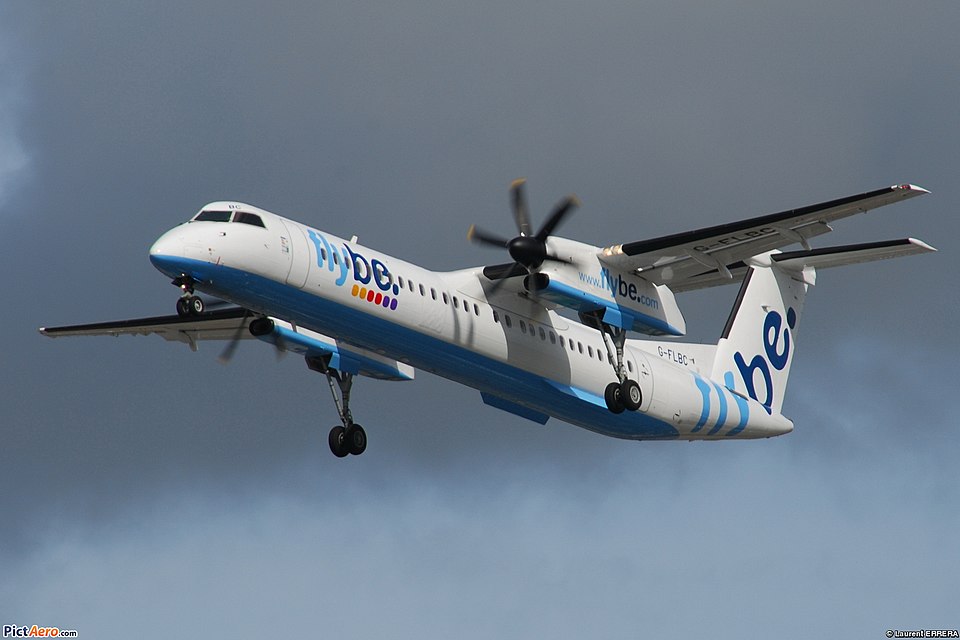
The aircraft, a Bombardier DHC-8-402 registered G-FLBC, was operating a scheduled commercial flight from Glasgow to Belfast on 16 December 2014. It was powered by two Pratt & Whitney Canada PW150A turboprop engines. The flight crew consisted of four members, with 76 passengers on board.
Accident Sequence
The flight departed Glasgow at 1812 hrs after a delay related to the nose landing gear oleo. At 1830 hrs, while climbing through FL151 to FL160, a triple warning chime sounded and the left engine oil pressure warning illuminated. The oil pressure gauge indicated zero then three dashes, suggesting a signal loss. The crew reduced power and initiated the quick reference handbook procedure for loss of oil pressure. As the left engine power lever was retarded, a judder was felt and a fire warning chime sounded briefly. The crew shut down the engine but did not discharge a fire bottle as the warning cleared.
Soon after, the fire warning returned and the left engine fire handle illuminated. The crew declared a MAYDAY and discharged the first fire bottle into the left engine nacelle. After 30 seconds, the warning persisted, so the second bottle was discharged. The fire warning remained for several minutes before clearing. In the cabin, passengers heard three loud "whooshing" noises and saw a large blue flame from the left engine exhaust, along with sparks behind the cowlings. A company first officer, seated in the cabin, relayed visual observations to the commander. The fire appeared to subside, and cabin crew confirmed no visible signs of fire about one minute after the flight deck indications cleared.
The aircraft diverted to Belfast Aldergrove Airport. Shortly before touchdown, the first officer saw possible signs of fire behind the left engine cowlings and informed the commander. The commander relayed this to ATC, but the message was misinterpreted as a fire in the cabin. The aircraft landed safely at 1847 hrs and stopped on the runway.
Evacuation
After landing, the fire crews observed a small fire through a vent grill on the left engine nacelle. ATC relayed that the left side was on fire, and the commander ordered an evacuation. The evacuation proceeded through the forward left door, rear left, and rear right exits. The forward right emergency exit remained closed. Some passengers were surprised by the height of the rear exits, which had no slides, and a few suffered minor cuts and bruises. An airport vehicle with an illuminated "passengers assemble here" sign and loudspeaker directed evacuees. All passengers were safely boarded on airport buses. One passenger was taken to hospital as a precaution due to anxiety and chest pains but was released later.
Investigation
The investigation found that the left engine oil pump assembly had failed due to fatigue cracking in an engine bearing key washer. A section of the washer broke free and migrated to the oil pump, causing mechanical failure. This disrupted oil flow, leading to engine lubrication failure, internal overheating, and fire. In response, the engine manufacturer issued an Alert Service Bulletin in December 2015 requiring specialist internal inspection of engines within a time span related to the key washer's service life. Additionally, the engine manual was revised to require replacement of the key washer upon access, and a Service Bulletin mandated replacement during engine shop visits. A new, improved key washer was also introduced.