History of the Flight
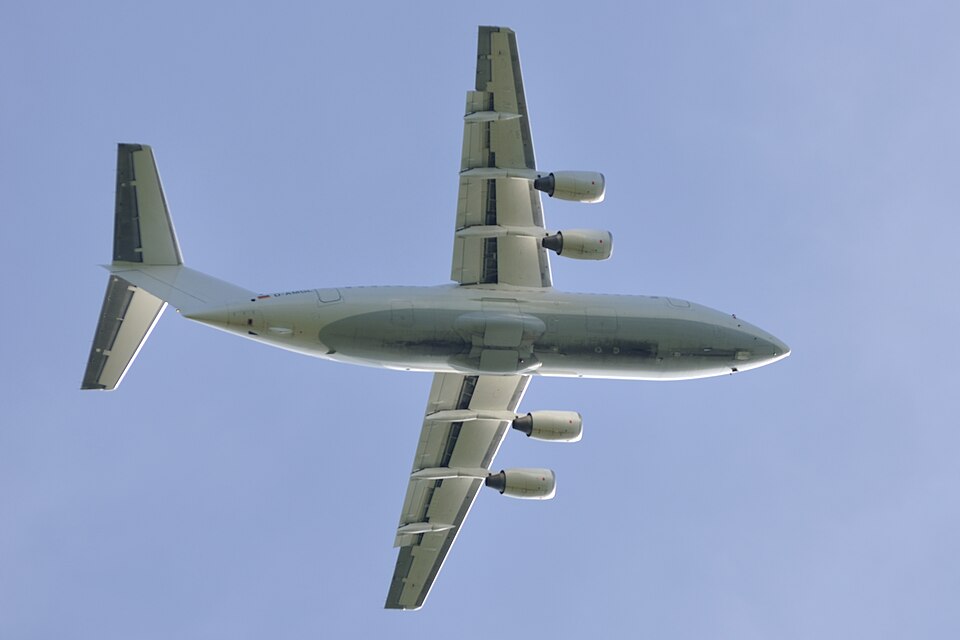
The aircraft, a British Aerospace 146-200 registered D-AMGL, was operating a scheduled passenger flight from Frankfurt to London City Airport (LCY) on 16 August 2015. The crew reported a normal flight including a steep approach to Runway 09. The commander described the touchdown as 'strongly positive with a slight bounce' before the aircraft settled. The landing roll and taxi to the stand were normal, with no warnings or indications of issues. After parking, ground crew informed the commander of fluid loss near the right main landing gear. The commander inspected the gear and withdrew the aircraft from service. CCTV recordings confirmed the touchdown location and the bounce.
Inspection at London City Airport
An oil stain was visible on the ground around the right main gear leg, with a piece of broken locking wire attached to the top of the shock-absorber. Bubbles of oil emanated from a hole where a bolt head was missing. Over the next 24 hours, the bubbling rate slowed. The shock-absorber was removed for examination. The right main gear door had a puncture from the inside, consistent with the missing bolt head being forced against it without penetrating the door structure.
Recorded Information
The Flight Data Recorder (FDR) and Cockpit Voice Recorder (CVR) were successfully replayed. The CVR contained no pertinent information. The FDR data showed corruption around touchdown, preventing precise descent rate assessment; however, preceding seconds indicated descent rates around 10 ft/sec. The Quick Access Recorder (QAR) had a blank compact flash card due to damaged electrical pins. The operator later found similar damage in two other fleet units and issued an internal bulletin. Detection of the QAR fault earlier could have allowed repair or replacement.
Aircraft Information
The BAe 146-200 has two main landing gear legs with shock-absorbers featuring a two-stage floating piston. The shock-absorber overhaul period is 15,000 landings (European operations) or 12 years. At the top of each shock-absorber are six bolts: two oil filler plugs and four attachment bolts with a life limit of 18,100 landings.
Shock-absorber Examination
Teardown examination at the manufacturer revealed that the three remaining attachment bolts had re-tightening torques between 84 and 92 lbft, slightly above the specified 66 lbft, suggesting possible over-torquing during previous maintenance. The fractured bolt showed three crescent-shaped fatigue cracks on the outer edge of the fracture surface. Metallurgical examination concluded the bolt fractured due to multiple fatigue cracks initiating where the bolt interfaced with the outer cylinder, with no defects at initiation sites. No cracking was found in the other bolts. The shock-absorber's general condition was good, and oil analysis was satisfactory. Leakage rate from the missing bolt hole was about 50 ml per hour in an unpressurized condition.
Landing Gear Performance with Fractured Bolt
The manufacturer calculated that with the two-stage floating piston design, oil loss is only about 0.6 litres of the 12-litre capacity when the outer piston is on its stops. The pressure change from 86 psi to 74 psi results in minimal degradation of shock-absorber performance in this condition.
Maintenance Information
The shock-absorber was manufactured in 1985, overhauled in 1998 at 2,013 landings, and repaired in 2002 at 4,327 landings without bolt replacement. The serial numbers of the three remaining bolts indicated they were fitted during the 1998 overhaul. In April 2015, the shock-absorber had completed over 23,100 landings, meaning the bolts had exceeded their 18,100 landing life limit. The operator was not monitoring bolt life before the incident but has since changed procedures.