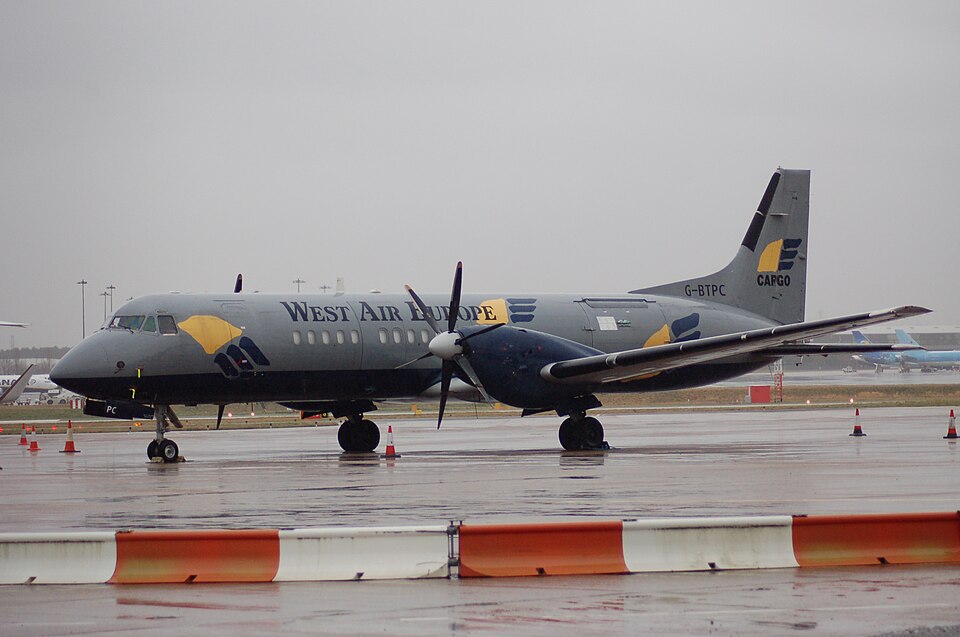
Accident Details
At 0150 UTC on 15 January 2015, a British Aerospace ATP cargo aircraft (registration G-BTPC) collided with a ground power unit (GPU) at Coventry Airport. The aircraft was being prepared for a cargo flight to Dublin, carrying approximately 4,600 kg of freight. The two flight crew members were uninjured. Damage was sustained to both nose gear doors and the underside of the forward fuselage; the top cover of the GPU was crushed.
Aircraft and Crew
The aircraft, serial number 2010, was manufactured in 1988 and powered by two Pratt & Whitney Canada PW126 turboprop engines. The commander, aged 47, held an Airline Transport Pilot's Licence and had 3,356 total flying hours, including 2,326 hours on type. The first officer was also on board.
Sequence of Events
Loading and final paperwork were completed at about 0145 hrs. The flight had been delayed, and the airport was due to close at 0200 hrs, creating time pressure. The flight crew carried out the pre-start checklist and started the right engine. They then signalled the ground crew to disconnect the GPU, which was positioned directly in front of the aircraft. When the GPU was not moved, the commander signalled for left engine start, which was approved. After starting the left engine, the commander signalled for the nosewheel chocks to be removed. As soon as the chocks were removed, the aircraft began moving forward. The first officer saw a ground crew member run clear to the right. Both flight crew members immediately applied wheel brakes, but the aircraft collided with the GPU. They shut down both engines and informed ATC, who initiated a ground incident alert.
Findings
After the accident, the flight crew realised that the parking brake was not set, which allowed the aircraft to move when the chocks were removed. The commander noted an expectation that the parking brake would have been set upon arrival at the aircraft. The parking brake was not an item on the turnaround checklist, but it was on the pre-start checklist, which had not been correctly completed. The commander observed that the signal to remove the chocks was given before the GPU had been moved clear of the aircraft. Although neither crew member felt rushed, the commander believed that time pressure due to the imminent airport closure was a contributory factor.