History of the Flight
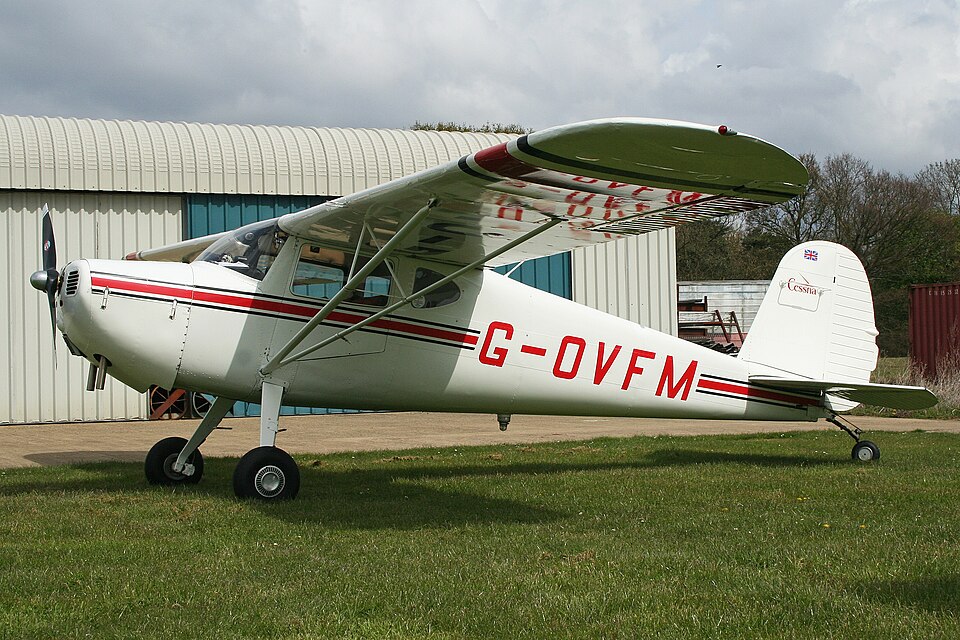
The pilot, accompanied by a passenger, was returning to South Cave (Mount Airy) Airfield after a private flight to Sherburn-in-Elmet. On arrival, the pilot overflew the runway to check the windsock, which indicated that downhill Runway 25 (gradient 2.3%) was most favourable. He positioned for the runway and commenced a quick final approach, touching down further along the runway than normal. Applying the brakes, the wheels – equipped with slick tundra tyres – skidded. Realising he was unlikely to stop on the runway, the pilot assessed there was insufficient distance to become airborne and clear trees beyond the runway end, so he continued the landing. The aircraft failed to stop and collided with a hedge at the end of the runway. Both occupants were uninjured.
The pilot believes that rain showers, which were forecast, had wetted the grass runway between his departure and return, making it slippery and increasing the landing distance. Additionally, the pilot was accustomed to flying G-OVFM solo and was not used to the higher weight with a passenger, which brought the aircraft close to maximum takeoff mass. He stated he was also used to flying a Cessna 172, which slows more rapidly with flaps, a control the Cessna 120 lacks.
Aircraft Examination
The damaged aircraft was recovered to a hangar and its wings and engine removed for repair. Inspection by the AAIB identified that the right main landing gear leg was deflected rearwards, causing buckling and twisting of the floor pan and fuselage behind the landing gear mount. The fuselage behind the left seat had buckled, the right wing root had cracked, and the engine cowls and propeller were damaged.
AAIB Comment
The accident was not reported to the AAIB by the pilot or aircraft owner; a third party contacted the AAIB to inquire whether the event was being investigated. Non-reporting of an accident is an offence and a breach of The Civil Aviation (Investigation of Air Accidents and Incidents) Regulations 2018. This occurrence serves as a reminder to all pilots of their obligation to report accidents or serious incidents, even if they consider the event not reportable.
The pilot was familiar with the airfield and aircraft, which may have led to a false sense of security and less diligent flight planning. Changing weather, increased aircraft weight, a fast and deep approach, and the adverse runway gradient combined to increase stopping distance and reduce brake effectiveness, resulting in the runway overrun. The AAIB noted that if the pilot had considered these factors in advance, he might have gone around earlier or accepted a slight tailwind but uphill landing. Reference was made to CAA publications such as CAP1535S ‘The Skyway Code’ and Safety Sense leaflet SS12 on Strip Flying as helpful resources for GA pilots.