Synopsis
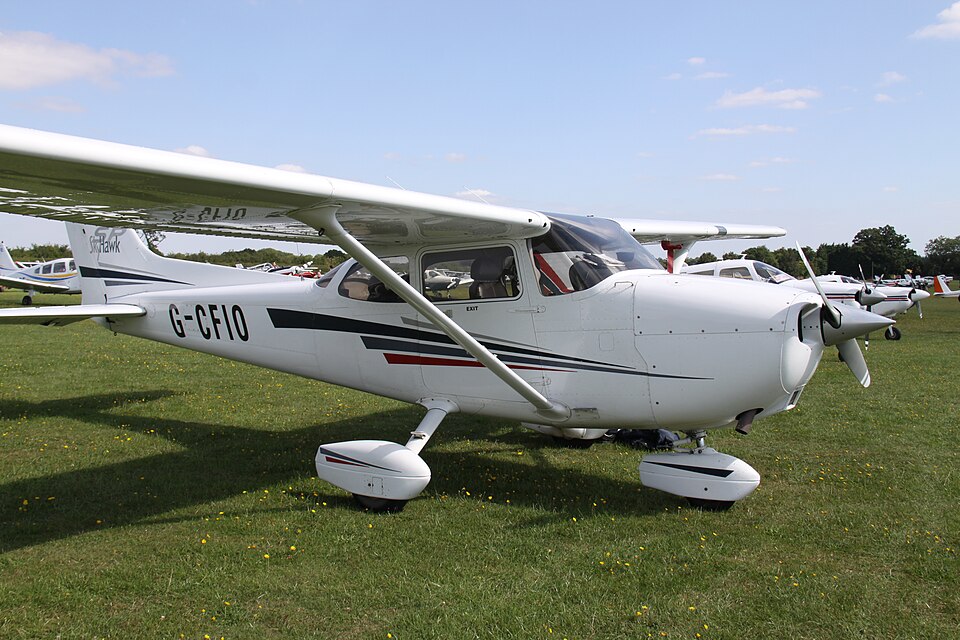
At 0958 hrs on 10 September 2021, a student pilot flew a Cessna 172S Skyhawk, registration G-CFIO, from Rochester Airport without the operator's permission or air traffic clearance. The aircraft was later observed entering a steep descending left turn before impacting a field adjacent to Tar Pot Lane near Ruckinge, Kent. The pilot did not survive.
History of the Flight
The pilot, who was scheduled for a dual training exercise, proceeded directly to the aircraft while the instructor sought flight approval via the Air Traffic Control building. Without the instructor on board and without air traffic approval, the pilot taxied and took off. Prior to departure, he transmitted over the radio that he had been diagnosed with a terminal illness and intended to deliberately crash the aircraft.
Radar data indicated that after departing Rochester, the aircraft flew to an area south of Ashford, where it loitered and conducted a series of sustained turns. At 1044 hrs, a witness 1.5 km south-southeast of the accident site saw a white aircraft to the north at low level enter a sharp descending left turn. The location and timing matched the accident site.
Accident Site
Impact evidence showed the aircraft struck the ground while in a descending left turn. The surrounding area contained several flat fields of acceptable length suitable for a field landing, including the accident field itself. However, the approach track was aligned across a corner of the field, leaving insufficient obstacle-free distance for a safe landing. A 30° track change to the right would have provided ample ground distance for a successful landing. No significant vertical obstacles were present near the final flight path that would have necessitated a turn.
Aircraft Examination
A detailed technical examination revealed multiple overload failures but no evidence of pre-impact disconnection or restriction of flight controls. Both fuel tanks contained fuel, and evidence indicated the engine was under power at impact.
Medical Information
The pilot had renewed his Class 2 aviation medical certificate in June 2021, before receiving a terminal diagnosis in July 2021. He did not disclose this diagnosis to the Aero-medical Examiner (AME), as required. Unless the AME is the applicant's own General Practitioner, they cannot review the pilot's central medical records. Pilots are obligated to report significant medical conditions. The pilot's General Practitioner confirmed the diagnosis.
Analysis
The investigation found no evidence of any technical failure that would have caused the aircraft to enter an uncontrolled descending left turn. Unless the pilot was distracted, disoriented, or medically impaired, he could have levelled the wings and established a safe landing path shortly before impact. The aircraft lacked recording devices to capture evidence of distraction, disorientation, or impairment.
Conclusion
The crash site was suitable for a field landing. No operational or technical reason was identified to explain why the aircraft approached the ground in a descending left turn that precluded a safe landing. The investigation could not determine whether pilot distraction, disorientation, or impairment contributed to the accident. Had the AME been informed of the diagnosis, it is likely the pilot's medical certificate would have been revoked. The coroner recorded a verdict of suicide.