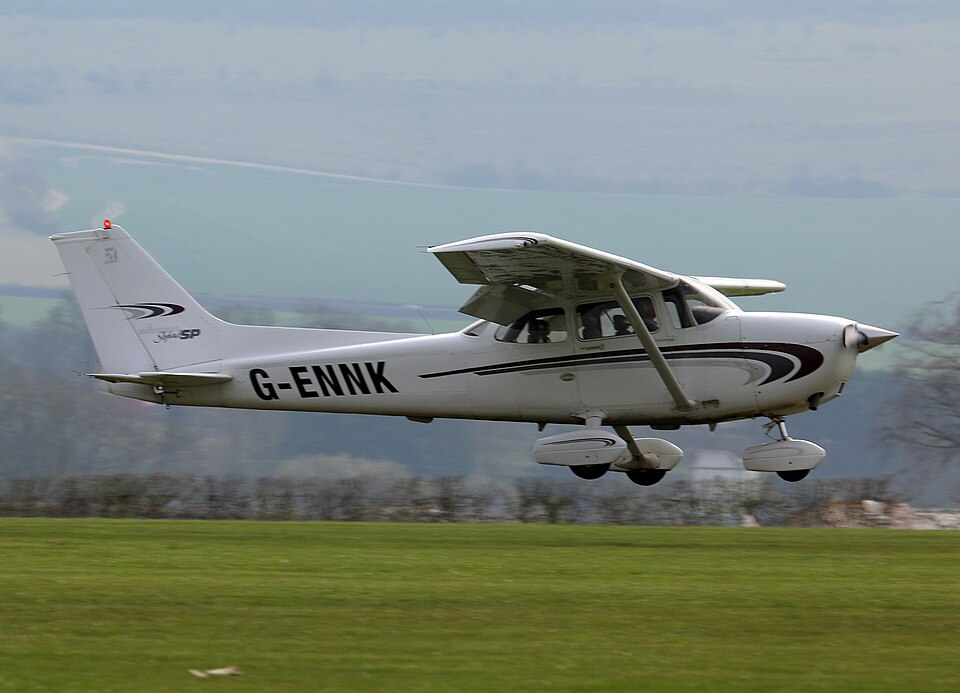
Accident Details
On 31 March 2016 at 0606 UTC, a Cessna 172S Skyhawk, registration G-ENNK, was attempting to take off from Sherlowe Airstrip in Shropshire. The aircraft was operated privately with only the pilot on board. The pilot, aged 73, held a Private Pilot’s Licence and had accumulated 8,000 flying hours including 1,000 hours on the type.
Runway and Aborted Takeoff
The takeoff was attempted on grass Runway 15, which is approximately 240 m in length. The pilot realized that the aircraft was not accelerating quickly enough to achieve flying speed because the ground was too soft. He abandoned the takeoff, but the aircraft ran off the end of the runway into a soft, cultivated field, where it flipped inverted. The pilot was uninjured and evacuated the aircraft unaided.
Pilot’s Assessment and Performance Margins
The pilot stated that he regularly operated from Sherlowe Airstrip and had calculated a 40% margin for soft ground based on the short-field takeoff performance figures in the Pilot’s Operating Handbook (POH). The Cessna 172S POH indicates a minimum ground roll of 186 m on a flat, level, dry paved surface at 0°C ambient temperature and an all-up weight of 2,200 lb. The POH notes that a 15% addition to ground roll is required when operating from a dry grass runway, giving a calculated minimum ground roll of 214 m. Thus, the available margin was 12% to offset the soft, damp runway conditions.
Relevant Guidance
The CAA’s Safety Sense leaflet 7c ‘Aircraft Performance’ urges pilots to establish a decision point at which takeoff can be safely abandoned without overrunning if performance is not satisfactory.
Damage and Aftermath
The aircraft was found inverted and probably damaged beyond economic repair. The pilot was not injured.