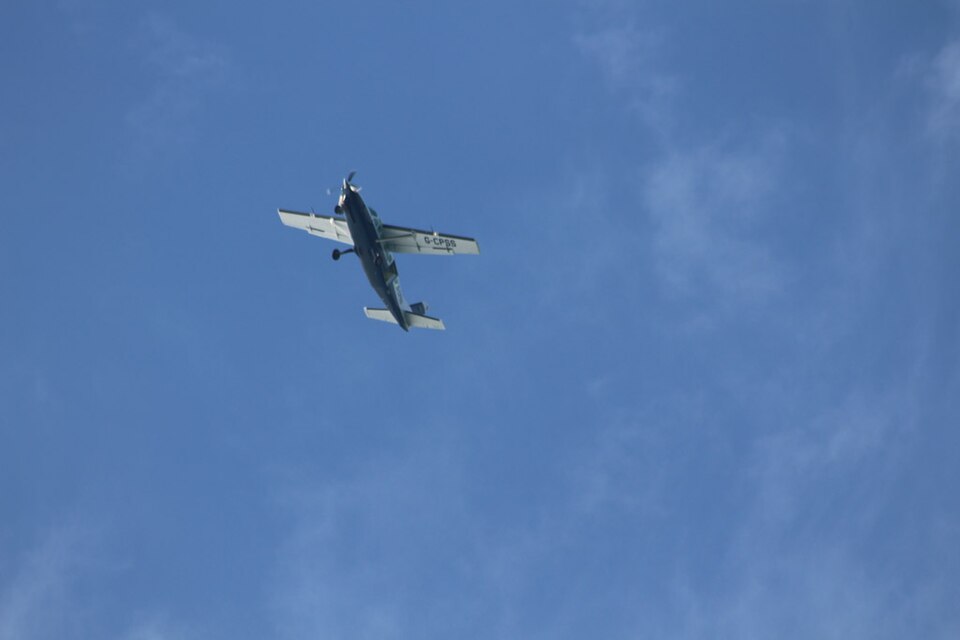
Aircraft Information
- Aircraft Type: Cessna 208B Grand Caravan
- Registration: G-CPSS
- Engine: One Pratt & Whitney Canada PT6A-114A turboprop engine
- Year of Manufacture: 2004 (Serial No: 208B1059)
- Operator: A sport parachute club (non-commercial flight)
- Commander: 57-year-old male, holding a Private Pilot's Licence with 489 total flying hours (146 on type, 6 hours in last 90 days, 2 hours in last 28 days)
Event Details
The flight was the fifth sortie of the day, dropping parachutists over Netheravon Airfield from heights up to 13,000 ft. After a rapid descent, the pilot stabilized the aircraft for a final approach to Runway 22 with flap 30, airspeed 85 kt, and maximum propeller rpm. Weather conditions were good, with surface wind from 200° at 13 kt.
On short final at about 150 to 200 ft, the aircraft began to descend abruptly. The pilot described the sensation as "being rapidly pushed down," suggesting windshear. He attempted to correct by pulling up, but the aircraft landed heavily in a flat, nose-down attitude. It skidded along the grass runway, veered right, and came to a halt alongside the runway. During the landing, the nose landing gear broke off and the propeller contacted the ground. The pilot then isolated the fuel and electrical systems and vacated through the normal exit. The pilot reported no injuries.
Post-Accident Findings
An internal investigation determined that the aircraft touched down in the undershoot area. The nose landing gear likely broke when it struck a shallow drainage ditch.
Damage
Damage was limited to the nosewheel, propeller, and propeller hub. No other damage was reported.