History of the Flight
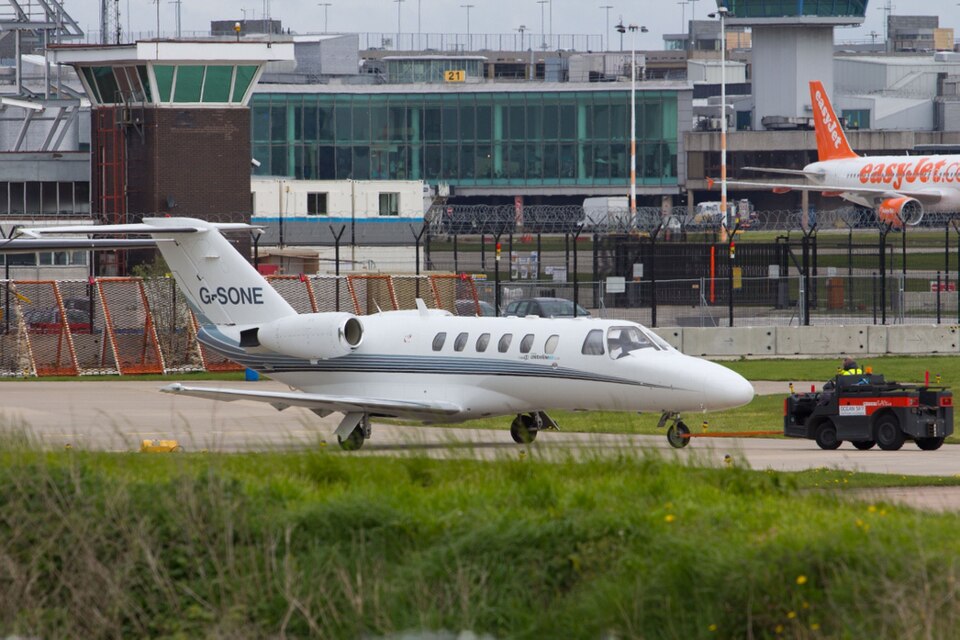
On 20 September 2017, at approximately 0600 UTC, a Cessna 525A Citationjet CJ2, registration G-SONE, departed Bristol Airport for Paderborn Lippstadt Airport in Germany. The aircraft was conducting a commercial air transport passenger flight with two crew and six passengers on board.
During the climb through Flight Level 200 (FL200), the crew received a master warning indicating that the cabin altitude had exceeded 10,000 ft. In response, they donned their oxygen masks and executed emergency procedures. Air traffic control initially cleared the aircraft to descend to FL170, but the cabin altitude continued to rise. When it reached 12,500 ft, the cabin oxygen masks deployed automatically. The passengers put on their masks, and the crew declared an emergency before descending to FL080.
The aircraft subsequently returned to Bristol and landed without further incident.
Post-Incident Examination
Following the incident, the operator conducted ground tests and a maintenance flight. However, no fault with the aircraft’s pressurisation system was identified. The aircraft was returned to service and had subsequently completed over 30 flights without any further pressurisation issues.
Cockpit Voice Recorder Preservation
The aircraft was equipped with a 120-minute cockpit voice recorder (CVR). A recording of the incident was not available because no immediate action was taken to preserve it. European regulation (Commission Regulation (EU) 965/2012, part CAT.GEN.MPA.105) requires the aircraft commander to preserve CVR and flight data recorder (FDR) records following an accident or an incident subject to mandatory reporting.
In response, the operator is issuing a Safety Notice to all flight crew reminding them of their obligations to preserve CVR and FDR data after a reportable incident. Additionally, an article on this topic will be published in the operator’s Flight Safety Newsletter.