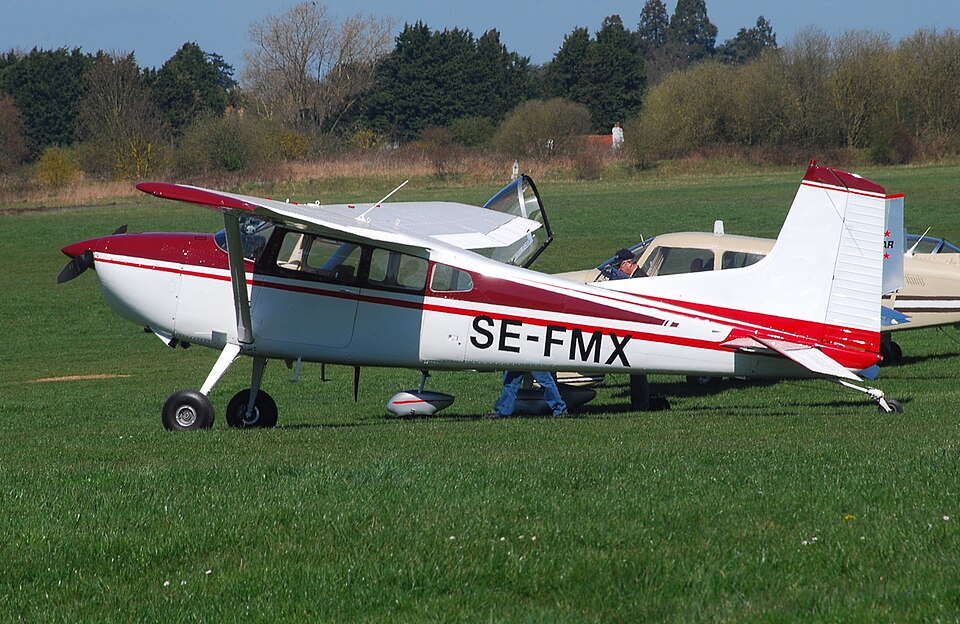
Accident Details
On 5 April 2014 at 1300 UTC, a Cessna A185E (registration SE-FMX, serial number 18501740, manufactured in 1978) was on a private flight. The aircraft was equipped with a single Continental IO-520D piston engine. The pilot held a Private Pilot's Licence and had 200 hours total flying experience, with 15 hours on type. The flight carried one passenger.
Sequence of Events
The pilot intended to land on tarmac Runway 25 at Bentwaters Airfield, Suffolk, with the wind from 180° at 15 knots. After observing the windsock, the pilot conducted a wing-down crosswind approach with the tail wheel locked in the trailing position for directional control on the ground. During touchdown, the aircraft experienced a slight bounce before settling on all wheels. Immediately after, the aircraft slewed violently to the left, causing the right tyre to dig into the runway surface. The right wing then contacted the runway, tipping the aircraft onto its nose while still travelling at approximately 50 mph. The aircraft came to rest inverted. The two occupants vacated the aircraft via normal exits without injury.
Pilot Comments
The pilot reported that he underestimated the severity of the gusting crosswind and was unable to prevent the aircraft from yawing into the wind. He noted that the aircraft has a "notoriously big fin," making it particularly susceptible to crosswinds. The pilot stated that in the future he would avoid landing in a crosswind of that magnitude.
Damage
The aircraft sustained damage from shock-loading of the engine, and the propeller, wings, and fin were damaged. There was no indication of any pre-existing mechanical defect that might have affected the outcome.