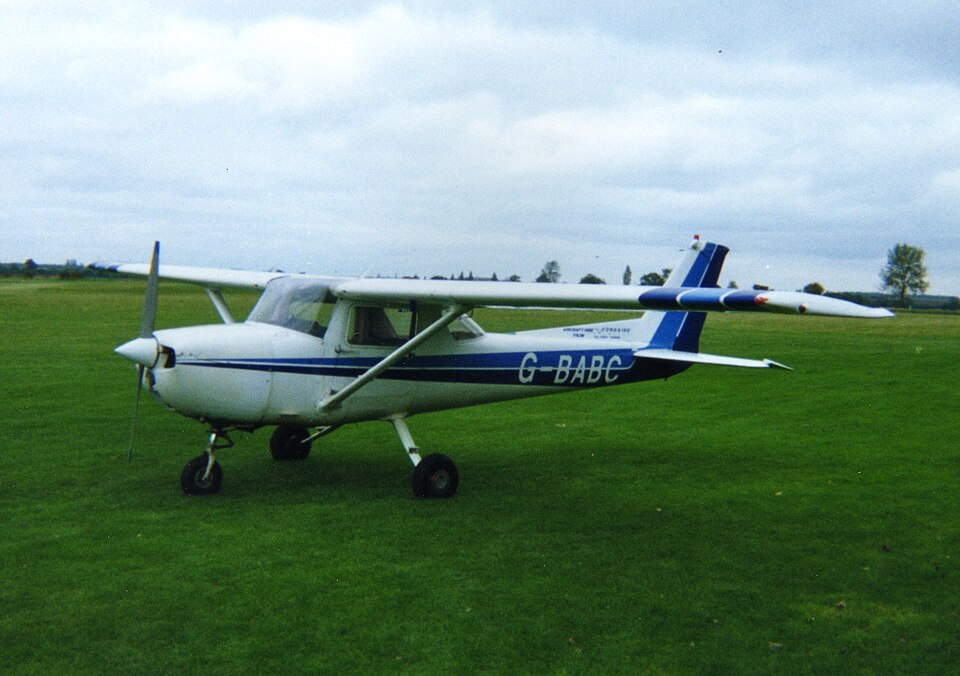
History of the Flight
On 14 November 2017 at 1330 UTC, a Cessna F150L (G-BABC) was conducting a training flight at RAF Henlow, Bedfordshire. The student pilot was practicing short field landing techniques with flaps set to 30°. During the first approach to grass Runway 26L, a high rate of descent developed shortly before touchdown. The instructor took control and performed a go-around. Following a re-brief, the student attempted a second approach.
During the second approach, at approximately 30 ft above ground level, idle power was selected. This caused the nose to pitch down and the descent rate to increase rapidly. The instructor took control and selected full power, but could not change the flap setting or prevent the nosewheel from striking the runway. The aircraft bounced to approximately 20 ft. Due to damage from the propeller strike, maximum thrust was not available.
The instructor held the control column fully back to cushion the subsequent touchdown. The aircraft landed heavily on both mainwheels. The nose leg had already detached, causing the aircraft to pitch forward. The nose and right wing tip contacted the ground. The tail rose until the fuselage was nearly vertical for a few seconds, then the aircraft toppled back onto its mainwheels. The occupants shut off fuel and electrics and vacated without difficulty.
Damage and Injuries
The aircraft sustained damage to the nose leg (detached), propeller, engine, forward lower fuselage, and right wing. The two crew members reported no injuries.
Instructor's Assessment
The instructor noted that the student had previously only landed with flaps set to 20° and had not appreciated the effect of selecting idle power with flaps at 30°. The instructor planned to provide more landing practice with flaps at 30° before teaching short field techniques.
Aircraft and Crew Information
The Cessna F150L (manufactured in 1972, serial number 831) was powered by a single Continental Motors Corp O-200-A piston engine. The commander held an Airline Transport Pilot's Licence, aged 71 years, with 16,288 total flying hours (1,125 on type).