History of the Flight
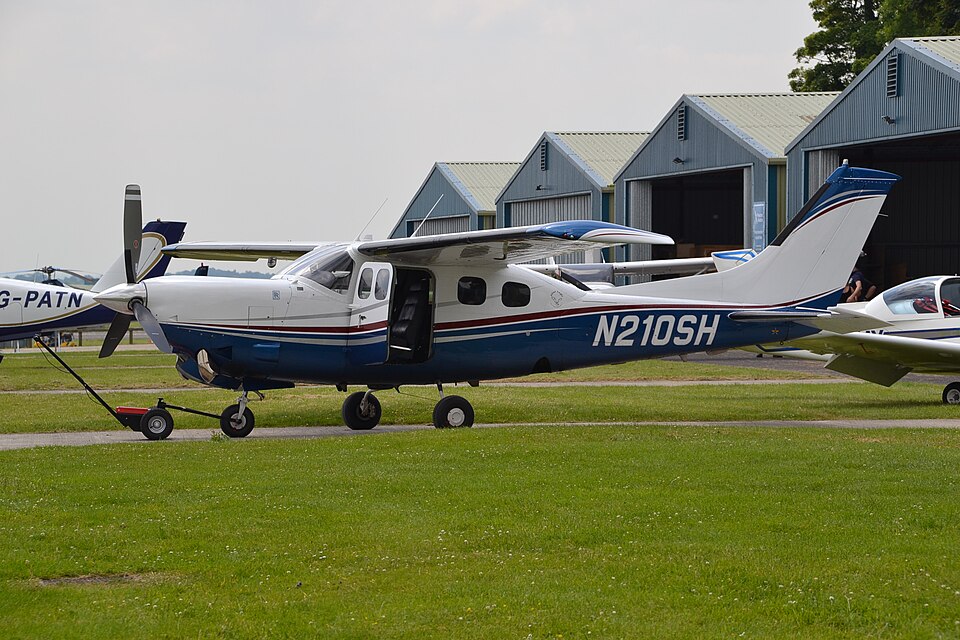
On 24 June 2014, at 1008 hrs UTC, a Cessna P210N (registration N210SH) landed on grass Runway 08 at Cotswold Airport, Gloucestershire, due to work in progress on the main runway. The wind was calm. After touchdown, the pilot selected reverse thrust and applied firm braking to slow the aircraft for a runway turn-off. Approaching the turn-off, the pilot realised the aircraft was too fast and continued to the next turn-off, simultaneously releasing the brakes and cancelling reverse thrust. The pilot reported that when the brakes were released suddenly, the aircraft typically pitched up and down, which occurred on this occasion. As the oscillation subsided and the aircraft slowed to a fast walking speed near the next turn-off, the nose landing gear collapsed. The pilot secured the aircraft, and he and his passenger, both uninjured, exited normally. No fire occurred.
Background Information
The aircraft was manufactured with a nose gear actuator spring guide made entirely of plastic, including two plastic pins fitting into holes in the downlock hooks. It was discovered that these plastic pins had a tendency to break, which could allow the downlock spring to fall out, leaving no tension on the downlock hooks. Subsequently, taxiing over a bump could cause the nose landing gear to collapse. In January 1984, Cessna issued Service Information Letter SE84-3 recommending replacement of the plastic spring guide with an all-steel component. Inspection of the available logbooks revealed no evidence that this replacement had been carried out on N210SH.
The aircraft, a 1981 model (serial number P21000739), was powered by a single Rolls Royce 250-B17F/2 engine. The pilot held an Airline Transport Pilot's Licence, was 67 years old, and had 17,000 total flying hours, including 43 hours on type. His recent flying experience included 146 hours in the last 90 days and 46 hours in the last 28 days.
Damage from the incident included the nosewheel, landing gear doors, propeller, gearbox, and engine.