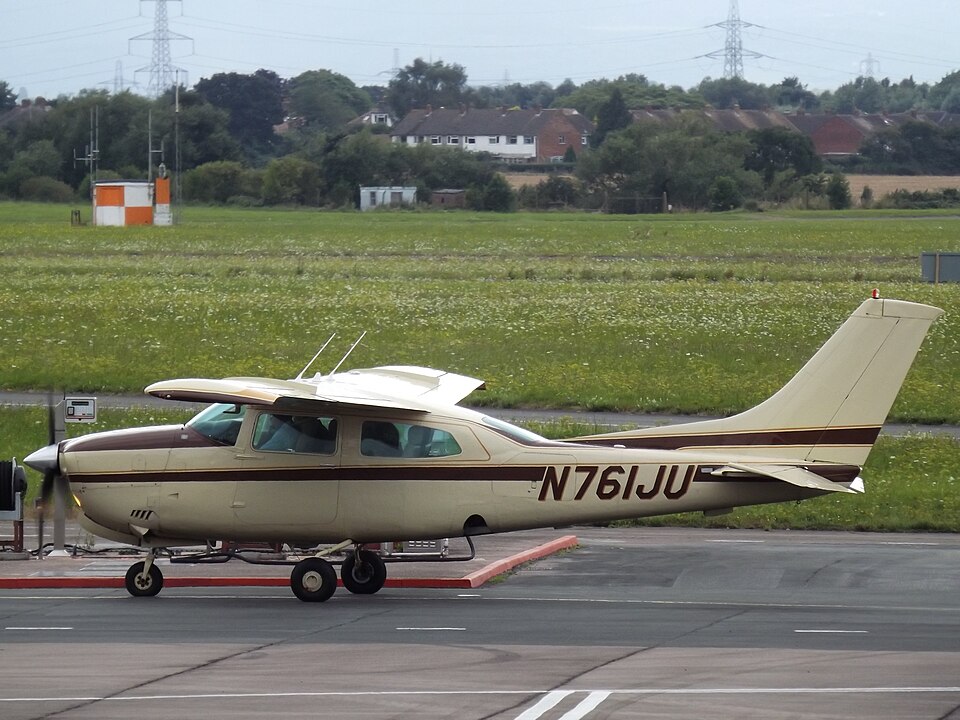
History of the Flight
On 11 April 2024, the pilot and his passenger departed Sturgate Airfield in N761JU and flew to Fadmoor Airfield. During that leg, the autopilot trim warning light illuminated multiple times, and the manual trim wheel became locked. The pilot used the electric trim switch to retrim and disengage the autopilot. After departing Fadmoor, they flew to Leeds East Airport for refueling. The pilot reported no handling difficulties. After landing, the pilot shut down the engine and turned off the master switches. Following refueling, he taxied to Runway 24. Recorded data showed two stops: one for about 30 seconds and another for two minutes at the holding point, where the pilot turned into wind for pre-takeoff checks. He delayed entering the runway due to an aircraft on short finals.
After lining up, the pilot began the takeoff roll. At approximately 70 kt, he attempted to rotate but found the control stick would not move. Believing the autopilot was engaged, he rejected the takeoff at about 100 kt. Upon closing the throttle, the aircraft jumped into the air to about 20 ft. The pilot could not maintain a nose-up attitude, and the aircraft descended rapidly, landing heavily on the nosewheel. Eyewitnesses observed two or three bounces; on the last bounce, the nosewheel detached. The aircraft then settled onto its nose strut, with the propeller striking the runway. Despite applying brakes and rudder, the pilot could not keep the aircraft on the centerline. At about 40 kt groundspeed, N761JU left the runway, the remains of the nose landing gear dug into soft ground, and the aircraft inverted.
Accident Site
The aircraft came to rest inverted off the right side of Runway 24. A furrow from the nose landing gear leg led to the aircraft. The left wing overlapped the runway, and fuel leaked from the filler cap. The aircraft was structurally intact, with damage to the propeller and vertical fin. The nose landing gear wheel was missing but later recovered. A continuous scrape on the runway from the nose leg was present, along with propeller strike marks at two locations.
Propeller Strike Analysis
Using recorded groundspeed and ground strike measurements, the propeller was estimated to be rotating at about 1,440 rpm when it first struck the ground. According to the Pilot's Operating Handbook, takeoff engine speed is between 2,600 and 2,700 rpm, indicating the propeller was rotating significantly below takeoff speed at impact.
Recorded Information
The pilot used a navigation application on a tablet that recorded GPS data at 1 Hz. The ground track showed a 45° turn on the taxiway, two stops, and the takeoff roll. The recorded groundspeed peaked at 93 kt. GPS altitude data had an accuracy of about ±20 ft and was not used for analysis.
Injuries
The pilot suffered minor head and back injuries and was discharged the same day. The passenger sustained major injuries, including cervical spine fractures, and died eight days later due to complications.
Autopilot System
The investigation found an intermittent fault with the autopilot system that might have contributed to the elevator trim moving toward the nose-down position. This fault was likely undetectable unless the pilot watched the trim wheel. The reason the autopilot might have been engaged during takeoff could not be determined. The Pilot's Operating Handbook and Quick Reference Handbook lacked autopilot-related checklists or abnormal procedures. The CAA has taken safety action to promote best practices for autopilot operation.