Synopsis
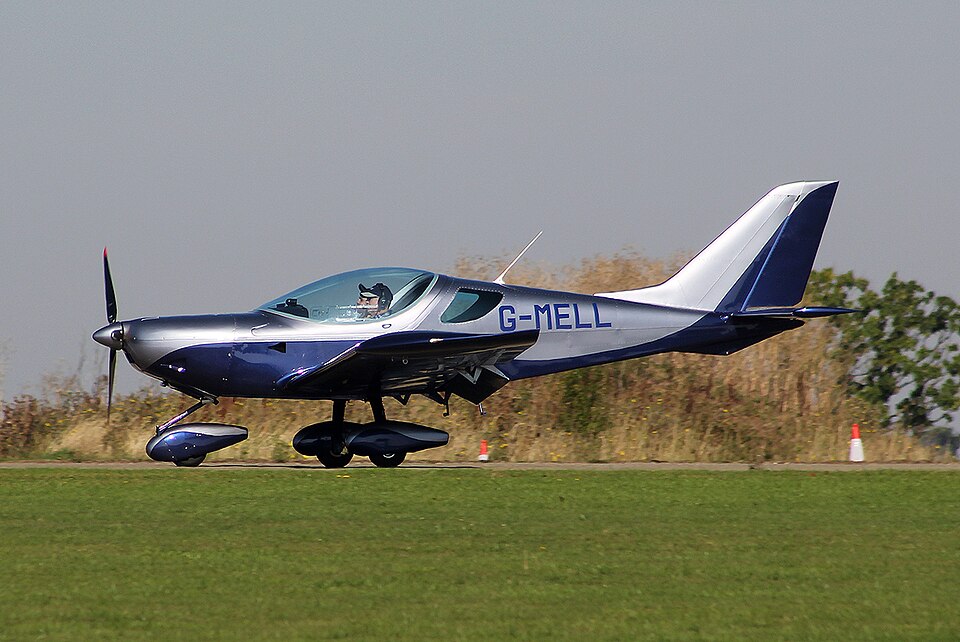
On 17 May 2014 at 1230 hrs, a CZAW Sportcruiser (registration G-MELL) sustained damage to its canopy, tailplane, elevator, and flaps during an air test approximately 3 miles south-east of Westcott, Hertfordshire. The sole occupant, the pilot, reported minor injuries. The aircraft was engaged in a private flight.
History of the Flight
The flight originated at Chilsfold Farm, West Sussex, with the intention of completing an air test near Westcott before landing at Elstree. The pilot climbed to 3,000 ft agl to perform a dive to the Never Exceed Speed (VNE) of 138 kt, checking aircraft handling and propeller overspeed prevention. Approximately 13 kt below VNE, at an indicated airspeed of 125 kt and height of 1,700 ft, a loud bang occurred, and the aircraft began to oscillate violently in pitch. The pilot noted that the canopy had fractured, and loose objects, including a fire extinguisher, were moving within the cockpit.
The pilot focused on regaining control, observing that the fire extinguisher had dislodged from its stowage beneath the armrest and was hanging by its trigger from wiring behind the instrument panel. Controlled flight was restored at about 1,000 ft with an indicated airspeed of 47 kt. The pilot elected to continue to Elstree rather than force-land, communicating with Farnborough North ATC. He found that at approximately 77 kt, the broken canopy pieces flapped and pitch oscillations resumed; he therefore maintained 70 kt at 1,400 ft. A normal approach and landing on Runway 26 followed.
Damage and Analysis
Post-landing inspection revealed severe buckling of the tailplane on both sides, with ruptures and consequent damage to the elevator. The tailplane was judged to be close to complete failure. The canopy had fractured, with the rupture located directly above the pilot's head. The pilot's headset was found partially lodged in the hole, and his recollection suggested that his head or headset had struck the canopy under significant negative g-forces. The Light Aircraft Association (LAA) tested seat harness movement and confirmed that sufficient upward motion was possible to cause such contact.
The AAIB analysis determined that the most likely scenario was a sharp vertical gust of wind, possibly resulting from the aircraft's abnormally high speed at low level, which overstressed the tailplane. This sudden 'g' spike likely caused the unsecured fire extinguisher to rise from its stowage and the pilot's head to strike the canopy.
Safety Actions
On 12 June 2014, the LAA issued Airworthiness Information Leaflet LAA MOD/338/018 Issue 1, reducing the VNE of homebuilt Sportcruisers from 138 kt to 120 kt. The following day, Airworthiness Alert LAA/AWA/14/09 summarized the incident and highlighted potential dangers from unsecured fire extinguishers. The LAA also published a verbatim account of the pilot's experience in the July 2014 edition of its journal Light Aviation. A design and certification review of the Sportcruiser tailplane structure was initiated, with the VNE reduction considered a temporary mitigation measure.