History of the Flight
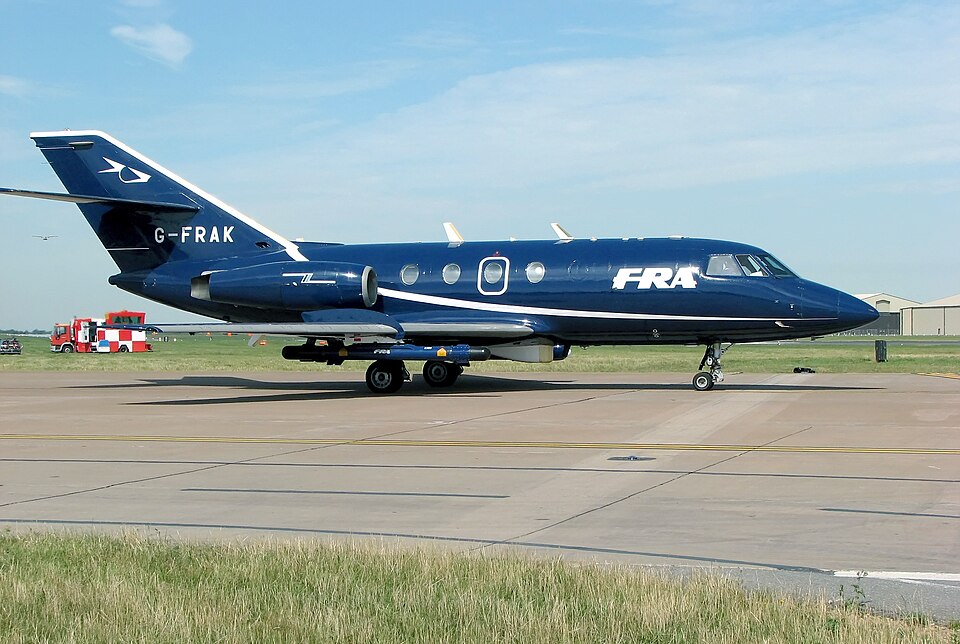
The aircraft, G-FRAK, a Dassault Falcon 20D, departed Bournemouth Airport at 1518 hrs on 25 April 2015 for a target-towing operation over the English Channel in a designated danger area. The target, 2.9 m long and weighing 53 kg, was attached to a winch mounted on a pylon under the left wing. The crew consisted of the commander (pilot flying), co-pilot, and a Target Tow Officer (TTO).
The target was towed 4,145 m behind and about 1,000 ft below the aircraft at an altitude of approximately 4,250 ft. Recovery began at 1640 hrs. The aircraft climbed to 4,800 ft to avoid cloud and turned onto a north-easterly heading. The minimum total air temperature during recovery was 10.75°C, and airspeed ranged from 222 to 238 KIAS.
The target was reeled in at 10 m/s until 340 m of cable remained, then automatically reduced to 3 m/s. At 60 m, the winch speed slowed to 0.76 m/s. The TTO selected the control switch to slow as a backup. As the target approached, the TTO noticed the cable length display reducing rapidly and felt the winch speed increase. Before he could hit the stop switch, the target appeared on the camera monitor, struck the launcher, and detached after hitting the wing.
The aircraft rocked. The TTO informed the pilots of the strike. The commander contacted Plymouth Military ATC, reported the incident, declared a PAN, and set the transponder to 7700.
Damage and Landing
The left wing leading edge was torn and dented. The winch carrier was damaged, and the target was lost at sea. The commander assessed the aircraft's handling and conducted a low-speed check. A flapless landing was performed on Runway 26 at Bournemouth at 1708 hrs. The aircraft stopped on the runway, and after an external inspection by RFFS, the crew taxied to parking.
Findings
The target winch, a Meggitt RM30/ASL reeling machine, is powered by a turbine controlled by vent doors. The winch oversped due to a fault with the closed limit switch on the vent doors, which prevented them from closing. This caused the target to be reeled in too quickly and strike the aircraft.
The operator and manufacturer have carried out several safety actions as a result of the investigation, and one Safety Recommendation was made.