Accident Synopsis
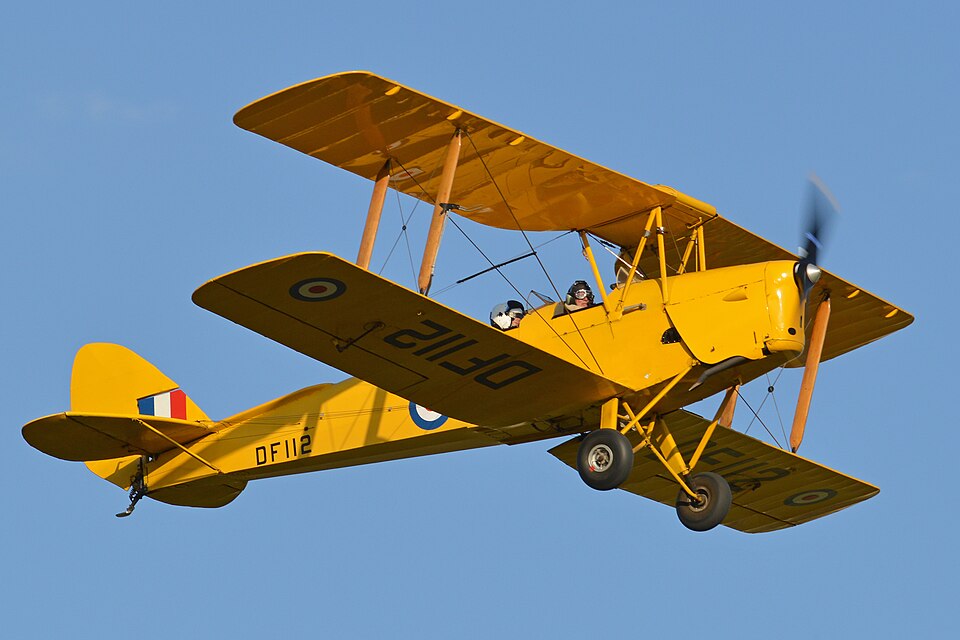
On 30 June 2018 at 1725 UTC, a DH82A Tiger Moth (registration G-ANRM) experienced an accident during landing at Sywell Aerodrome, Northamptonshire. While flaring for Runway 03R, the aircraft was affected by a gust of wind, inducing a left roll that the pilot was unable to correct. The left wing struck the ground, causing the airplane to nose over and come to rest inverted, facing the opposite direction of landing. The aircraft sustained damage to the wings, propeller, forward fuselage, and rudder.
Flight History
The aircraft was operating on behalf of an organization providing vintage flying experiences. The pilot had flown the Tiger Moth from its home base at Duxford to Sywell the afternoon prior, completing one short air experience flight and two uneventful landings on grass Runway 03R. During the third flight, on short final for Runway 03R, the pilot received wind information from Sywell indicating 040° at 15 kt. The approach was normal. The pilot observed the windsock and assessed the wind as approximately 10° right of the runway heading, opting for a three-point landing technique, his preferred method in the absence of significant crosswind.
Wind Conditions
Over the course of the evening, wind varied between 030° to 050° at 12 to 18 kt, with a maximum recorded gust of 20 kt. Around the time of the incident, Sywell Information briefly observed an anemometer reading of 070° at 18 kt, which differed from the nearest windsock indication. The chief pilot later noted that indications from the two windsocks at Sywell were inconsistent with each other and with the wind information provided by the airfield.
Pilot and Chief Pilot Comments
The pilot characterized the gust during the flare as "sudden and unpredictable" and noted the Tiger Moth's susceptibility to gusts due to its low wing loading. He reported being unable to prevent the wing from contacting the ground because of poor aileron authority at low speed. The chief pilot stated that the wind remained within the operator's recommended limits for Runway 03R; however, pilots had been briefed to use either Runway 03R or Runway 05 depending on conditions. The chief pilot commented that Runway 05 may have been preferable given the tendency for gusts to veer and strengthen, particularly in the evening.
Damage and Injuries
The aircraft came to rest inverted with damage to the wings, propeller, forward fuselage, and rudder. Both occupants—a crew member and a passenger—were restrained by four-point harnesses and sustained only minor injuries. They were assisted in evacuating by the aerodrome rescue and firefighting service.
The operator's guidelines recommend against flying the Tiger Moth in crosswinds exceeding 15 kt. The original pilot's notes for the aircraft do not include any wind limitations.