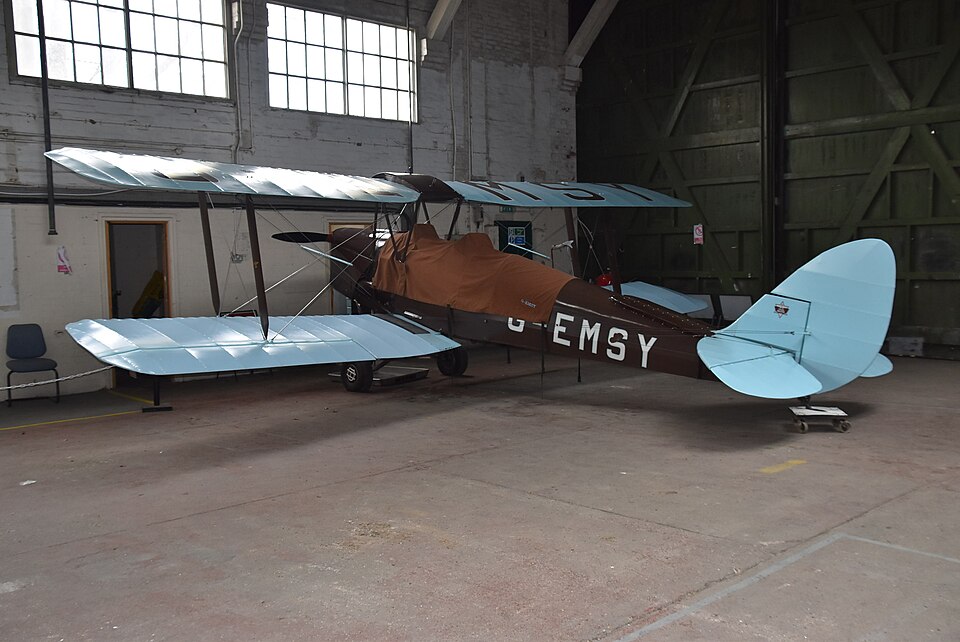
Accident Details
On 15 May 2015 at 1251 UTC, a de Havilland DH82A Tiger Moth (registration G-EMSY) operated as a training flight at Old Sarum Airfield, Wiltshire. The aircraft, manufactured in 1940, was powered by a single De Havilland Gipsy Major I piston engine. The flight involved the part-owner of the aircraft, seated in the rear seat, renewing his Single Engined Piston (SEP) rating, with an instructor in the front seat.
Sequence of Events
After approximately one hour of flight, the aircraft returned to Old Sarum. The rear seat pilot conducted a touch-and-go landing. He flared the aircraft somewhat too high, causing it to bounce on touchdown. He continued the manoeuvre, opened the throttle, and attempted to rotate into a climbing attitude. Instead of climbing, a nose-down pitching moment developed, and the propeller and nose struck the ground. The aircraft then flipped over inverted.
Injuries and Damage
Neither the instructor nor the rear seat pilot sustained any injuries. The aircraft sustained damage to the propeller, engine cowling, upper wing, and empennage.
Pilot Information
The rear seat pilot, who was the part-owner, held a Commercial Pilot's Licence and was 31 years old. His total flying experience was 1,817 hours, including 45 minutes on type. The two pilots suspected that a sudden gust of wind may have lifted the tail, causing the accident.