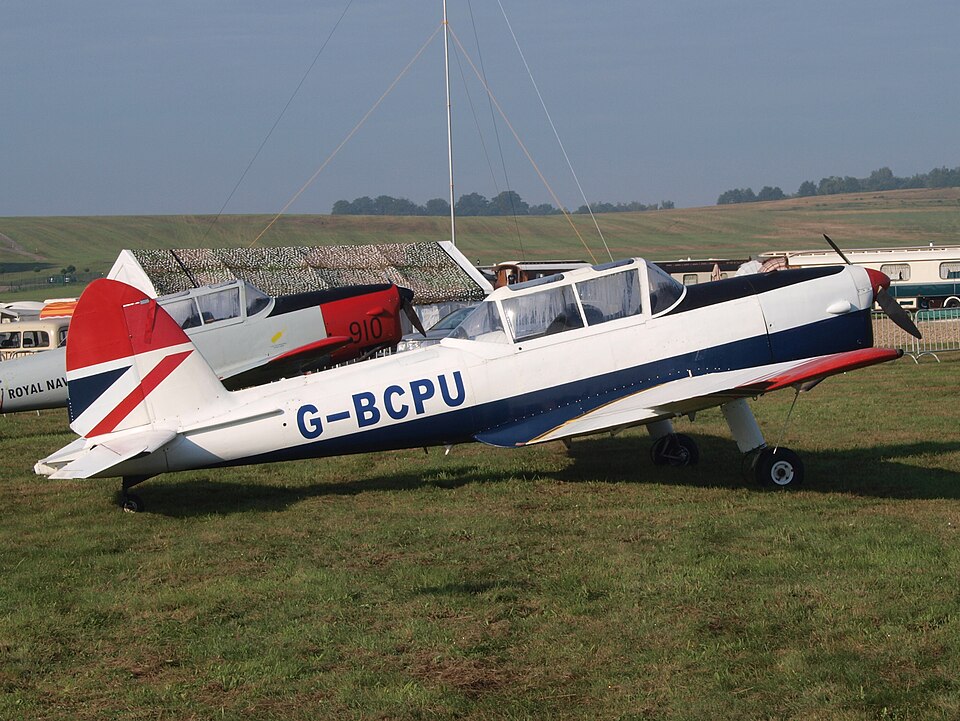
Flight Details
The incident occurred on 8 September 2018 at 1235 UTC near White Waltham Airfield, Berkshire. The aircraft was a 1953 DHC-1 Chipmunk 22, serial number C1/0839, powered by a single De Havilland Gipsy Major piston engine. The pilot, a 49-year-old commercial pilot with 1,024 total flying hours (300 on type), was the sole occupant and was conducting a private flight performing an aerobatic display.
History of the Flight
After finishing the final display maneuver—an aileron roll at 600 ft agl—the aircraft continued to roll and pitched nose-down despite the pilot's control inputs. The pilot reduced power and declared a MAYDAY. He identified a restriction in the rudder controls. Through vigorous movement of all flight controls, the restriction cleared. The pilot regained control at approximately 50 ft agl, turned the aircraft back towards the airfield, and completed an uneventful emergency landing.
Inspection and Findings
An immediate post-flight inspection revealed that the flight controls operated normally and were undamaged. A more detailed inspection conducted a few days later confirmed no defects in the flight control system. However, a partially crushed pen was discovered within the fuselage. The damage to the pen indicated that it was the probable cause of the control restriction. The pilot reported that during a pre-flight loose article check, a pen top was recovered from the rear cockpit, but no other articles were observed.
Probable Cause
The partial crushing and location of the pen within the fuselage led investigators to determine that it had caused the restriction in the rudder control circuit, leading to the loss of control.
Post-Incident Actions
Following the incident, the pilot implemented more rigorous pre- and post-flight inspections for loose articles and now only permits pens if they are securely tied to the pilot's or student's flying suit.