Incident Overview
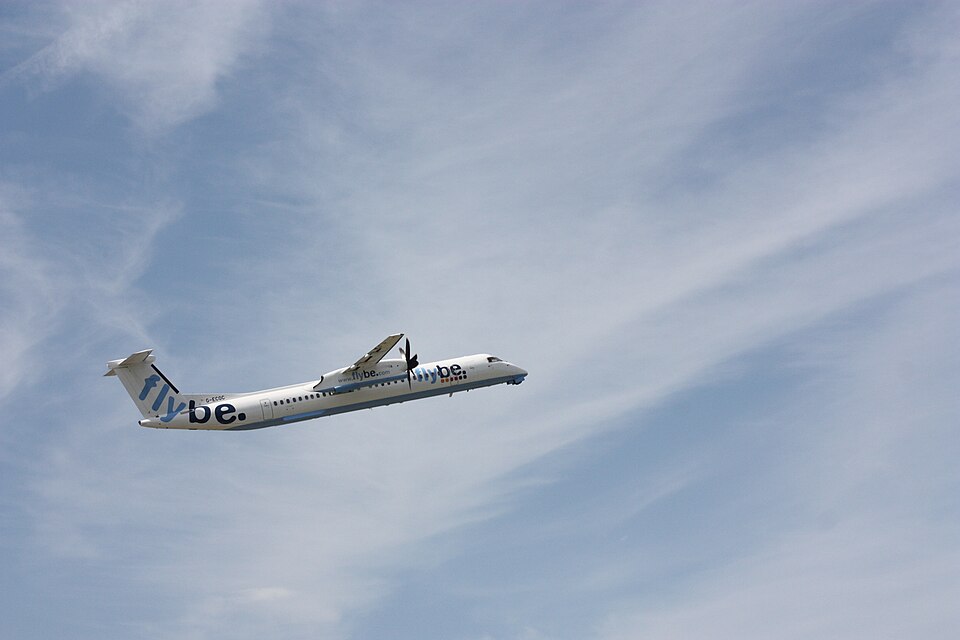
On 13 December 2018, at 2105 UTC, a De Havilland Canada DHC-8-402 Dash 8 aircraft, registration G-ECOC, was en route from Aberdeen to Birmingham on a commercial air transport flight. The aircraft was manufactured in 2007 and powered by two Pratt & Whitney Canada PW150A turboprop engines. There were 4 crew members and 77 passengers on board; no injuries were reported and no damage occurred.
Flight Events
Prior to departure from Aberdeen Runway 16, the flight crew completed safety checks, including verifying the crew oxygen system pressure. During climb, at approximately 18,000 ft (FL180), the crew heard a loud noise on the flight deck, which they associated with a decompression event. The cabin altitude indicated normal, but the maximum differential pressure (max diff) warning illuminated. The aircraft was levelled at FL190 and air traffic control was informed. As a precaution, the pilots donned their oxygen masks. When activated, the headbands did not inflate and no oxygen was available. There were no standard operating procedures for crew oxygen system failure. The pilots continued without masks, reset the pressurisation system, which functioned normally for the remainder of the flight. The aircraft remained at FL190, and portable oxygen from the cabin was requested. On arrival at Birmingham, the pilots rechecked their masks: the pressure gauge showed normal, but when oxygen was demanded, pressure dropped to zero.
Oxygen System Examination
The crew fixed oxygen system consists of a single pressurised cylinder assembly in the lower nose fuselage, three full-face masks, and associated piping. The cylinder assembly, last certified in February 2015 with a passed flow rate test, had been returned for minor rework and refilling three times since. Following the incident, the cylinder assembly was removed and examined. The regulator was disassembled, revealing debris blocking the crew oxygen supply port (port [7] in Figure 3). The debris was tapered, approximately 6 mm long, with a left-hand thread. Energy dispersive X-ray analysis showed the debris was low-alloy steel containing chromium and molybdenum, while the valve pin and regulator body were corrosion-resistant steel. Scanning electron microscopy indicated the fracture surface was consistent with torsional overload in shear. The debris geometry and thread pattern matched a screw extractor tool. It appeared that the tool had been inserted into the port, contacted the valve pin, and sheared off. The debris partially blocked the port, allowing the pressure gauge to read normally but restricting flow when demanded.
Analysis and Conclusion
No explanation could be found for the presence of the debris. The acceptance test certificate from February 2015 confirmed oxygen flow was within limits, indicating the debris was not present at that time. The investigation concluded that, for reasons unknown, a tapered screw extractor tool had been inserted into the crew oxygen supply port until it failed through torsional overload. The blockage restricted oxygen flow during the incident flight but allowed the cylinder pressure to register on the flight deck gauge until the system was activated.
Safety Action
The operator updated its Operations Manual for Flight Deck Fixed Oxygen Checks to include a one-second flow of oxygen to ensure system pressure is maintained during the first flight check.