Incident Overview
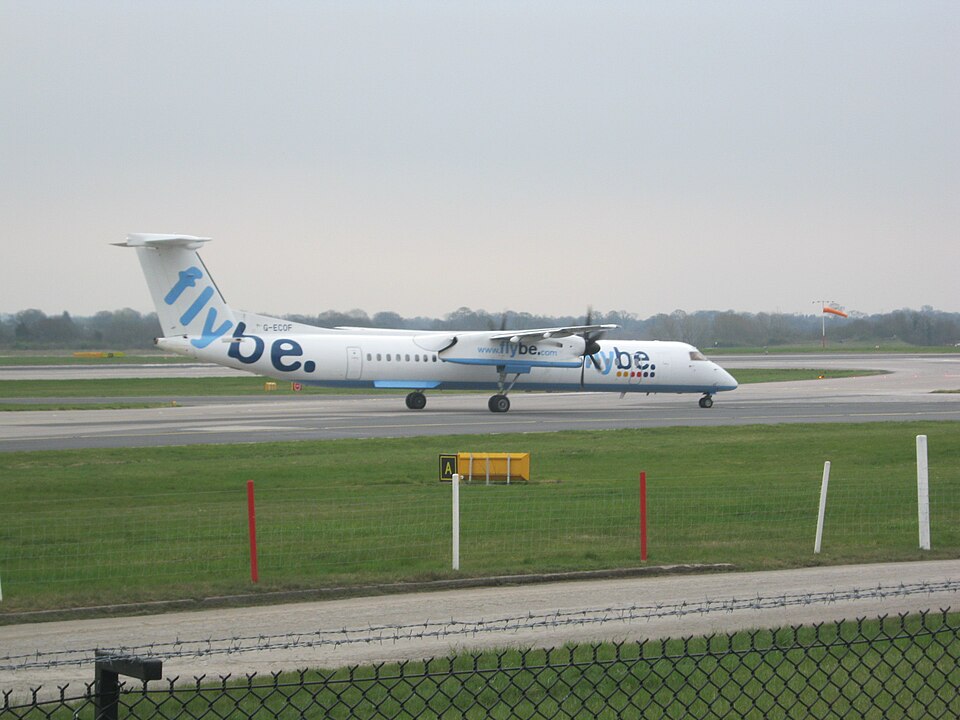
On 30 October 2016 at approximately 1340 UTC, a DHC-8-402 Dash 8, registration G-ECOF, was preparing for takeoff at Belfast City Airport when ground handlers reported smoke emanating from the rear of the aircraft near the auxiliary power unit (APU). The commander initiated a precautionary disembarkation. The APU, which had been running, shut down automatically. Inspection revealed that the tail cone had become very hot, causing discolouration of the external surfaces. No injuries were reported among the 4 crew and 77 passengers.
Sequence of Events
The aircraft was boarded, doors closed, and the crew prepared for departure with the APU running for engine start. A ground handler notified the crew of smoke from the rear. The commander, initially not overly concerned due to the absence of flight deck APU fault indications, asked the No 1 cabin attendant to open the forward door. The co-pilot contacted ATC, who confirmed smoke visible at the rear. The commander then ordered a precautionary disembarkation, using only the forward door as the rear airstairs were unserviceable. A PAN call was made to ATC. The APU shut down, generating a fail caption. No fire or smoke warnings appeared on the flight deck, and no fumes or smoke were detected inside the cabin, though a burning odour became apparent. All passengers disembarked before the airfield fire service arrived. The fire crew measured temperatures around 158°C in the APU area, dropping to 40°C at the rear pressure bulkhead.
Earlier Incident
Two days prior, on 28 October 2016, the same aircraft was at Birmingham with a different crew. After pushback clearance with the APU running, the pushback tug driver found a hot piece of debris approximately 10 m behind the aircraft. The commander examined the object and conducted a walk-round inspection, finding no damage. The object bore no markings. Assuming it came from a passing truck, the crew disposed of it in a FOD bin. The aircraft continued in service. Following the later incident, attempts to locate the debris were unsuccessful.
Examination Findings
The APU is located in a bay within the tail cone. The exhaust duct contains a titanium duct with a fibre-metal acoustic liner. Examination showed the front half of the liner had partially disintegrated. The item found at Birmingham was a circumferential section from the front end. The remaining liner portion was removed, possibly causing additional distortion. Internal tail cone surfaces were discoloured, paint blistered, and electrical cables sustained heat damage. APU data download indicated an open circuit shutdown, likely due to cable damage. The operator noted previous instances of liner cracking near the first frame. The aircraft manufacturer reported 17 prior events of duct liner cracks since September 2003, with two missing pieces and one collapsed liner causing similar exhaust gas intrusion.
Discussion
The AAIB concluded that disintegration of the APU exhaust duct liner allowed hot exhaust gases into the tail cone. The liner is exposed to severe thermal and acoustic environments, but no regular inspection period is specified. The duct had been inspected two weeks prior during an APU change, yet a substantial piece failed. The nature of the failure was not determined. No flames were observed, but temperatures were sufficient to generate smoke and damage electrical harnesses, leading to APU shutdown. The APU is certificated for ground use only.